
Business tax planning in India helps business owners manage tax liability legally by understanding eligible deductions, business expenses, depreciation, and applicable tax provisions.
Business tax planning is a part of managing a business in India. It is not only about paying taxes on time but also about understanding the tax rules and making financial decisions that can help a business manage its tax liability legally. Whether you run a business partnership firm, LLP, or company proper tax planning for business can help you control expenses, improve cash flow, and avoid unnecessary tax payments.
The main objective of business tax planning is not to avoid tax. Instead, it involves using the deductions, exemptions, business expenses, and tax provisions available under tax laws in the right manner. Good planning also helps businesses maintain records and prepare their income tax returns accurately.
Table of Contents
What is Tax Planning for Business Owners
Tax planning for business owners is about making financial and business choices ahead of time so they can handle their taxable income and take advantage of the tax benefits that exist in Indian tax laws. This can involve picking the business structure claiming real business expenses, arranging for buying assets and depreciation, handling advance tax payments and seeing if a presumptive taxation scheme applies.
Tax planning for business owners is important because it helps business owners understand their financial situation better. Tax planning for business owners can also help them save money and avoid problems with the tax authorities. Tax planning for business owners is something that needs to be done regularly. Tax planning for business owners can make a difference in how much money they keep and how much they pay in taxes.
Business Tax Planning in India: Key Strategies for Businesses
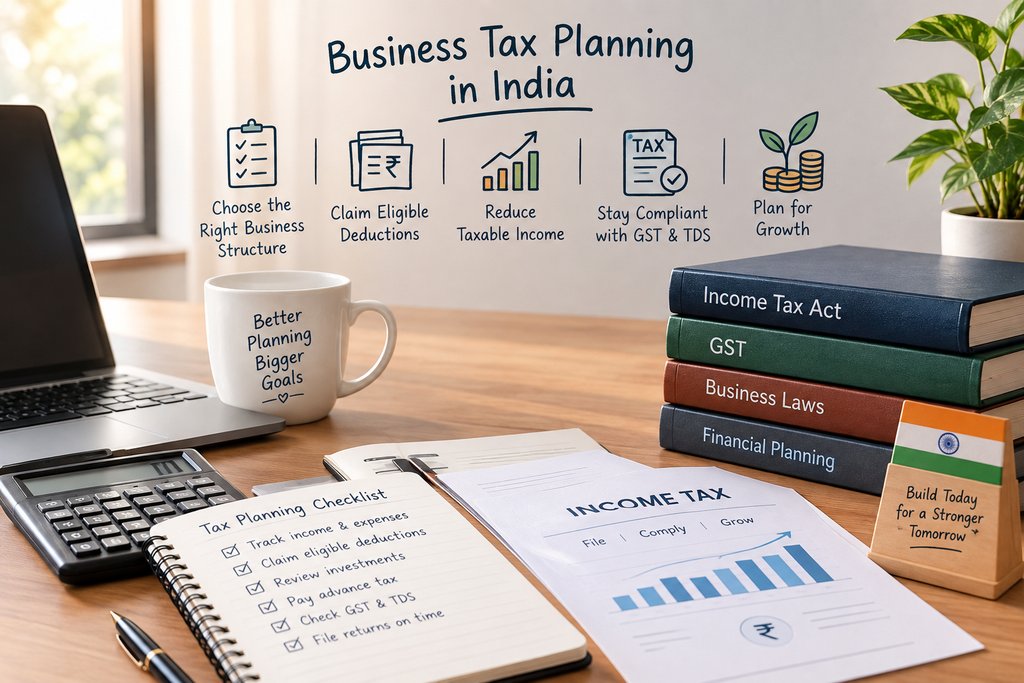
Source: ChatGpt
Tax Planning Strategies for Businesses
1. Choose the Right Business Structure
The kind of business you start like, a proprietorship, partnership, LLP or company can change how your income is taxed. Before picking a structure, it is important to know the tax, legal, and financial effects and choose the one that works best for your business.
2. Keep Your Financial Records Updated
Keeping records of your income, expenses, bills, receipts and invoices makes tax planning much easier. It helps you track your money, claim the expenses and avoid issues when you file your tax return.
Maintaining accurate financial records helps businesses track expenses, monitor cash flow, and prepare reliable financial reports.
3. Check if Presumptive Taxation Applies
Small businesses and some professionals might be able to use taxation schemes if they meet the rules. These schemes can make taxes easier because income is calculated at a set rate, without needing detailed calculations of every expense.
4. Claim Eligible Tax Deductions
Businesses need to make sure they do not miss deductions that they can legally claim. Depending on the business and the tax laws some costs, investments, or payments might be eligible for deductions. It is important to check the rules before claiming any benefit.
5. Plan Investments
Before making an investment, business owners should think about both the financial and tax effects. Some investments might give tax benefits under the rules while others might just help the business grow. The main focus should be on choosing investments that make sense for the business rather than just for tax savings.
6. Make Proper Use of Depreciation
If a business buys things like computers, machinery, furniture or equipment depreciation might be available, under the tax rules. Keeping track of business assets and calculating depreciation correctly can help the business get the deduction it should have.
Source: ChatGPT
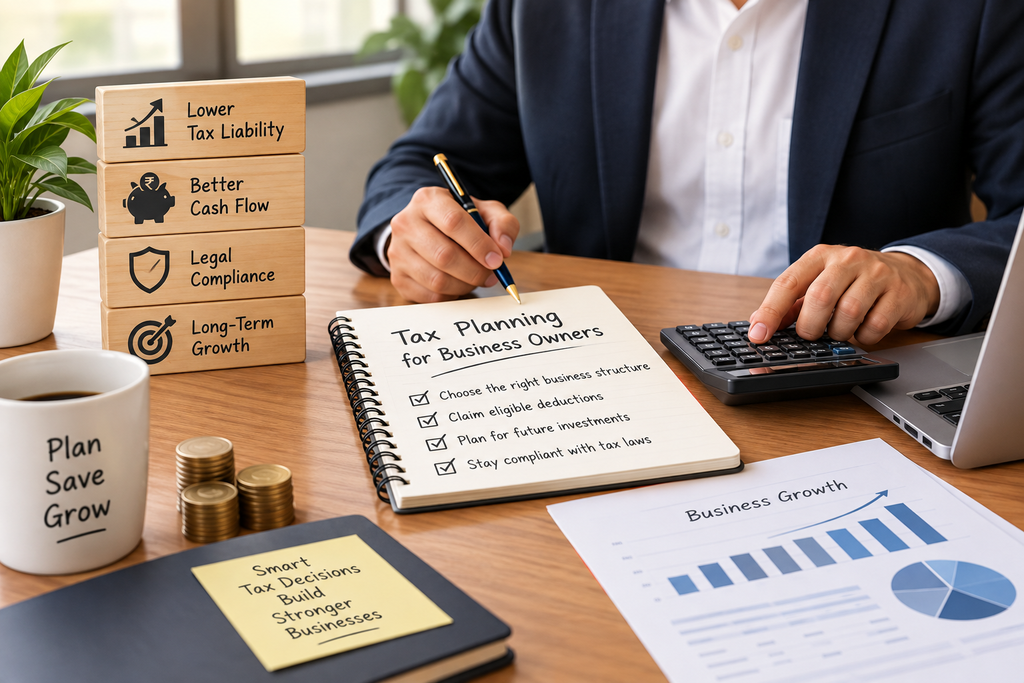
Ways to Reduce Taxable Income Legally
The main goal of tax saving for businesses is to spot expenses and deductions that are legal. Businesses must claim real expenses that fit the rules of the tax law.
1. Eligible Business Expenses can be claimed
Businesses normally spend money on rent, salaries, electricity, internet, professional fees, repairs and office supplies. These are the expenses that can be claimed to reduce the tax . It is important to keep records of all spending . When these costs are allowed by tax rules, keeping invoices and records lets businesses claim them properly.
It is vital that businesses do not mix expenses with business expenses just to lower taxable income.
2. Use Depreciation
Businesses often buy assets, like computers, machinery, furniture, vehicles and equipment. Eligible business assets can get depreciation under the tax law.
Keeping an asset register and computing depreciation correctly helps businesses avoid missing eligible deductions.
3. Plan Business Investments
Before making investments businesses should think about expected income, expenses and future needs. Depending on the asset type and tax rules some investments may change tax outcomes.
Tax planning should be paired with business needs, not just a possible tax advantage.
4. Maintain Proper Financial Records
Keeping records is one of the easiest ways to plan corporate taxes. Businesses should keep invoices, receipts, bank statements, payroll records, purchase documents and other useful financial data.
Tax Planning Is Different from Tax Evasion
Understanding the difference between tax planning and tax evasion is important. Tax planning uses provisions that the law allows to manage tax liability. Tax evasion however involves activities such as hiding income creating false expenses or giving incorrect information to tax authorities.
A business should never create bills or hide transactions just to reduce taxable income. Such practices can cause interest, penalties, and other legal consequences.
Common Mistakes Businesses Should Avoid
Some businesses make tax planning difficult by waiting until the last minute. Common mistakes include not keeping invoices, mixing business expenses, forgetting about eligible deductions, recording transactions the wrong way and missing important filing or payment deadlines.
Regular bookkeeping and checking income and expenses on a regular basis can make the tax filing process much smoother.
Conclusion
Effective business tax planning in India is about making informed decisions while following the law. Businesses can manage their tax liability by claiming business expenses using depreciation correctly, keeping proper records, and understanding the tax provisions that apply to their structure.
Tax planning only as a way to lower taxable income; businesses should treat it as part of their overall financial strategy. Proper tax planning can improve cash flow, maintain compliance, and avoid tax problems. For transactions or major tax decisions, consulting a qualified tax professional can help ensure that the business follows the applicable rules correctly.
REFERENCE:
[1] TaxClue, “Tax Planning for Business Owners Under Income Tax Act 2025: Complete Strategy Guide,” 2026. [Online]. Available. Tax Planning for Business Owners Under Income Tax Act 2025:
[2] M.K. Shah, “Business Tax Planning in India: A complete guide for savvy entrepreneurs,” 2026. [Online]. Available. Business Tax Planning in India: A Complete Guide for Savvy Entrepreneurs – Meghavi K Shah & Associates
[3] CA Shiv Kumar Sharma, “Must-Know Tax Planning strategies for Indian business owners,” TaxGuru, 2023. [Online]. Available. Must-Know Tax Planning Strategies for Indian Business Owners
AI Report:

Plagiarism Report:

Grammar Report:
