
Personal finance for gig workers and freelancers is essential for managing irregular income, controlling expenses, building emergency savings, and preparing for future financial needs.
In today’s world people are finding new ways to make money. Many work as content writers, graphic designers, online tutors, delivery partners and social media managers.These jobs are not like jobs where you get a fixed salary every month. Gig workers and freelancers often don’t get benefits such as paid time off health insurance or help with retirement savings. Their pay can be different each month so managing money becomes really important. Personal finance helps them deal with their income, track their spending, save money and get ready for the future.
Table of Contents
Challenges in Managing Personal Finances
One of the challenges that gig workers face is having an unpredictable income. They might make a lot of money in one month. Get very few jobs or orders in another. This makes it hard to handle costs like rent, food, electricity and getting around. Another challenge that freelancers have is the thing. They might have a month but then not have much work for a while. This makes it tough to pay for things like rent, food, electricity and transportation. It’s a problem for gig workers. Also for freelancers. Both groups struggle with not knowing how money they will have each month. That makes it hard to plan for expenses, like rent, food, electricity and transportation.
Another challenge is not having benefits provided by an employer. Freelancers usually need to handle their health insurance, save for retirement and build up emergency funds. They might also get paid late by clients, which can cause money troubles. So relying on the income they are making right now without preparing for unexpected problems can be dangerous.
Effective Personal Finance Strategies
1. Create a Monthly Budget
The first thing to do to stay on top of your money is to make a budget. Freelancers should figure out how much they usually make each month. Then they need to split that money into parts. Think about what’s needed, like rent and food. Also set aside money for saving, taxes and things you want to spend on yourself. When you make money in a month don’t spend it all. Instead put the extra into savings. That way you’ll be ready, for times or big goals later.
2. Build an emergency fund
Building an emergency fund is an important step toward managing irregular income and handling unexpected expenses.
An emergency fund is very important, for people who have incomes. It can help them deal with expenses, medical problems or times when work is not available. They should try to save enough to cover three to six months of living expenses. Keeping this money in a savings account that’s easy to reach can give financial security.
3. Save and Invest Regularly
Freelancers should get into the habit of saving when the money they earn is not much. They can start by putting aside a percentage of each payment they get. After they have money, for emergencies they can look for good investment choices that match their money goals and how much risk they are willing to take. Starting sooner can help them grow their money over the years.
4. Plan for Taxes
Unlike employees, freelancers must handle their taxes on their own. Freelancers must keep records of income, invoices, business expenses and money received. Setting aside a portion of money for taxes helps avoid money problems. Freelancers also need to learn the tax rules that apply to the type of work they do.
5. Protect Against Financial Risks
Freelancers can protect themselves against risks by having health insurance and proper accident coverage.Freelancers must not put all their effort into one client or platform because that makes freelancers more vulnerable.Freelancers can work with clients and learn new skills, which can improve earning chances and make freelancers less vulnerable, to loss of income.
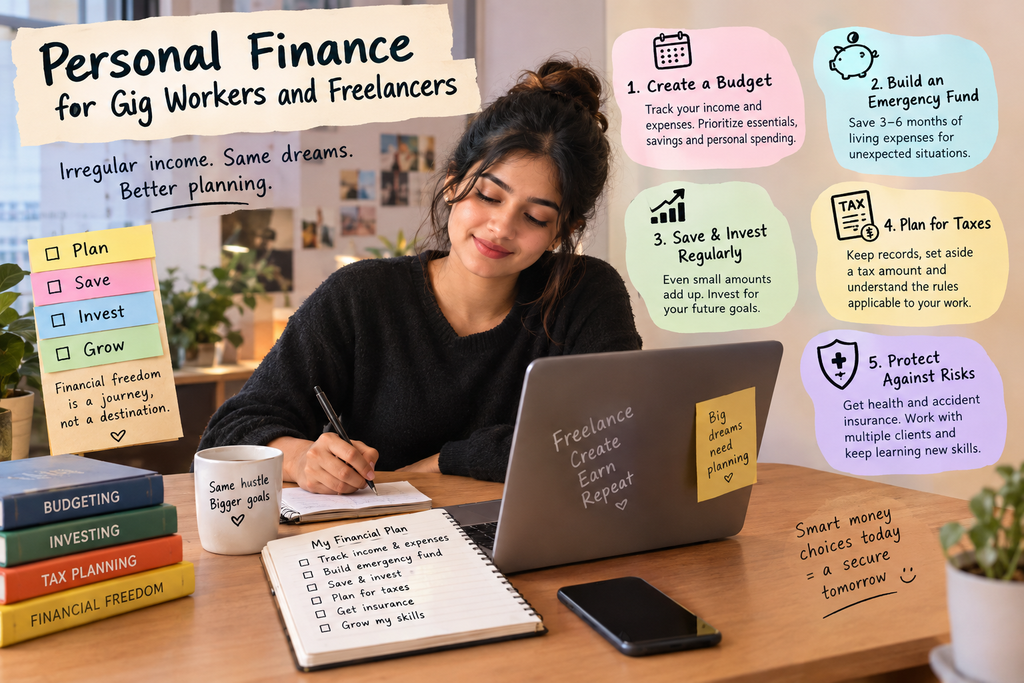
Source: ChatGpt
How is Personal Loan for Gig Workers from a Regular Personal Loan?
Personal Loan for Gig Workers and freelancers differ from Regular Personal Loan in the following ways:
– Interest rates are higher for Personal Loan for Gig Workers compared to Regular Personal Loan.
-Applicants for Personal Loan for Gig Workers are usually offered a loan amount than applicants for Regular Personal Loan.
-Applicants for Personal Loan for Gig Workers may not qualify for pre‑approved offers that are available for Regular Personal Loan.
-Lenders for Personal Loan for Gig Workers might ask for ITR and bank statements of salary slips that are required for Regular Personal Loan.
-Personal Loan for Gig Workers is difficult to obtain through public sector banks and top private banks that usually offer Regular Personal Loan.
-Personal Loan for Gig Workers has approval chances, through NBFCs and many fintechs but this comes at a higher interest rate compared to Regular Personal Loan.
Conclusion
Getting loans for freelancers takes more preparation than it does for people who have a regular salary.Getting loans is not impossible, for people who work on their own. The papers needed are not as hard as they seem once you have everything
Pick your lender based on who you’re. If your credit score is good and you have been working as a freelancer for years it is worth trying traditional banks. If you have not been freelancing for long or your money comes in amounts each month NBFCs and fintech lenders are better. The way of working that is based on jobs is now a normal way to earn money and lenders have mostly gotten used to that.
Reference:
[1] My Mudra, “Personal Loans for Freelancers and Gig Workers: What You Should Know.” [Online]. [Available]: Personal Loans for Freelancers and Gig Workers
[2] Paisabazaar, “Personal Loan for Gig Workers and Freelancers: How to Qualify in 2026.” [Online]. [Available]: Personal Loan for Freelancers & Gig Workers in India
AI Report:

Plagiarism Report:
Grammarly Report: