Learning how to improve CIBIL score can help you build a stronger credit profile and prepare for future borrowing needs. Your CIBIL Score is a three-digit number based on information in your credit history, including repayment behaviour and credit usage.
Paying bills on time, keeping credit utilisation under control, and checking your credit report for errors can support healthy credit habits. However, score changes depend on your individual credit profile and the information reported by lenders.
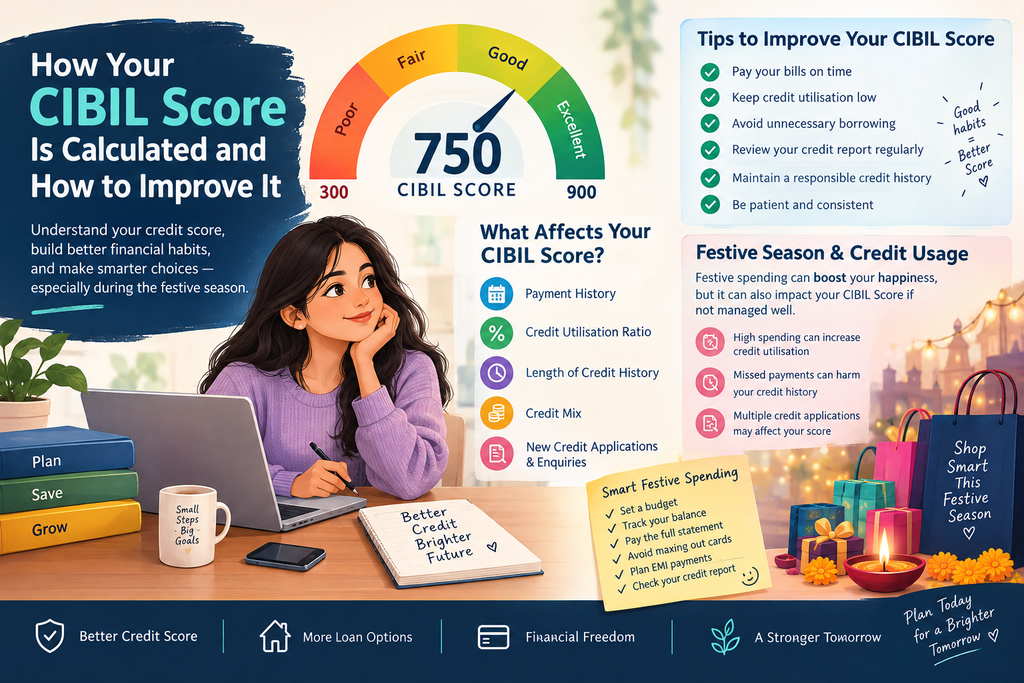
Source : Ai Generated Image
Your credit history is a crucial component of your financial life. Your credit profile can affect your chances of getting a personal loan, home loan or credit card. CIBIL Score is one of the most popular credit scores in India.
People often use the internet to find out what is meant by a Civil score and a credit score. Understanding these terms, how your CIBIL Score is derived, and how overspending during the festive season impacts it can lead you in making better financial decisions.
How to Improve CIBIL Score: Factors That Matter
A CIBIL Score is a 3-digit number between 300 and 900, which indicates your credit history and lenders’ perception of your creditworthiness. It is created by TransUnion CIBIL from the details present in your credit report comprising of your loan accounts, credit card activities, payment history, and any credit checks.
In general, the higher the CIBIL Score, the more likely you are to be able to get a loan or credit card approved. There are also other factors which lenders consider when making a decision, including income and other financial obligations, employment details, and their own requirements. A good score does not ensure approval. [1]
Another thing to keep in mind is that the CIBIL Score is a type of credit score. There are other credit information companies in India that also have their methods of calculating credit scores.
What Makes up a CIBIL Score?
There are a number of features of your credit behaviour that form your CIBIL Score. While the formula used for calculating the score is a proprietary one, TransUnion CIBIL has identified the following important factors that affect your score. [1][2]
1. Payment History
Your repayment record is among one of the most crucial signs of credit reliability. When you pay credit card bills and loan EMIs on time, you show that you can pay your bills on time.
Failing to make payments, paying late or defaulting on loans can have a negative influence on your score. If you have multiple bills to pay, be sure to avoid missing your credit card and loan payment due dates.
Tip: Make payment reminders or use automatic payments to help prevent missed payments.
2. Credit Utilisation Ratio
Credit utilisation is the percentage of available credit that you are using. A high utilisation ratio may be a negative indicator as it could mean that you are heavily depending on borrowed capital, which will affect your credit.
Say, for instance, that your credit card’s credit limit is ₹1,00,000 and you have a balance of ₹30,000. Then your CERT is 30%.
The formula is:
CUR = (Outstanding balance on the credit card/ Total limit of the credit card) ×100.
It is usually good to maintain a relatively low utilisation. The percentage isn’t a set rate that will give you a specific score, but if you don’t pay too much at all times, you will be able to keep your credit profile healthier.
3. Duration of Credit History
Your credit history is a reflection of how you’ve dealt with credit in the past. Working with a longer history of responsible borrowing and on-time repayment may be helpful.
Keeping an older credit card in good standing might not be a necessity, if you have one that you use properly. However, the fees and the usefulness of the card along with your capacity to run it securely should also influence whether or not you open it.
4. Credit Mix
Your credit mix is the variety of credit sources you have availed – secured loans and unsecured credit. There are several types of credit, such as a home loan (secured) or a personal loan or credit card (unsecured).
A well-rounded credit profile can be interpreted as a positive sign of a good credit history. But don’t fall for the idea of removing loans just to diversify your credit. It will matter more to borrow only when necessary and if it is possible to pay back the loan.
5. New Credit Applications & Enquiries
The lender might review your credit report when you apply for a loan or credit card. This may lead to a hard enquiry. Having multiple credit applications in a short amount of time can have a negative impact on your score, although the extent of the impact depends.
If you’re thinking about applying for new credit, compare the choices and only make the application when you really need it.
Here are some tips on how you can improve your CIBIL Score.
Earning a better CIBIL Score takes time and good financial practices. Here are a few things you can do to improve your credit profile.
Make payments on time. Try to pay off your credit card bills and loan EMIs on time. Pay off the full statement balance on the credit card whenever possible, rather than paying off the minimum amount due. The minimum payment might keep you from being considered “late” if you do pay it, but may also carry a significant penalty for late payment in the form of interest charges.
Ensure an appropriate credit utilisation ratio. Don’t use up 90% or more of your credit limit each month. If you have a lot of debt, focus on paying it off in your budget.
Avoid unnecessary borrowing. Avoid borrowing money or getting several credit cards for the sole purpose of boosting credit scores. All loans should be considered within your budget.
Check your credit report on a frequent basis. Ensure that the personal information, accounts, credit balances and payments in the CIBIL Report are correct, as there may be information that is not familiar to you or that has been reported incorrectly as an outstanding balance or over-due payment. If you have a mistake, dispute with the appropriate credit bureau or lender.
Have a good credit history. Take out loans from time to time and pay them back as per terms. You may be new to credit, but keep in mind that a good credit history will take time to build.
Be patient and consistent. Your score might not increase as soon as you pay off the balance on your debt or fix a mistake. Updates will be made on a reporting cycle and based on the credit bureau’s available information.
How Festive Credit Usage Impacts on your CIBIL Score
During festive events like Diwali, spending goes up on stuff like clothes, electronics, travel, gifts, home renovations, and celebrations. These purchases can be made easier with the help of credit cards, consumer durable loans, and Buy Now, Pay Later (BNPL) facilities. But if not carefully managed, festive debt can state a negative impact on one’s credit profile. [3]
High Festive Spending Can Increase Credit Utilisation
With the festive season underway, credit utilisation can be pushed up by high spending.
Suppose you have a credit card with the credit limit of ₹1,00,000. If you spend ₹70000 in festive shopping, and carry that balance, the amount of debt is ₹70000.If you spend ₹70,000 during festive shopping and carry that balance, the amount of debt is ₹70,000. You’re at a relatively high utilisation ratio of 70%.
If you plan on paying the balance off later, the high balance can still impact your score. The effect will vary based on your credit profile and timing of the lender reporting your credit account.
Missed Payments Can Damage Your Credit History
The cost of the festival can keep going after the festivities. Late-payment record and failure to pay credit card bills or EMI for loans may adversely affect the score if one goes over and pays more than the capacity.
If you make just the minimum payment, you aren’t paying no interest at all. These may be subject to interest and other applicable charges which can add to the amount you owe.
Some credit applications may negatively impact your credit score.
Festive offers may include incentives for consumers to apply for store cards, new credit cards, personal loans, or BNPL programs. Making multiple applications for credit products in a short time frame can create multiple enquiries, which could impact your score.
Always review the repayment terms, fees, interest and if it is a credit application, before accepting an offer.
The holiday season is the ideal time to practice good credit.The holiday season is an excellent time to practice good credit.
Smart spending can help you get a festive holiday shopping experience without hurting your credit profile with some good habits:
- Set a spending budget: Make sure you know what you can spend ahead of time, and don’t spend more than that.
- Monitor your card balance: See the remaining and unpaid transactions on your credit card all year long!
- If you can, pay off the statement balance: This prevents interest from rolling over and helps to prevent debt buildup.
- Don’t overspend with credit cards: Don’t overuse your credit cards so you don’t exceed the limit.
- Do not make unnecessary applications for credit: Shop around before taking out a new product of credit.
- Schedule EMI payments: Ensure that future EMIs are within your budget.
Analyze credit report post season: Re-examine credit repayment and account history for mistakes.
Keep in mind that high expenditure during the festive season doesn’t necessarily have a negative impact on your CIBIL Score. The important elements are the amount of credit you use, what the credit balance will be reported as, if you pay off on time, and your pattern of borrowing responsibly.
Conclusion
Your CIBIL Score is a significant aspect of your financial profile. It shows the lender your credit history and credit worthiness. You can keep your score up or help improve it if you pay bills on time, keep credit usage low, borrow responsibly and regularly check your credit report.
The holiday season can be very tempting with discounts and offers that are promising to be a great deal.It’s easy to become entangled in the discounts and offers that seem like a great deal during the holiday season. You can have a great time without the long-term financial burden from planning your purchases, avoiding unnecessary debt and making timely payments.
Good credit scores are established through regular practice. With knowledge of how credit score is calculated and responsible credit usage, you can enhance your financial health and ensure you are ready for future credit needs.
References
[1] TransUnion CIBIL, “All You Need to Know About Your CIBIL Score and How It Is Calculated.” [Online]. Available: https://www.cibil.com/blog/all-you-need-to-know-about-cibil-score
[2] TransUnion CIBIL, “Frequently Asked Credit Questions.” [Online]. Available: https://www.cibil.com/frequent-queries
[3] TransUnion CIBIL, “Stay Merry This Festive Season: Keep Your CIBIL Score Sparkling!” [Online]. Available: https://www.cibil.com/blog/stay-merry-this-festive-season-keep-your-cibil-score-sparkling