Trend: September 2026 GST filing deadlines range from the 10th through the 28th
GST Return Deadlines If you have ever sat with a GST portal tab open at 11:58 PM on the 20th, refreshing the page and praying it doesn’t time out, you already understand why GST deadlines matter more in practice than they do on paper. As someone tracking compliance data this semester, I found September particularly instructive, it packs almost every kind of GST return into one calendar month, which makes it a useful case study for understanding how the filing system is structured.
GST Return Deadlines are essential for businesses to manage their tax responsibilities and maintain GST compliance in India. Filing returns such as GSTR-1 and GSTR-3B on time helps businesses report sales, calculate tax liabilities, and claim eligible input tax credits. Understanding the important GST filing dates can help taxpayers avoid late fees, maintain accurate financial records, and ensure smooth business operations. Businesses should regularly check the official GST portal for updated due dates and filing requirements.
Why September Is a Crowded Month : GST Return Deadlines
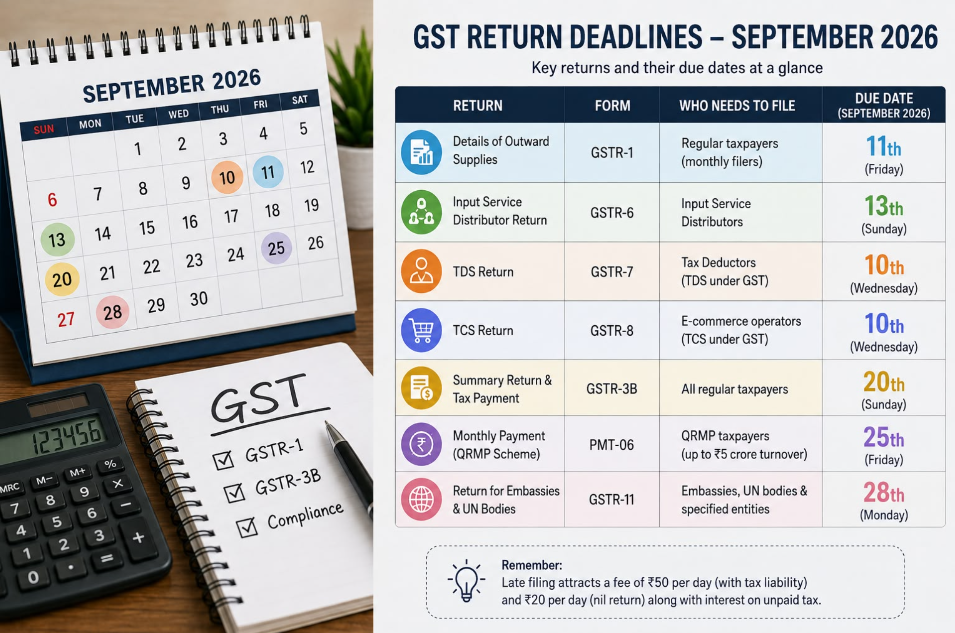
Unlike months with a single dominant deadline, September 2026 spreads obligations across the 10th through the 28th for forms including GSTR-1, GSTR-3B, GSTR-5, GSTR-6, GSTR-7, GSTR-8, and GSTR-11. This spread is not incidental; it reflects how GST separates taxpayers by role deductor, collector, non-resident, regular filer rather than applying one blanket date to everyone.GST Return Deadlines
GST Return Deadlines
GSTR-1: Reporting Sales First : GST Return Deadlines
GSTR-1 reports details of all outward supplies, or sales, and is due on the 11th of the following month for monthly filers. This return exists to give the tax department (and downstream buyers) visibility into what was sold before any tax liability is settled. For quarterly filers under the QRMP scheme, the equivalent submission, the Invoice Furnishing Facility (IFF) falls due around the 13th. GST Return Deadlines
GSTR-3B: Where the Tax Is Actually Paid : GST Return Deadlines
GSTR-3B is the summary return covering sales, purchases, tax liability, and Input Tax Credit claims, due on the 20th of the following month. This is the return most businesses treat as the real deadline, since it is where actual cash liability gets settled. In 2026, this date carries an added wrinkle worth noting for research purposes: both the 13th and 20th of September fall on a Sunday, and GST due dates do not automatically shift to the next working day, though the portal does accept filings over the weekend. The catch is banking infrastructure, not the portal high-value payment windows may not function on a Sunday, so any cash liability under GSTR-3B is best arranged a day or two early. GST Return Deadlines
The Supporting Cast: GSTR-5, 6, 7, 8, and 11: GST Return Deadlines
The other forms serve narrower audiences. GSTR-6, for Input Service Distributors, is due by the 13th, while GSTR-7 (TDS deductors) is due by the 10th. GSTR-7 and GSTR-8 share the 10th, though they apply to different TDS and TCS reporting obligations for e-commerce operators. GSTR-11, filed by embassies, UN bodies, and similarly notified entities claiming input tax refunds, falls due on the 28th. GST Return Deadlines
QRMP Filers Follow a Different Rhythm : GST Return Deadlines
Not everyone files monthly. Taxpayers with turnover up to ₹5 crore can opt into the Quarterly Return Monthly Payment scheme, filing GSTR-1 and GSTR-3B quarterly while still paying tax monthly via the PMT-06 challan. For August 2026, the second month of the July–September quarter, this PMT-06 payment is due on the 25th of September, even though the actual quarterly GSTR-3B doesn’t get filed until October.
Why This Matters Beyond Compliance : GST Return Deadlines
From a research standpoint, what stands out is how the deadline structure encodes the government’s priorities: sales data first (GSTR-1), tax settlement second (GSTR-3B), and niche categories filed around the edges. Missing any of these isn’t just an administrative slip late filing attracts a fee of ₹50 per day for returns with tax liability, and ₹20 per day for nil returns, alongside interest on unpaid tax.
Tracking a single busy month like this made the logic of GST’s return architecture click for me in a way that reading the statute never quite did.
GST Return Deadlines play an important role in helping businesses stay organized and meet their tax obligations without delays. Returns like GSTR-1 and GSTR-3B allow taxpayers to report outward supplies, declare tax liabilities, and manage eligible input tax credits. By tracking monthly and quarterly filing schedules, businesses can reduce the risk of penalties, improve financial planning, and maintain compliance with GST regulations. Regularly checking official GST updates ensures that businesses stay informed about changes in filing dates and requirement
References
[1] DMI Finance, “GST Return Due Dates 2026: Monthly, Quarterly & Annual Calendar,” 2026. Online Accounting Software for India | Zoho Books
[2] TaxReply, “GST Due Dates for September 2026,” 2026. GST Due Dates for September 2026: Complete Filing Calendar | GST Consultancy
[3] Ebizfiling, “GST Compliance Calendar September 2026: Due Dates,” 2026.GST compliance calendar September 2026: Due Dates | Ebizfiling
[4] TaxSlabs, “Tax Due Dates September 2026: Complete Expert Guide,” 2026. https://taxslabs.com/tax-due-dates-september-2026/
[5] Mark IT Solutions, “GST Return Due Date Finder 2026,” 2026.GST Return Due Date Finder 2026 | Mark IT
[6] Internal Link: Add Post ‹ Eve Consultancy — WordPress