
AUDITING THE HIDDEN OVERHEAD OF MASS UNIVERSITY DRIVES
| FIELD | DETAIL |
|---|---|
| Strategic Why | A rigorous CFO-facing financial model itemizing the invisible costs of high-volume mass hiring—interview drag, training bottlenecks, onboarding friction, and severances—contrasted with precision cohort hiring. |
| Reader Question | When you hire 500 graduates to retain only 120 after 18 months, have you factored the staggering hidden cost of engineering management into your campus ROI? |
| SEO Focus Keyword | campus recruitment ROI model |
| Funnel Hook | EveConsultancy invites enterprises to calculate their true recruitment costs with EveConsultancy’s financial model. |
MASS CAMPUS HIRING PIPELINE: THE HIDDEN COST LEAKAGE
FROM GROSS APPLICANT VOLUME TO DEGRADED OPERATIONAL VELOCITY
DESIGN PRINCIPLE: DIRECT CAMPUS SPEND<< SUNK ENGINEERING CAPACITY + MANAGEMENT OVERHEAD
FIGURE 1. The traditional volume hiring pipeline: where visible sourcing budgets mask compounding organizational friction.
THE OPTICAL ILLUSION OF COST-PER-HIRE
Standard campus recruitment metrics present a dangerous accounting illusion. When calculating Cost-Per-Hire (CPH), talent acquisition teams traditionally tally university placement fees, travel expenses, test vendor subscriptions, and branding collateral. Divided across several hundred offer letters, the resulting cost-per-hire looks deceptively low—often registered on executive dashboards at nominal rates of $1,500 to $3,500 per headcount.
Finance leaders are increasingly finding that these nominal cost-per-hire figures represent only the tip of an organizational iceberg. The direct costs visible to the recruitment budget fail to reflect the total operating expenditure required to convert an untrained graduate into an autonomously contributing engineer.
When enterprise leaders evaluate full-cycle campus programs, the real ledger balance reflects a starker reality: high gross volumes frequently mask severe operational drag, an extended negative-productivity runway, and compounding attrition penalties.
ITEMIZING THE INVISIBLE BALANCE SHEET: ENGINEERING DRAG
The heaviest hidden cost of mass university intake does not originate in Human Resources; it is extracted directly from product delivery schedules and core engineering velocity.
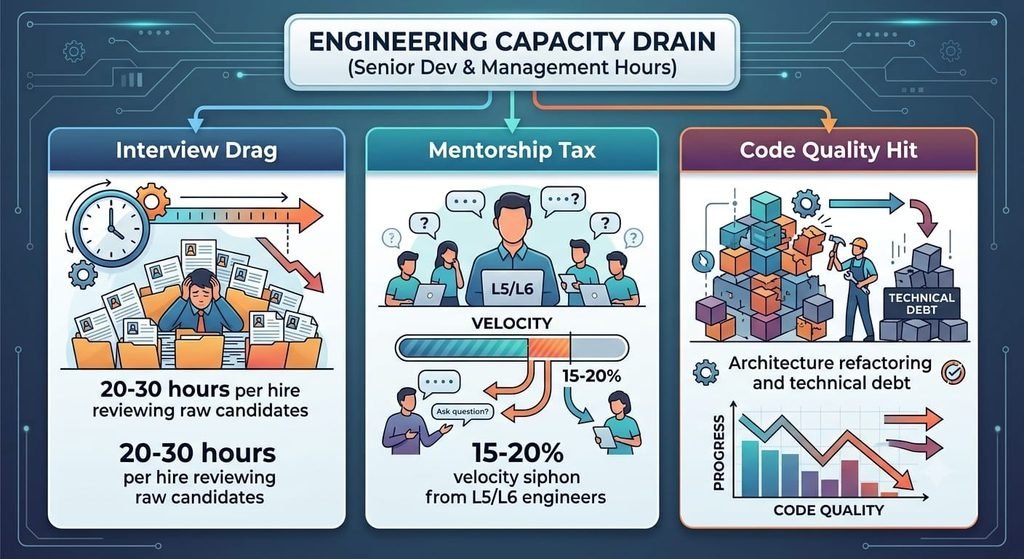
FIGURE 2. DECONSTRUCTION OF ENGINEERING MANAGEMENT DRAG INCURRED ACROSS HIGH-VOLUME GRADUATE ONBOARDING.
High-Value Technical Siphoning:
Preparing, administering, and reviewing technical rounds for thousands of unvetted candidates pulls Principal and Staff Engineers off delivery tracks. When an L6 engineer spends 25 hours a month conducting entry-level screens, the enterprise incurs an opportunity cost directly equivalent to stalled architectural initiatives and delayed release cycles.
The Mentorship Tax:
Mass cohorts inevitably deposit unevenly prepared talent across product pods. Senior engineers must routinely pivot from architecture design to basic remedial guidance, debugging fundamental syntax, Git workflows, and CI/CD pipelines. This mentorship tax regularly degrades sprint velocity across senior contributors by 15% to 25% over the recruit’s first two quarters.
Compounding Technical Debt:
Sub-optimized code authored by early-tenure hires—frequently passed through code reviews due to reviewer fatigue—introduces security vulnerabilities, test suite regressions, and long-term refactoring requirements that consume senior bandwidth quarters after initial deployment.
THE ATTRITION CASCADE AND THE 18-MONTH BREAK-EVEN TRAP
In software and technical disciplines, an entry-level professional does not achieve net-neutral productivity on day one. For the initial 90 to 180 days, an entry hire is an organizational net consumer of value:
Months 1–3: Value negative (high supervisory burden, foundational ramp-up, orientation).
Months 4–6: Value neutral (basic pull requests fulfilled, continuous oversight required).
Months 7–12: Marginally value positive (independent feature execution within bounded modules).
Months 13–18: Fully value positive (amortization of onboarding investment begins).
The core failure mode of mass university hiring lies in the mismatch between this break-even horizon and industry turnover patterns. When an enterprise hires 500 graduates and retains only 120 after 18 to 24 months, the math collapses:
True Cost Per Retained Engineer=
Direct Program Costs+Sunk Salary/Benefits of Departed+ Supervisory Drag+Replacement Expense
___________________________________________________________________________
Total Retained Productive Cohort
Rather than amortizing training costs across multi-year tenures, the organization repeatedly finances entry-level bootcamps for candidates who exit precisely when they cross into positive ROI territory. The departed 380 hires leave behind zero net return on the senior engineering time invested into them, while triggering replacement hiring cycles and operational handoff friction.
ENTERPRISE CAMPUS RECRUITMENT ROI SCORECARD
To expose and correct for hidden onboarding friction, enterprise CFOs and heads of talent are turning toward comprehensive scorecard frameworks that track performance beyond upfront administrative spend:
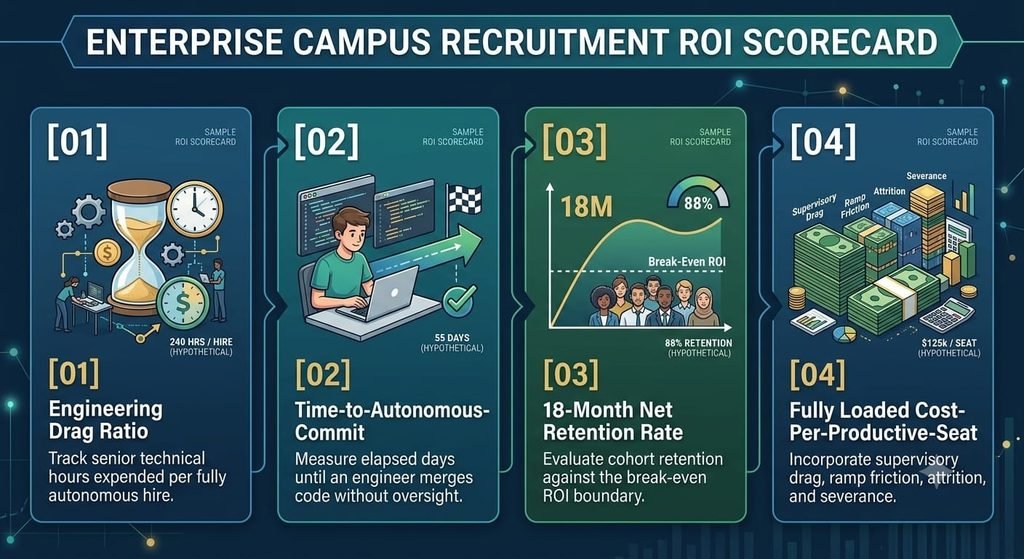
FIGURE 3. ENTERPRISE CAMPUS RECRUITMENT ROI SCORECARD.
THE STRATEGIC SHIFT: PRECISION COHORT DEPLOYMENT
Under a precision cohort structure, enterprises exchange speculative mass recruitment for pre-vetted, competency-mapped squads. Rather than absorbing 500 loosely screened candidates across fragmented business units, the enterprise procures calibrated, project-ready early talent specifically trained against the company’s internal architectures, tooling, and delivery paradigms.
Front-Loaded Screening:
Replacing generic standardized assessments with project-based, verifiable code mastery reduces technical screening drag for senior engineering teams by up to 80%.
Accelerated Time-to-Productivity:
Cohorts trained on enterprise-grade codebases arrive pre-conditioned for agile cadences, compressing the ramp-to-productivity timeline from 6 months down to 4 to 6 weeks.
Predictable Balance-Sheet Impact:
Fixed cohort operationalization allows finance leadership to establish capital predictability, transforming an unpredictable operational expense into an asset-building pipeline.
MONETIZATION HOOK: AUDITING YOUR REAL CAMPUS ROI
Most organizations lack the visibility required to measure the fully loaded cost of entry-level talent acquisition. Traditional accounting systems fragment interview hours across engineering cost centers, log training time as general payroll, and file attrition replacements as disconnected recruiting events.
EveConsultancy’s Campus Recruitment ROI Model gives CFOs, CTOs, and Talent Directors an end-to-end framework to audit this hidden overhead. By inputting current intake numbers, interview panel structures, senior engineer compensation, ramp timelines, and cohort retention rates, enterprises can clearly isolate:
- The exact dollar value of engineering time lost to campus screening and remediation.
- The real, fully loaded cost of every engineer who departs before the 18-month mark.
- The direct cost-saving potential of shifting from broad campus drives to managed precision pods.
TRANSITIONING TO CAPITAL-EFFICIENT EARLY TALENT ACQUISITION
Mass university drives were conceived for an era when enterprise technology stacks were homogeneous, onboarding requirements were general, and graduates remained at companies for five to ten years. In the modern engineering landscape, where software complexity is high and talent mobility is rapid, the volume-first model functions as an unmonitored capital leak.
Sustainable campus talent strategy is an exercise in capital allocation. By auditing the invisible costs of engineering management drag, ramp lag, and early turnover, forward-thinking enterprises are leaving behind indiscriminate campus drives in favor of precision cohort pipelines that protect senior bandwidth and deliver predictable returns.
REFERENCES
[1] Society for Human Resource Management (SHRM), “The Real Costs of Recruitment and Mis-Hires in Enterprise Teams,” SHRM Research Reports, 2024.
[2] Harvard Business Review, “The True Cost of a Bad Hire: Management Friction, Velocity Drag, and Hidden Capital Loss,” HBR Talent Strategy, 2023.
[3] Deloitte Insights, “Rethinking Campus Talent: From Volume-Based Recruiting to Targeted Capability Acquisition,” Global Human Capital Trends, 2024.
[4] International Labour Organization (ILO), “Quality Apprenticeships and Enterprise-Driven Work Transitions,” ILO Publications, 2024.
[5] AI image references from Gemini.