
Venture Debt vs Equity for Startups
in a Cautious Funding Market
How founders can choose capital, protect ownership, and manage repayment risk
| KEY TAKEAWAY Venture debt can extend runway without the same immediate ownership dilution as an equity round, but it adds fixed repayment obligations. Equity has no scheduled loan repayment, but founders give investors ownership and often governance rights. In a market where money is flowing into fewer, larger rounds, the right choice depends on business maturity, cash-flow visibility, runway, and the specific milestone the capital will fund. |
7 Crucial Factors to Compare Venture Debt vs Equity Financing
Indian startup funding data points to a more selective market. Between January 1 and October 15, 2026, Indian tech startups raised about US$10.94 billion across 1,253 equity rounds, compared with US$10.21 billion across 1,982 rounds in the comparable 2025 period. The total value rose about 7%, while round count fell roughly 37%, signalling that capital was concentrated in fewer deals. [1]
At the same time, venture debt is becoming a more established funding option. A report on India’s venture debt market put 2025 deployment at US$1.3 billion across 187 startups, up from US$80 million in 2018. [2] This does not mean debt is a substitute for equity in every case. Debt is usually best for a company with institutional backing, a credible repayment path, and a defined use for the money; equity is generally better suited to uncertain, long-horizon investment where repayment would be risky.
The practical lesson: do not choose debt simply to avoid dilution, and do not raise equity simply because it is familiar. Compare the total cost, risk, control implications, timing, covenants, and the milestones each funding option can realistically deliver.
The funding backdrop: fewer rounds, larger cheques
The cautious funding environment is visible in the number of transactions. Tracxn data reported by Business Standard shows 1,253 Indian startup equity rounds from January to October 15, 2026, down from 1,982 in the comparable period in 2025. Average equity funding per round rose from about US$5.1 million to roughly US$8.6 million. [1] The increase in average deal size should not be read as easier access for all founders: the market can become more competitive for companies without traction or a clear path to scale.

Chart 1. Reported equity funding rounds, Jan–Oct 15. Source: Business Standard/Tracxn. [1]
This environment makes capital planning more important. A founder may need to extend runway until a stronger valuation, fund inventory before collections arrive, purchase equipment, or bridge a predictable gap between milestones. The instrument should match the problem rather than the headline market trend.
What is venture debt?
Venture debt is a loan designed for venture-backed startups, often used alongside equity rather than instead of it. Depending on the lender and transaction, it may include interest, fees, a defined repayment schedule, security over specified assets, financial or operational covenants, and sometimes warrants that give the lender a small potential equity upside. Terms vary materially by lender and company.
Common uses include:
- Extending runway while the company works toward a near-term milestone.
- Financing working capital when customer payments arrive after operating expenses.
- Buying equipment or funding a planned expansion with a reasonably visible return.
- Bridging a short timing gap between a signed equity round or expected cash receipts.
- Funding growth after a company has already demonstrated repeatable demand.
Venture debt is not free money and is not automatically non-dilutive in every structure. Warrants, conversion features, or other contractual rights may create some dilution, while interest and fees increase the total cost.
What is equity financing?
Equity financing means selling shares or another ownership interest to investors in exchange for capital. Investors generally expect the company to grow in value and eventually provide a return through an acquisition, public listing, secondary sale, or another liquidity event. Equity typically has no scheduled principal repayment, which can make it more suitable when revenue and cash flows are uncertain.
Common uses include:
- Research and development with uncertain timing or commercial outcomes.
- Hiring and market expansion before revenue becomes predictable.
- Building a new product, entering a new geography, or testing product-market fit.
- Funding capital-intensive plans where debt repayments would constrain the business.
- Strengthening the balance sheet before taking on debt.
Venture debt vs equity financing: side-by-side
| Factor | Venture debt | Equity financing |
| Ownership dilution | Usually lower immediate dilution; warrants or equity-linked terms may apply | Investors receive ownership; dilution depends on valuation and deal terms |
| Repayment | Interest and principal must be repaid on schedule | No routine loan repayment |
| Cash-flow pressure | Adds fixed obligations and possible covenants | Less direct repayment pressure, but investors expect value creation |
| Best fit | More mature venture-backed company with a defined use and credible repayment path | High-uncertainty growth, product development, or long-term investment |
| Speed and process | Can be faster for eligible borrowers, but diligence and security terms matter | Can take time for valuation, investor diligence, and negotiation |
| Control and rights | Lender protections, covenants, security, and sometimes warrants | Board, information, consent, liquidation preference, and other investor rights may apply |
| Main risk | Repayment strain, default, covenant breach, reduced flexibility | Ownership dilution, valuation pressure, governance complexity |
| Typical purpose | Runway extension, working capital, milestone bridge, selected capex | Build the business, fund uncertain growth, enter new markets |
Chart 2. India’s venture debt market has grown

Chart 2. Reported venture debt deployment grew from US$0.08 billion in 2018 to US$1.3 billion in 2025. Source: Business Standard, citing Stride Ventures’ Global Private Debt Report 2026. [2]
The trend indicates wider use of venture debt, but market growth is not a recommendation to borrow. The 2025 report also recorded 187 deals, with activity concentrated in Series A and B as well as later-stage companies. Eligibility and pricing depend on the startup’s backing, financial position, sector, and lender appetite. [2]
How founders can decide

Diagram 1. A simplified decision framework. Use it as a discussion guide—not as a substitute for reviewing the actual term sheet and repayment model.
Choose venture debt when…
- You have a specific, time-bound use for the capital and can explain how it creates value.
- Revenue, gross margin, collections, or a committed next financing event give you a credible repayment path.
- The debt can extend runway to a meaningful milestone without assuming a future equity round is guaranteed.
- You have modelled downside cases, including slower growth, delayed fundraising, and lower-than-expected collections.
- The covenants, security, fees, maturity date, and any warrants are acceptable under both base and downside scenarios.
Choose equity financing when…
- The business model is still being validated and cash flow is difficult to forecast.
- Capital will fund long-term product development, research, market creation, or a multi-year expansion.
- The company needs flexibility because the timing of returns is uncertain.
- Debt repayments would reduce essential spending on product, customer support, or sales.
- A new equity investor brings useful distribution, expertise, credibility, or strategic relationships as well as money.
A blended strategy: debt and equity can work together
Some startups use equity to finance high-uncertainty growth and debt for a narrower, more predictable requirement. For example, equity may fund product development and expansion, while a smaller debt facility funds inventory or receivables after demand has been proven. This can reduce the amount of equity needed immediately, but only if debt service remains manageable. A mixed capital structure can also create complexity, so founders should map repayment dates, covenants, investor consent rights, and downside scenarios together.
Worked example: compare the purpose, not just the price
Imagine a startup needs ₹5 crore. Option A is equity at a negotiated valuation; the company gives up a percentage of ownership and accepts investor rights, but has no scheduled loan instalments. Option B is venture debt; the company avoids most immediate ownership dilution but must repay principal, interest, and fees on time. The right comparison is not just “how much equity do we lose?” versus “what is the interest rate?” It is the expected value of dilution versus the risk-adjusted cost of repayments, covenants, fees, warrants, and reduced flexibility. No option can be declared better without the actual valuation, loan terms, cash-flow forecast, and downside case.
Founder checklist before signing
- Prepare a monthly cash-flow forecast covering at least the loan term and a downside scenario.
- Calculate runway after financing costs, fees, and planned repayments—not just after receiving the money.
- Confirm all covenants, security, guarantees, prepayment fees, default triggers, and lender remedies with qualified advisers.
- For equity, review valuation, dilution on a fully diluted basis, liquidation preferences, board rights, vetoes, and future fundraising implications.
- Stress-test delayed fundraising, slower sales, higher churn, late customer payments, and unexpected costs.
- Tie the capital to specific milestones and define what happens if those milestones are missed.
- Compare multiple credible offers and assess the investor or lender’s reputation, flexibility, and behaviour during difficult periods.
Conclusion
In a cautious funding market, founders should treat financing as a strategic design choice. Recent data shows equity capital concentrating in fewer, larger deals, while India’s venture debt market has expanded over time. The two instruments solve different problems: equity absorbs uncertainty and supports long-horizon growth, while venture debt can extend runway or finance a defined need when repayment is credible. The strongest choice is the one that preserves the company’s ability to operate through a downside case—not simply the one that minimises dilution today.
Founders can choose the right funding option by applying startup fundraising strategies that align capital requirements, business milestones, cash flow, and long-term ownership goals.
SEO details
Primary keyword: venture debt
Secondary keyword: equity financing
Suggested meta description: Compare venture debt vs equity financing for startups in a cautious funding market. Learn costs, dilution, repayment risks, and how founders can choose.
Suggested URL slug: venture-debt-vs-equity-financing-startups
Suggested image alt text: Diagram comparing venture debt and equity financing decisions for startups.
Reports
The report screenshots below are reproduced from the reference image you supplied, to match the requested layout. They are examples from your image, not newly generated test results for this article. Run the final article through the relevant services and replace these screenshots with current results if you need to report verified scores.
• GRAMMARLY —
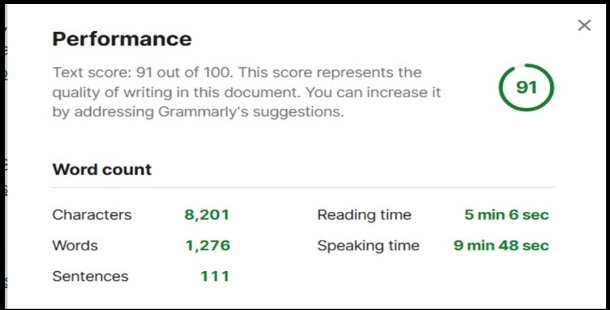
Reference image displays: text score 91/100; 8,201 characters; 1,276 words; 111 sentences; reading time 5 min 6 sec; speaking time 9 min 48 sec. These values are not verified for this article.
• Plagiarism Report —

Reference image displays: 3% exact match, 0% partial match, and 97% unique/original content. Run the final article through a plagiarism checker to obtain its actual result.
• AI Detection Report —

Reference image displays 4.5% AI GPT and the label “Your Text is Human written.” AI detectors can produce false positives and do not conclusively establish authorship.
References
- Business Standard, “India’s VC funding for startups stays flat at $10.9 billion in 2026 so far” (October 18, 2026). Tracxn data on funding rounds and average equity cheque sizes. — https://www.business-standard.com/amp/companies/news/companies-start-ups-india-vc-funding-stagnates-at-10-billion-startups-for-three-years-126101800347_1.html
- Business Standard, “Indian startups raise $1.3 billion in venture debt in 2025: Report” (April 8, 2026). Figures from Stride Ventures’ Global Private Debt Report 2026. — https://www.business-standard.com/markets/news/indian-startups-raised-1-3-billion-venture-debt-2025-report-126040800934_1.html
- Outlook Business, “Private Debt Shifting From Bridge Financing to Core Capital Layer in India” (April 10, 2026). Discussion of venture debt and growth credit use cases. — https://www.outlookbusiness.com/corporate/private-debt-shifting-from-bridge-financing-to-core-capital-layer-in-india
- The Economic Times, “Deeptech sparks new hope as venture debt deals stay flat in H1” (2026). Overview of venture debt structure and typical borrower profile. — https://economictimes.indiatimes.com/tech/startups/deeptech-sparks-new-hope-as-venture-debt-deals-stay-flat-in-h1/articleshow/132222486.cms
Editorial note: Figures are reported-source data and may differ by provider, coverage window, and definitions. This article is for general information and is not financial, legal, tax, or investment advice.