7 Essential IPO Governance Checklist Steps for Late-Stage Startups
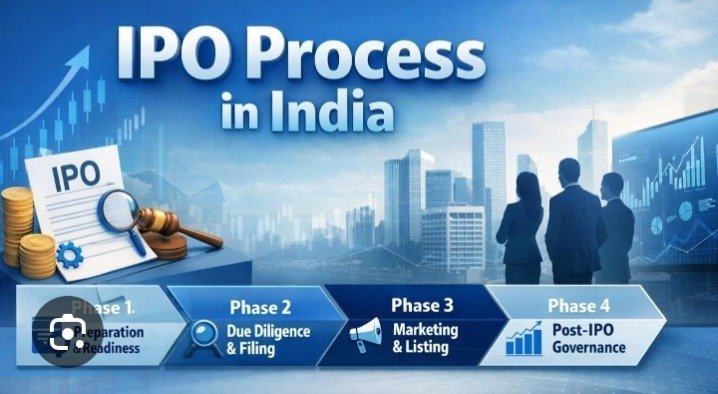
Transitioning from a private late-stage startup to a publicly listed enterprise is one of the most significant milestones in a company’s growth journey. While scaling revenue and expanding market share remain critical, the success of an Initial Public Offering (IPO) heavily relies on institutional corporate governance, regulatory transparency, and internal compliance controls. Capital market regulators like SEBI mandate strict compliance standards that require late-stage startups to start preparing years before filing their Draft Red Herring Prospectus (DRHP).
| Governance Pillar | Key Focus Area | Public Readiness Requirement |
|---|---|---|
| Board Structure | Independent Directors & Committees | SEBI compliant board composition & audit committee |
| Financial Reporting | Ind AS Accounting & Financial Audits | 3-5 years of clean, restated financial statements |
| Internal Controls | Risk Oversight & ICFR Framework | System-driven accounting and fraud detection mechanisms |
| Disclosure & ESG | ESG Reporting & Stakeholder Relations | Investor relations team & transparent ESG policies |
Understanding Corporate Governance in Late-Stage Startups
Corporate governance is the system of rules, practices, and processes by which a firm is directed and controlled. In early-stage startups, decision-making is often centralized around founders and key investors. However, late-stage ventures preparing for the public equity market must pivot to institutional governance, ensuring that minority shareholder interests are protected, board discussions are recorded transparently, and decision-making adheres to legal norms.
Comprehensive Pre-IPO Governance Checklist
1. Reconstructing Board Composition & Oversight
- Onboarding Independent Directors: Public companies require a balanced board comprising qualified independent directors with expertise in finance, risk management, and legal compliance.
- Forming Statutory Board Committees: Establishing mandatory board committees including the Audit Committee, Nomination and Remuneration Committee (NRC), and Stakeholder Relationship Committee.
- Promoting Board Diversity: Ensuring proper board representation, including independent female directors as mandated by regulatory guidelines.
2. Upgrading Financial Audits and Reporting Standards
- Transitioning to Ind AS: Reconciling historical financial reporting with Indian Accounting Standards (Ind AS) to meet public market standards.
- Multi-Year Financial Restatement: Preparing restated financial disclosures for at least the preceding 3–5 financial years as required for DRHP filings.
- Appointing Institutional Statutory Auditors: Transitioning to reputed, independent auditing firms to ensure credibility during due diligence.
3. Internal Financial Controls (IFC) and Risk Management
- Internal Controls Over Financial Reporting (ICFR): Designing automated workflows to eliminate manual overrides in key accounting operations.
- Whistleblower Policy & Fraud Prevention: Setting up an active, independent whistleblower mechanism directly monitored by the Audit Committee.
- Enterprise Risk Management (ERM): Identifying regulatory, operational, and macroeconomic risks and defining clear mitigation strategies.
Strategic Benefits of Early Governance Preparation
Preparing early for IPO governance helps startups avoid last-minute valuation discounts and filing delays caused by regulatory queries. Companies with institutional-grade governance inspire greater confidence among institutional investors, leading to stronger demand during the IPO book-building process.
Conclusion
Preparing for an IPO is not merely a transaction; it is a fundamental transformation of a company’s operational DNA. Late-stage founders who treat corporate governance as a core strategic asset rather than a regulatory burden position their startups for long-term public market success and sustainable value creation.
Founders can align their IPO preparation with startup fundraising strategies that prioritize investor confidence, financial transparency, sustainable growth, and strong corporate governance.
References & Further Reading
- SEBI (Listing Obligations and Disclosure Requirements) Regulations & DRHP Guidelines: https://www.sebi.gov.in
- Inc42 Startup Funding & Governance Trends Report: https://inc42.com
Reports :-
Grammerly report

Ai report

Plagiarism report