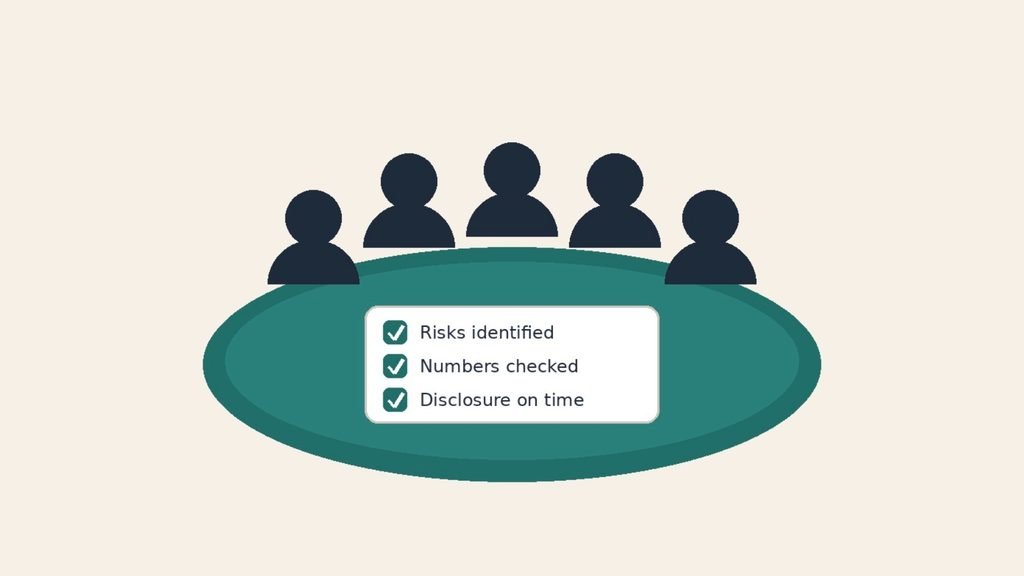
(Image Source: Claude, AI-generated illustration)
ESG governance helps company boards oversee sustainability risks, verify disclosures, strengthen accountability and connect environmental and social priorities with business strategy.
Imagine a mid-sized listed manufacturer, call it Kaveri Components. Two days before the filing date, the board receives a 90-page sustainability report. Most directors skim it. One asks where the emissions figure came from, and nobody in the room can say. Boards don’t enjoy thinking about moments like that, but ESG governance is shifting from a communications topic to something directors answer for. The questions at Kaveri’s table are the ones regulators and investors are starting to ask.
Why Directors Can’t Delegate This
Kaveri is among India’s 1,000 largest listed companies by market value, so SEBI’s sustainability reporting format, the BRSR, applies to it. Inside that format sits a smaller group of indicators, the BRSR Core, and these are meant to be checked by someone outside the company. That check arrives in stages, biggest names first. By FY 2026-27, the year that began on 1 April 2026, the whole top 1,000 are in. Then there’s a duty that predates all of this. The Companies Act has long told directors to look beyond shareholders and keep staff, the community and the environment in view. Put the two together and “the sustainability team handled it” won’t carry much weight when a figure is wrong.
What Directors Should Oversee
Deloitte’s note on the BRSR Core is clear about where responsibility ends up: with the board. Directors answer for whether the company follows the disclosure and assurance rules, and for whether the ESG claims it makes are accurate. Three practical checks follow from that. Is there a process for catching ESG risks? Is there a paper trail behind every reported number? And does the disclosure match what SEBI actually asks for?
How Kaveri’s Board Could Do It
A new committee isn’t essential. Some boards give the job to an existing risk or stakeholder committee, and that works. What makes the difference is rhythm. Each quarter the committee receives a one-page dashboard covering the few ESG metrics that really move Kaveri’s business. Then directors press on each number. Where does it originate? Who verified it? And if it moved since last year, what moved it? Fuzzy answers tell the board something useful.
Tie It to the Business Plan
ESG shouldn’t live in a separate box. Say water is scarce near Kaveri’s main plant. That’s a supply risk, and it deserves the same airtime as capital spending and insurance. Boards that ask how ESG risks change the plan are governing. Boards that merely approve the report are filing paperwork.
Don’t Wait for the Assurance Year
The timeline is worth a calendar reminder. FY 2026-27 is when plenty of top-1,000 companies meet an outside check on their BRSR Core data for the first time, so an independent party will test the trail behind each number. In March 2025 SEBI loosened the wording from assurance only to assessment or assurance, and made value chain reporting voluntary for the top 250. Easier wording won’t make the data easier to collect. Better to start tracing figures early than to scramble at the deadline.
Slip-Ups Worth Avoiding
Some slips repeat. The report arrives the night before filing and everyone calls it a review. ESG gets parked with the CSR head. Metrics get treated like marketing copy, though they’re edging closer to financial data. And a quiet director is taken for an overseeing one.
Conclusion
Good ESG governance doesn’t need directors who can do carbon accounting. It needs directors who press for a straight answer early, while it can still change something. Kaveri’s board could try the dashboard routine at its next meeting. For anything legal, rely on the SEBI circulars and a company secretary, not an article like this one.
Effective ESG governance also depends on tracking social ESG metrics, including workforce diversity, employee wellbeing and human rights performance.
References
[1] “BRSR in 2026: All You Need to Know About SEBI’s Business Responsibility and Sustainability Reporting,” GreenSutra. [Online]. Available: https://greensutra.in/news/brsr-all-you-need-to-know/
[2] “Business Responsibility and Sustainability Report Core,” Deloitte India, Nov. 2023. [Online]. Available: https://www.deloitte.com/content/dam/Deloitte/in/Documents/audit/in-audit-Business-Responsibility-and-Sustainability-Report-Core_10-11-2023.pdf
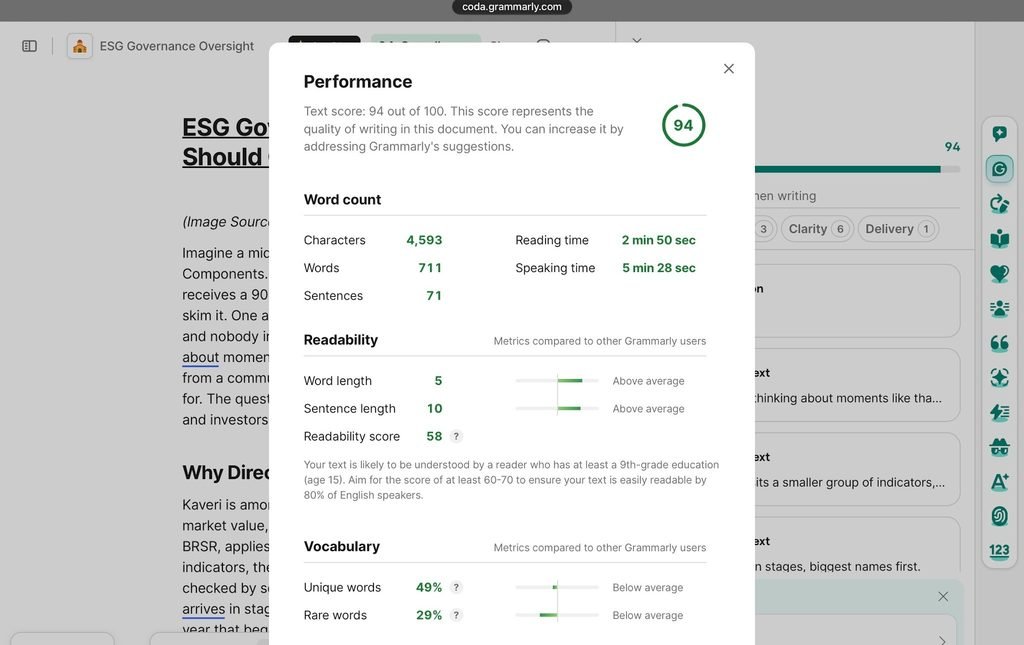
1. Proofreading Report
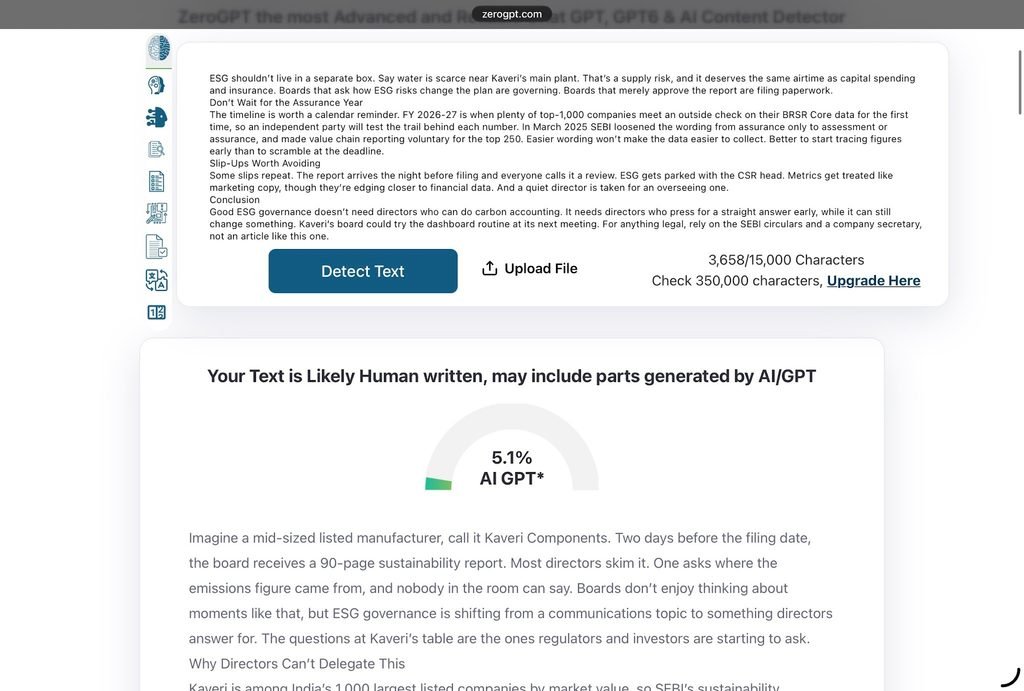
2. AI Detection Report
3. Plagiarism Report