Income Tax and GST notices require timely attention, accurate documentation, and a clear response to help taxpayers address discrepancies and meet compliance requirements.
Getting an Income Tax notice or a Goods and Services Tax (GST) notice can cause stress, for individuals and businesses.. A notice does not always mean that a taxpayer has made a mistake. It might just ask for details, an explanation or a fix, for a mistake. Knowing how to reply can stop extra fines and legal problems from happening.
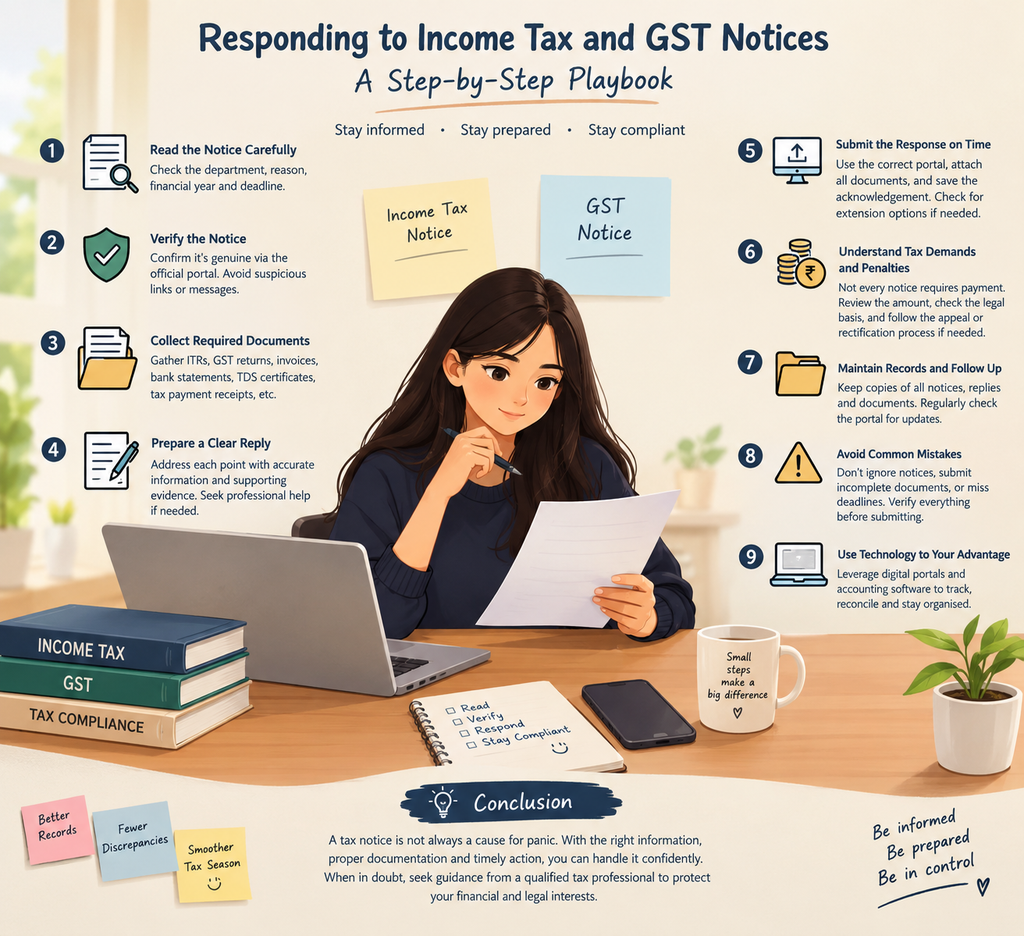
1. Income Tax and GST Notices: Seven Steps to Prepare and Submit a Reply
Begin by looking at the department that sent the notice the reason why it was sent the financial year or tax period that it is about and the date by which a response is needed. Income Tax notices can be about differences in the income that was reported, the deductions that were claimed or the taxes that were paid. GST notices can be about problems with returns, input tax credit or taxes that have not been paid.
2. Verify the Notice
Before sharing details or making any payments make sure the notice is real. You can check Income Tax notices on the Income Tax e-Filing portal. For GST-related messages go to the GST portal to review them. Don’t click on any links that seem strange or come from sources. Stay careful. Avoid replying to messages that look suspicious.
3. Collect the Required Documents
Gather documents that support your explanation. These may include Income Tax Returns, GST returns, bank statements, invoices, TDS certificates, tax payment receipts, and input tax credit records. Keeping documents organised makes it easier to identify discrepancies and prepare an accurate response.
4. Prepare a Clear Reply
Understand the issue raised and respond to each point with factual explanations and supporting evidence. For example, if a notice identifies a mismatch in reported income, explain the difference and provide relevant records. If an error has occurred, consider the appropriate procedure for correcting it. For complicated cases, consulting a chartered accountant or qualified tax professional can be helpful.
5. Submit the Response on Time
Submit your reply through the appropriate official portal, following the instructions mentioned in the notice. Check that all required documents are attached before submission. Save the acknowledgement number and a copy of your response for future reference. If you need more time, check whether an extension is available under the applicable procedure.
6. Understand Tax Demands and Penalties
Not every notice requires immediate payment. Some request information, while others communicate a tax demand or proposed adjustment. Review the amount and the legal basis before paying. If you believe a demand is incorrect, check whether rectification or an appeal is available and follow the applicable deadline.
7. Maintain Records and Follow Up
Continue checking the relevant portal for further communications. Keep copies of notices, replies, and supporting documents. Businesses should regularly reconcile GST returns and invoices, while individuals should verify their income details and tax information before filing returns to reduce future discrepancies.
Source:ChatGpt
Common Mistakes to Avoid
One of the biggest mistakes taxpayers make is ignoring a notice because they believe it is minor or incorrect. Delaying a response can lead to additional complications. Other common mistakes include submitting incomplete documents, providing incorrect information, missing deadlines, and making payments without verifying the demand. Taxpayers should carefully review every detail before submitting a reply and keep proof of all communication with the department.
How Technology Can Simplify Tax Compliance
Digital tax portals have made it easier to track notices, upload documents, submit replies, and check the status of proceedings. Businesses can also use accounting software to maintain invoices, reconcile GST returns, and identify discrepancies early. Regular digital record-keeping reduces paperwork and helps taxpayers respond more efficiently when a notice arrives.
Conclusion
Responding to Income Tax and GST notices requires timely action, accurate information, and proper documentation. By verifying the notice, understanding the issue, preparing a clear reply, and meeting deadlines, taxpayers can manage the process more confidently. Ignoring a genuine notice can create further complications, so seeking professional advice when necessary is always a sensible step.
Following a GST compliance checklist can help businesses maintain accurate records, identify discrepancies early, and respond more efficiently to tax-related queries.
AI Report:
Income Tax e-Filing Portal
Link text: Income Tax e-Filing portal
URL: https://www.incometax.gov.in/Copy URL
GST Portal
Link text: official GST portal
URL: https://www.gst.gov.in/Copy URL
Central Board of Indirect Taxes and Customs
Link text: official GST rules and guidance
URL: https://cbic-gst.gov.in/Copy URL

Plagiarism Report:

Grammarly report: