GST Compliance Selling products online has become easier than ever. A seller in Bhubaneswar can list products on Amazon or Flipkart and receive orders from Chennai, Delhi, and Mumbai.While online platforms help businesses reach more customers, they also bring certain responsibilities, including GST compliance.
GST rules for online sellers can be different from those for local shops.Understanding these rules helps sellers avoid penalties and manage their businesses smoothly.
GST Compliance: Who Needs to Register for GST?
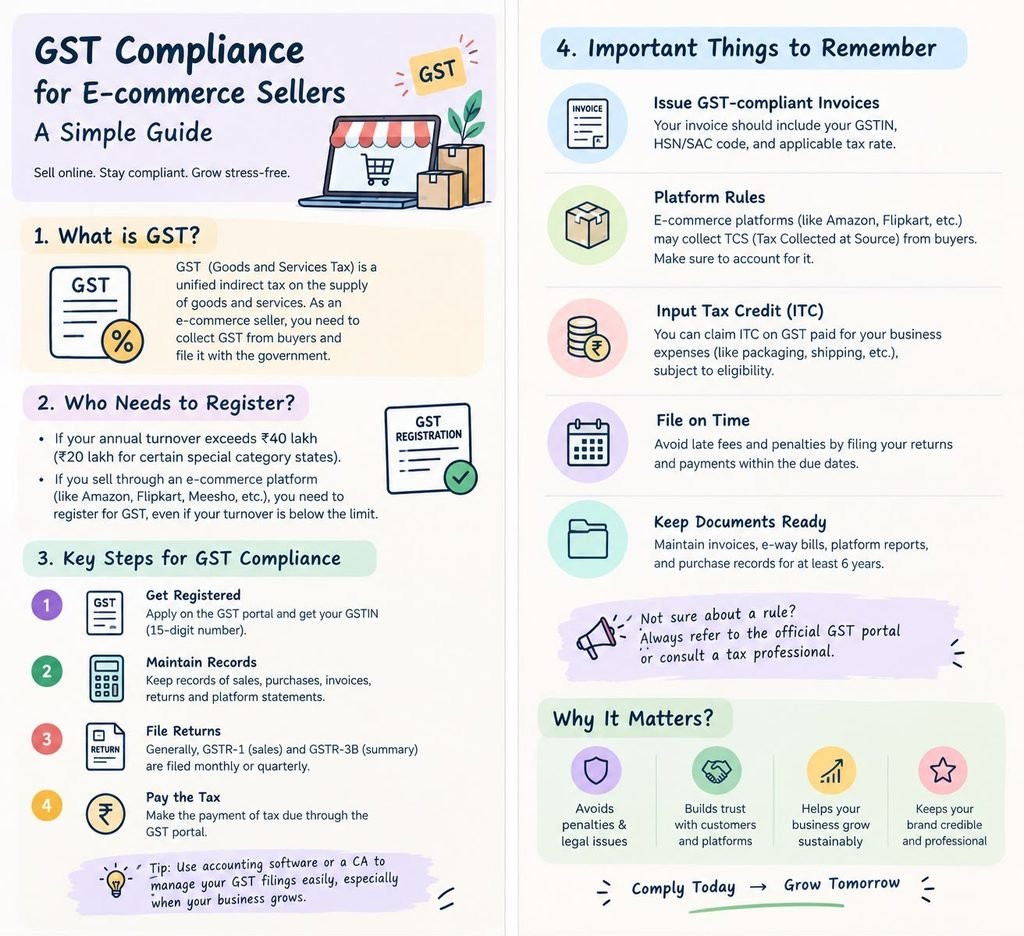
GST registration is an important step for e-commerce sellers. Under the usual GST rules, businesses can have a turnover limit before registration becomes necessary.However, special rules apply to sellers using e-commerce platforms. Many sellers selling goods through platforms such as Amazon, Flipkart, Meesho, and Myntra generally need GST registration. However, certain eligible small sellers may sell without GST registration if they meet specific conditions introduced for e-commerce sales.These include limits on turnover and restrictions on interstate sales.
For example, a person selling handmade jewellery online may assume that a small business does not need GST registration. But if the seller does not understand the applicable rules, they may face compliance problems later. The main lesson is to check the GST registration requirements before starting an online business.
GST Compliance: How Does Tax Collection at Source (TCS) Work?
Tax Collection at Source, or TCS, is a system under which e-commerce operators collect a small amount of tax on certain sales made through their platforms. For example, if you sell products worth ₹10,000 through an e-commerce platform, the platform may deduct TCS according to the applicable rate before transferring your payment. This amount is reported to the GST system and can generally be claimed as credit in your electronic cash ledger, subject to the applicable rules. It is not simply an extra expense for the seller. Sellers should regularly check their GST accounts and compare the TCS details reported by the platform with their own sales records.
GST Compliance: Filing GST Returns
Registered e-commerce sellers must file the GST returns that apply to their business.
Two important returns are:
* GSTR-1: Used to report sales and other outward supplies.
* GSTR-3B: Used to report tax liability and claim eligible input tax credits.
The information reported by the seller should match the relevant details reported by the e-commerce platform. Differences in sales figures or tax details can lead to questions from the GST department.
Accounting software such as ClearTax, Zoho Books, and Tally can help sellers organise sales records, track taxes, and prepare returns more easily.
GST Compliance: Input Tax Credit for Online Sellers
Input Tax Credit (ITC) allows eligible businesses to reduce their GST liability using the GST paid on qualifying business purchases.For example, an online seller may pay GST on packaging materials, business services, or goods purchased for resale.If the purchases meet the required conditions, the seller may be able to claim this tax as credit. Claiming eligible input tax credit helps reduce the amount of GST a business needs to pay.
Sellers should keep proper invoices and check the relevant GST rules before claiming credits.
GST Compliance: The Bottom Line
E-commerce platforms have made it easier for people to start businesses without opening physical shops. However, sellers must also understand their GST responsibilities. Check whether GST registration is required, understand how TCS works, file the applicable returns on time, and claim eligible input tax credits. Keeping accurate records and using accounting software can make the process much easier.
With the right knowledge and regular compliance, online sellers can avoid many common mistakes and focus on growing their businesses.
Reference-
[1] “information about GSTR-1 and reporting sales made through e-commerce platforms.”, [online]
Available: https://tutorial.gst.gov.in/userguide/returns/GSTR_1.htm
[2] “about Central Goods and Services Tax Act, 2017, including provisions relating to registration and e-commerce operators”[online]
Available: https://cbic-gst.gov.in/hindi/CGST-bill-e.html
[3] Internal Link: Add Post ‹ Eve Consultancy — WordPress