Topic: Whistleblower Protection
Preface
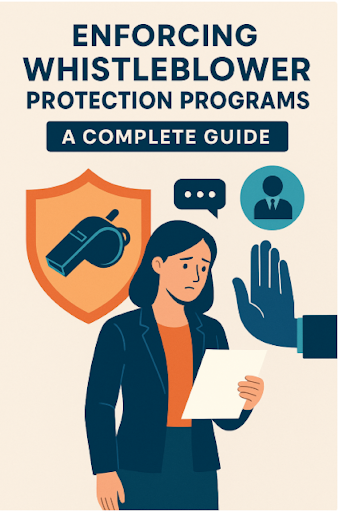
Whistleblower protection programs are a foundation of ethical commercial governance. They give a secure frame for workers to report misconduct—whether it’s fraud, importunity, safety violations, or unethical practices—without fear of retribution. In a global business terrain where translucency is increasingly tied to character and sustainability, these programs act as both a safeguard and a strategic advantage.
Numerous associations still treat whistleblower programs as a formality rather than an active, trust-driven system. The real challenge lies in taking an action from “just on paper” to completely functional—going from 0 to 100 in perpetuation.
What Are Whistleblower Protection Programs?
A whistleblower protection program is a structured policy and functional system that enables workers, contractors, or stakeholders to report unethical or illegal conditions within an association while ensuring they are not subject to retaliation. These programs constantly cover issues like financial fraud or account irregularities, health and safety violations, discrimination, importunity, bribery, and corruption.
Why Are They Helpful?
- Encourages Ethical Culture—When workers know they can speak up safely, unethical gestures are less likely to persist.
- Prevents Legal and Fiscal Losses—Beforehand discovery of fraud or compliance breaches can save millions in suits and penalties.
- Builds Trust – A transparent terrain strengthens hand dedication and improves public perception.
- Aligns with Regulations—Multitudinous industriousness and authorities bear analogous programs for compliance (e.g., Sarbanes-Oxley Act in the U.S., EU Whistleblower Protection Directive).
How Can They Be Implemented?
Going from 0 to 100 in enforcing a whistleblower protection program requires a structured, practical way
- Develop a Clear Policy—Define the scope of reportable issues, confidentiality measures, and disquisition procedures.
- Produce Multiple Reporting Channels—give a hotline, an anonymous dispatch system, an online gate, and in-person options.
- Ensure obscurity—Allow anonymous reporting to encourage participation, especially in sensitive cases.
- Train workers and directors—Regular training sessions on how to use the system and cover whistleblowers.
- Engage Independent Oversight—Use third-party investigators or compliance officers for unprejudiced running of reports.
- Communicate zero tolerance for retribution—support this in policy documents and leadership dispatches.
- Examine and Ameliorate – Review cases, measure program effectiveness, and make policy updates annually.
Examples in Different Companies
- Siemens—After facing corruption dishonors in the 2000s, Siemens enforced a global whistleblower hotline accessible in multiple languages. It’s credited with perfecting translucency and precluding major ethical breaches.
- Infosys—In India, Infosys has a detailed whistleblower policy biddable with SEBI guidelines, including anonymous submission and a clear non-retaliation provision.
- Google—Offers multiple anonymous reporting tools, including a devoted ethics portal and translated communication channels.
Impact of Whistleblower Programs
When enforced effectively, whistleblower protection programs deliver measurable results.
- Reduction in Misconduct Cases—Associations frequently see a significant drop in reported ethical breaches after original cases are addressed transparently.
- Advanced Employee Engagement—Workers feel valued and secure when they can speak without fear.
- Improved Investor Confidence—Shareholders see ethical compliance as a sign of long-term stability.
- Global Character Earnings—Companies that act on whistleblower reports frequently gain media recognition for their ethical governance.
Conclusion
Whistleblower protection programs are more than compliance tools; they are trust-structure mechanisms that guard an association’s integrity. Going from 0 to 100 in their perpetuation requires leadership commitment, artistic alignment, and nonstop enhancement. In the long run, companies that cover their veracity tellers also cover their own future.
References
- U.S. Congress, “Sarbanes–Oxley Act of 2002,” Public Law 107-204, 2002.
- Siemens AG, “Compliance System,” [Online]. Available: https://baselgovernance.org/sites/default/files/2019-02/compliance_system_en.pdf
- Unilever PLC, “Code of Business Principles and Whistleblowing Policy,” [Online]. Available:https://www.unilever.com/files/92ui5egz/production/a7ad961ef886a578ab4dd316b4e5195cbc0965a0.pdf
- Securities and Exchange Board of India (SEBI), “Prohibition of Insider Trading Regulations, 2015,” [Online]. Available: https://www.scconline.com/blog/post/2023/09/14/sebi-prohibition-of-insider-trading-regulations-2015-major-obstacles-implementation/
FAQ: Whistleblower Protection & Compliance Ethics
1. What is whistleblower protection?
Whistleblower protection is a formal program that allows employees or stakeholders to report unethical or illegal practices safely, without fear of retaliation.
2. Why is whistleblower protection important for compliance ethics?
This program promotes transparency, strengthens ethical compliance, and encourages a culture of integrity within an organization.
3. What types of issues can employees report?
Employees can report fraud, corruption, harassment, safety violations, and other breaches of ethical compliance through a whistleblower protection system.
4. How does whistleblower protection encourage an ethical workplace?
By ensuring safe reporting, the program discourages misconduct and reinforces adherence to corporate ethics standards.
5. Can whistleblower protection prevent legal and financial losses?
Yes, early detection of fraud or compliance breaches through this reporting system helps organizations avoid fines, lawsuits, and penalties.
6. What are the key steps to implement whistleblower protection effectively?
Steps include creating a clear policy, offering multiple reporting channels, ensuring confidentiality, training employees, engaging independent oversight, enforcing non-retaliation, and reviewing outcomes regularly.
7. Why is anonymity important in whistleblower protection programs?
Anonymity encourages more employees to report sensitive issues, increasing participation and effectiveness of the reporting system.
8. How do companies like Siemens and Google implement whistleblower protection?
They provide global hotlines, online portals, multi-language support, and independent oversight to ensure transparency and adherence to compliance ethics.
9. What role does leadership play in whistleblower protection?
Leadership ensures employees feel safe reporting misconduct, communicates zero tolerance for retaliation, and supports ethical governance across the organization.
10. How does training help enforce whistleblower protection?
Training educates staff on using the reporting system correctly and reinforces the organization’s commitment to corporate ethics.
11. How are whistleblower reports reviewed and improved?
Reports are regularly examined, program effectiveness is measured, and policies are updated to maintain a robust whistleblower protection framework.
12. What measurable benefits do whistleblower protection programs offer?
Organizations see fewer misconduct cases, higher employee engagement, stronger investor confidence, and improved public reputation for ethical practices.
13. Are whistleblower protection programs legally required?
Many regulations, such as the Sarbanes-Oxley Act or EU Whistleblower Protection Directive, mandate these programs to ensure compliance ethics in organizations.
14. How does whistleblower protection align with compliance ethics?
It ensures ethical behavior is maintained, violations are addressed promptly, and governance standards meet regulatory and organizational expectations.
15. How can organizations start implementing whistleblower protection?
Start by designing a structured program, providing accessible reporting channels, training employees, involving independent oversight, and regularly monitoring and improving the system.
Penned by Khushi Basediya
Edited by Seema Acharya, Research Analyst
For any feedback mail us at info@eveconsultancy.in
Finance made simple, fast, and fun! 🏦💡 Sign up for your daily dose of financial insights delivered in plain English. In just 5 minutes, you’ll be smarter already!
Simplify Your Business Compliance with Eve Consultancy
Eve Consultancy is your trusted partner for end-to-end compliance services, including Company Incorporation, GST Registration, Income Tax Filing, MSME Registration, and more. With a quick and hassle-free process, expert guidance, and affordable pricing, we help businesses stay compliant while they focus on growth. Backed by experienced professionals, we ensure smooth handling of all your legal and financial requirements. WhatsApp us today at +91 9711469884 to get started.