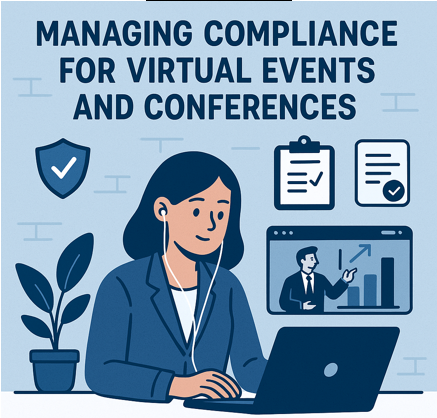
Virtual event compliance is one of the most critical responsibilities for organizers of online conferences, webinars, and digital meetings. As remote work and global connectivity continue to rise, virtual events have become a standard way to bring people together. However, ensuring compliance with legal, ethical, and industry standards is essential for protecting participant data, maintaining accessibility, respecting intellectual property, and safeguarding an organization from financial or reputational risks. Without proper compliance, organizations face fines, legal actions, and loss of trust, making compliance a cornerstone of every successful virtual event strategy.
Compliance includes maintaining safe participant data while respecting their privacy and ensuring that everything works correctly in legal terms. If this is not followed, it might result in fines, loss of confidence, and potential legal trouble. Non-compliance can be a range of things, from inappropriate disclosure of the participants’ data without their consent to breach of the privacy laws or inability to provide appropriate accessibility features that may lead to discrimination claims.
5 Powerful Ways to Manage Virtual Event Compliance for Conferences and Online Meetings
Now that we know how important compliance is, we would now point out some of the most important aspects for managing compliance while conducting virtual events and conferences:
- Data Protection and Privacy: Virtual events and conferences usually gather participants’ names, email addresses, and even some other types of personal information. Laws such as the General Data Protection Regulation (GDPR) in Europe and the California Consumer Privacy Act (CCPA) in California protect user data. According to these laws, all organizations must:
- Gather only relevant and minimum amounts of data.
- Gain clear consent from the participants.
- Protect the participants’ privacy through secure data facilities.
- Allow data subjects to access/delete data on request.
2. Accessibility: The virtual events should be accessible for all, which essentially means that everyone should have the ability to participate in your event. The Americans with Disabilities Act (ADA) and other international standards require virtual conferences to have an accessible user interface. This consists of:
- Transcripts and captions for videos and other presentations.
- Screen reader-friendly webpages of the event.
3. Copyright and Intellectual Property: The presentations, slides, or music that you do not own might create trouble. To avoid this trouble, you must always secure permissions for sharing copyrighted materials and ensure that relevant credits are added to the material used. For recordings, it must be ensured that the users are informed of the manner their content will be used after the event.
4. Codes of Conduct: Just like the physical gatherings, online events also require etiquette guidelines. Formulating a code of conduct for online events ensures that instances of harassment and disorderly conduct can be mitigated. It might consist of:
- Steps for addressing conduct violations.
- Reporting process.
- Specific violations and their associated penalties.
5. Financial and Marketing Compliance: If you charge for attendance, sell products, or promote sponsors, there are more rules to follow:
- Upfront disclosure of any fees or charges.
- Clear refund policies.
- Marketing messages and advertising must align with applicable laws.
- Marketing communications should only be sent to registered users.
5 Steps to Conduct a Successful Virtual Event
- Ensure the Platform Is Appropriate: Select a technology that provides the best security features for data collection, offers accessibility features, and simplifies user role assignment.
- Follow the Rules: Retention of a consultant who is a legal practitioner is essential. Ensure your attendees are adequately covered by the relevant laws of all regions they are coming from.
- Teach as Planned: Make certain that all event volunteers and team members comprehend and follow the policy guidelines, particularly before the event commences.
- Keep to the Action Plan: Make sure that every attendee ascertains what information is being collected from them and its intended purpose, including the guidelines and what their rights are.
- Ensure cohesion: Make sure to include attendee and incident reports to supplement your data from the event feedback for strengthening the future event solutions.
Conclusion
Host and organize online events and conferences while remaining compliant with the rules and regulations of the organizer’s country. Prioritizing data protection, accessibility, intellectual property, codes of conduct, and honest financial practices will help to earn the organization respect and contribute to smooth operations.
FAQ
1. What is virtual event compliance?
Virtual event compliance refers to following legal, ethical, and industry standards when organizing online conferences, webinars, and digital meetings. It ensures that participant data is protected, accessibility is maintained, intellectual property is respected, codes of conduct are enforced, and financial transactions follow regulations. Without compliance, event organizers risk fines, lawsuits, and reputational harm.
2. Why is virtual event compliance important?
Virtual event compliance is crucial for three main reasons:
- Legal Protection – Meeting global regulations like GDPR, CCPA, or ADA prevents lawsuits and fines.
- Trust Building – Participants are more likely to engage when their data and rights are respected.
- Smooth Operations – Compliance ensures events run without disruptions caused by data breaches, disputes, or accessibility complaints.
3. What are the key areas of virtual event compliance?
There are five major areas to focus on:
- Data Protection & Privacy – Collect only necessary data, obtain consent, and secure storage.
- Accessibility – Provide captions, transcripts, and screen-reader friendly interfaces.
- Copyright & Intellectual Property – Secure licenses for shared media and disclose how recordings will be used.
- Codes of Conduct – Establish clear policies to prevent harassment or inappropriate behavior.
- Financial & Marketing Compliance – Ensure transparency in fees, refund policies, and advertising practices.
4. What challenges do organizers face with virtual event compliance?
The main challenges include:
- Global Legal Variations – Different regions enforce different compliance rules.
- Balancing Security with Usability – Ensuring safety without making platforms overly complex.
- Managing Intellectual Property – Avoiding copyright violations when using third-party media.
- Accessibility Gaps – Adapting platforms to meet international accessibility standards.
Virtual event compliance consultants often help companies navigate these complexities effectively.
5. How can technology improve virtual event compliance?
Technology plays a key role in streamlining compliance. Features like encrypted data storage, AI-driven monitoring, secure payment gateways, and accessibility tools help organizers stay compliant. Platforms offering built-in GDPR consent forms or ADA-friendly designs reduce the risk of oversight.
6. What are the future trends in virtual event compliance?
Upcoming trends include:
- AI-Powered Compliance Monitoring – Real-time detection of security or policy breaches.
- Automated Privacy Controls – Systems that auto-manage user consent and data deletion requests.
- Global Compliance Integration – Event platforms adapting to multiple regional laws simultaneously.
These innovations will make compliance more seamless and proactive.
7. How does virtual event compliance benefit organizations?
When organizations prioritize compliance, they:
- Build credibility by showing respect for participants’ privacy and rights.
- Reduce legal risks tied to non-compliance.
- Improve engagement through accessible and inclusive platforms.
- Strengthen sponsor and investor trust by ensuring transparency and ethical practices.
Ultimately, compliance transforms virtual events into trusted, professional experiences.
References
- Eventscase, “Data Protection At Virtual Events: Risks And Regulations,” [Online]. Available: https://eventscase.com/blog/data-protection-at-virtual-events-key-elements.
- EventBuilder, “Advanced Security Measures For High-Stakes Virtual Events,” [Online]. Available: https://www.eventbuilder.rocks/blog/advanced-security-measures-for-high-stakes-virtual-events.
- Veeva Systems EU, “How to deliver Better Events with Greater Compliance,” [Online]. Available: https://www.veeva.com/eu/resources/how-to-deliver-better-events-with-greater-compliance/
- Eventtia, “How to Ensure Legal Compliance When Gathering Event Participant Data,” [Online]. Available: https://www.eventtia.com/en/how-to-ensure-legal-compliance-when-gathering-event-participant-data/.
Penned by Kinjal Bagrecha
Edited by Reeya Kumari, Research Analyst
For any feedback mail us at info@eveconsultancy.in
Finance made simple, fast, and fun! 🏦💡 Sign up for your daily dose of financial insights delivered in plain English. In just 5 minutes, you’ll be smarter already!
Simplify Your Business Compliance with Eve Consultancy
Eve Consultancy is your trusted partner for end-to-end compliance services, including Company Incorporation, GST Registration, Income Tax Filing, MSME Registration, and more. With a quick and hassle-free process, expert guidance, and affordable pricing, we help businesses stay compliant while they focus on growth. Backed by experienced professionals, we ensure smooth handling of all your legal and financial requirements. WhatsApp us today at +91 9711469884 to get started.