
The Emergence of the Gig Economy
The gig economy has rapidly transformed the modern workforce. Powered by technology and internet platforms, the gig economy is disrupting industries like IT, creative services, hospitality, and transport. According to a McKinsey survey, 36% of the workforce—over 58 million people—are now independent contractors. That’s a 10% increase since 2016.
Several core factors have contributed to the rise of the gig economy:
Digital transformation has enabled small businesses to go virtual, replacing brick-and-mortar stores with online platforms.
Demographic shifts, particularly the rise of millennials, have driven demand for flexible work arrangements. Millennials prefer autonomy and are often willing to accept lower pay in exchange for work-from-home benefits and work-life balance.
Entrepreneurial opportunity is another motivator. The gig economy allows individuals to monetize their skills and passions as micro-businesses.
Cost efficiency attracts companies, as hiring gig workers gives them access to specialized talent without the commitment and cost of full-time employment.
The Impact on Employees
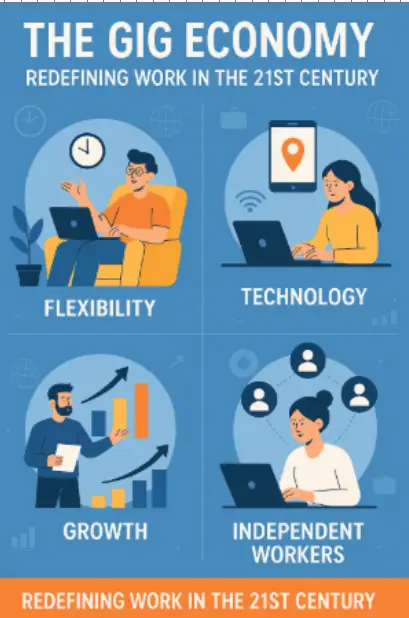
One of the most attractive benefits of the gig economy for workers is flexibility. People can choose when and where they work, which is ideal for parents, students, retirees, and anyone seeking balance in their lifestyle.
However, instability often accompanies that flexibility. Less experienced workers may struggle with inconsistent earnings and job security, making financial planning difficult.
Still, one of the advantages is continuous skill-building. Freelancers take on a variety of projects across different industries, gaining versatile experience and the ability to adapt—key traits in today’s ever-changing job market.
The Impact on Businesses
For companies, the gig economy brings several operational benefits:
Scalability & affordability: Businesses can quickly scale their workforce up or down without incurring the cost of onboarding and benefits. Some onboarding processes for full-time employees can cost over $40,000. Gig workers aren’t entitled to severance or unemployment compensation, reducing HR liabilities.
Access to niche skills: Companies can hire independent contractors with specific expertise for short-term projects, avoiding the constant retraining of full-time employees. Contractors also tend to invest more in keeping their skills up-to-date.
Management challenges: On the flip side, managing remote, short-term workers can be difficult. Communication, collaboration, and quality control often require new systems and leadership styles.
The Impact on the Community
Beyond business and employment, the gig economy is shifting societal norms. It’s changing how people approach work, giving rise to a culture that values flexibility, entrepreneurship, and on-demand services. As traditional job models fade, workers and consumers both expect more customized and immediate interactions.
Future Trends of the Gig Economy
According to a 2023 report, the gig economy is projected to grow at a CAGR of 16.18%, reaching $873 billion by 2027. Despite fears of a global recession, the data shows no signs of slowdown.
As skilled labor becomes harder to find in the traditional job market, the gig economy offers a scalable, adaptive solution. Companies must evolve alongside these trends to stay competitive and agile in a rapidly shifting labor landscape.
Conclusion
Whether you’re an independent contractor, a hiring manager, or a policymaker, understanding the power and potential of the gig economy is essential. With flexibility, scalability, and innovation at its core, the gig economy is not just a trend—it’s a fundamental shift in how we work and live.
References
[1] | E. Charlton, “What is the gig economy and what’s the deal for gig workers?” 22 11 2024. [Online]. Available: https://www.weforum.org/stories/2024/11/what-gig-economy-workers/. |
[2] | M. Rivera, “The Future of the Gig Economy for 2023 and Beyond,” 2023. [Online]. Available: https://www.clearvoice.com/resources/gig-economy-future-2023/. |
Penned by Anil Naniya,
Edited by Aarshi Arora, Research Analyst
For any feedback, mail us at info@eveconsultancy.in
Finance made simple, fast, and fun! 🏦💡 Sign up for your daily dose of financial insights delivered in plain English. In just 5 minutes, you’ll be smarter already!
Simplify Your Business Compliance with Eve Consultancy
Eve Consultancy is your trusted partner for end-to-end compliance services, including Company Incorporation, GST Registration, Income Tax Filing, MSME Registration, and more. With a quick and hassle-free process, expert guidance, and affordable pricing, we help businesses stay compliant while they focus on growth. Backed by experienced professionals, we ensure smooth handling of all your legal and financial requirements. WhatsApp us today at +91 9711469884 to get started.