Topics: Import duties USA, HTS USA
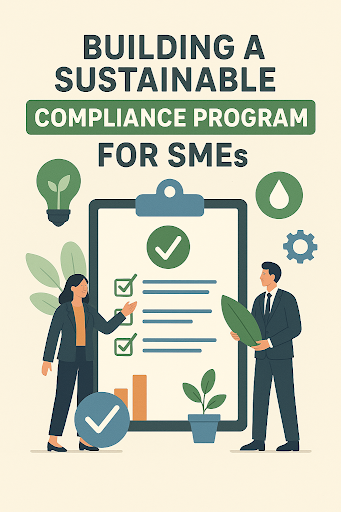
Regulatory compliance is no longer a nicety or a luxury of doing business; now, it has become essential in today’s life. To SMEs, it’s an unpleasant pill. While large corporations can sustain specialised staff for legal and regulatory affairs, SMEs often juggle many hats with limited staff. But it’s not only feasible to build a sustainable compliance program for SMEs incorporating sustainability practices, it’s also essential for long-term prevalence, reputation, and even survival.
Let’s break down what precisely a compliance program is. Why is it necessary, and how can SMEs realistically implement and maintain one without burning out or breaking the bank?
8 Powerful Compliance Programs Driving Corporate Success
A compliance program is literally an embodied process whereby a company and its workers are brought in line with all niche legislation, provisions, regulations, industry customs and internal policy. These might range from information protection to financial procedures, labour laws, environmental regulations etc.
That is an ethical and legitimate way of conducting business, so nothing falls through the cracks.
Why Do SMEs Need Compliance Programs?
Till now, most of the SME business owners believe that the law is for the big corporates only, but it’s not the truth, it’s a false myth. SMEs are just as responsible and even more liable than others. One breach of the law, whether it is a data leak, labour problem or tax issue, can kill a small business overnight.
The below are some of the most important reasons why SMEs must worry about compliance:-
–Escape Legal Sanctions: Non-compliance can result in substantial fines, lawsuits and closure.
–Build Trust With Customers: Customers are becoming more responsible about being ethical and legal. A compliant firm earns greater trust.
– Facilitate Expansion: Investors, partners, and large customers usually check if a business is compliant first before engaging in business with them.
–Enhance Internal Efficiency: A well-planned program enhances the transparency, consistency, and accountability of the organisation.
How to Create a Sustainable Compliance Program?
It is daunting to begin a compliance program anew, but it can be divided into some important steps. And those steps are–
1.Get to know your regulatory environment:-
Start off by forming what laws and regulations apply in your line of business, where you carry out your business & what business you run. They are:
‘Tool-Strip-Separator’.
– Tax and financial reporting law
-Regulations governing employment (remuneration, conditions of employment, contracts)
– Sector-specific regulations (health, safety, environmental, etc.)
-Data protection law (if you store customer information)
Seek the advice of an attorney or trade association if needed. A single consultation will avoid huge future headaches.
2. Internal Policies and Procedures:-
With your regulatory needs conceived, write them down in plain, understandable and functional internal policies. And they must contain:-
-Code of conduct for employees
-Data handling policies
-Safety measures
-Anti-discrimination and harassment policy
-Financial control policies
Don’t copy, cut-and-paste word-for-word from the internet. Adapt your policies to the size, culture and operations of your business.
3.Assign Responsibility:-
You can’t have a compliance officer early and late, but someone has to be accountable. Perhaps it is a senior manager, the head of HR or the founder. The thought is to have someone who tracks developments in the regulations, screens on a spontaneous basis and is a contact person.
If feasible, hire a part-time compliance consultant on an occasional basis or buy legal/compliance software that has regular updates.
4.Train Your Team:-
Compliance isn’t a one-off thing; it’s something that everyone does. Ongoing training sessions (even monthly, brief ones) will keep your employees up-to-date on what regulations to comply with. Discuss things like:-
-Workplace ethics and behaviour
-Anti-bribery and anti-corruption
-Data privacy and cybersecurity
-Whistleblowing and complaint handling
Training doesn’t need to be dull and costly. Use interesting modules, case studies or YouTube videos to make it interesting.
5.Create Reporting Channels:-
Make reporting easy for employees without fear. This may be an anonymous email avenue, a suggestion box or someone they can trust completely without any hesitation. An open reporting culture enables problems to be reported early enough to prevent them from becoming unmanageable.
6.Monitor and Audit:-
Develop a schedule, bi-monthly, quarterly or yearly, to check– “if your policies are being enforced? Is data backup going according to schedule? Is employee data current? Are financial controls established?”
You don’t have to hire a big audit team. Spot-checking randomly and using basic checklists will suffice.
7.Learn and Adapt:-
Legislations evolve. Business evolves. Your compliance program also has to evolve. Keep immediate with industry trends, sign up for regulatory agency updates and participate in relevant webinars.
After every incident, whether internal or external, find out what happened and revise your policies accordingly.
8.Technology in Your Favour:-
You don’t need to break the bank on enterprise-level systems to manage compliance. There are abundant three-penny tools out there that can help SMEs to be well-organised:
-HR software such as Zoho People or Freshteam to handle employee records
– Accounting software such as QuickBooks or Tally for accounting compliance -Cybersecurity software to safeguard data
-Project planners such as Trello or Asana to schedule audits and reminders
Also, think about setting up Google Alerts for cabalistic compliance topics in your industry to be notified automatically.
Challenges Confronting SMEs with Compliance
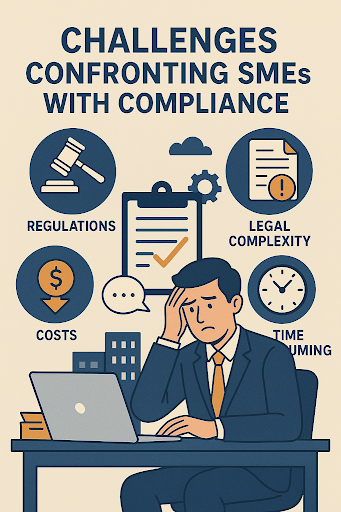
- Resource Limitations: Lack of funds, staff, or time.
- Unawareness: Few people know what laws they must comply with.
- Changing Rules: Rules are constantly changing, and it is difficult to keep up.
- Overburden: The workload and paperwork volume could be too much. SMEs should not forget that compliance is an investment over the long term and not a cost that is borne once.
To build a sustainable compliance project is nothing but to fabricate a legal chateau; it’s to build savvy, scalable processes that enable you to conduct business safely, ethically and with confidence. With vision, proper tools & a longing to learn, even the smallest business can convert compliance burden into compliance strength. For SMEs, amplitude doesn’t have to be the goal, but better. Every step along the journey towards a more solid compliance culture is helping to construct a better and stronger business.
FAQ: Building a Sustainable Compliance Program for SMEs
Q1. What is a Sustainable Compliance Program for SMEs?
A Sustainable Compliance Program for SMEs is a structured system that helps small and medium enterprises follow legal, regulatory, and ethical standards consistently while ensuring long-term business growth.
Q2. Why is a Sustainable Compliance Program for SMEs important?
A Sustainable Compliance Program for SMEs is crucial because it prevents legal penalties, builds customer trust, and strengthens operational efficiency, making compliance an asset instead of a burden.
Q3. How can SMEs start a Sustainable Compliance Program?
SMEs can begin a Sustainable Compliance Program for SMEs by identifying applicable laws, creating internal policies, assigning compliance responsibilities, and gradually implementing cost-effective monitoring tools.
Q4. What are the benefits of a Sustainable Compliance Program for SMEs?
The benefits of a Sustainable Compliance Program for SMEs include legal protection, higher credibility with investors, improved employee accountability, and smoother business expansion opportunities.
Q5. What challenges do SMEs face in building a Sustainable Compliance Program?
The main challenges in creating a Sustainable Compliance Program for SMEs are limited resources, lack of awareness, changing regulations, and the administrative burden of compliance reporting.
Q6. Can technology help in a Sustainable Compliance Program for SMEs?
Yes, technology plays a vital role in a Sustainable Compliance Program for SMEs by automating processes, tracking regulatory updates, and improving data protection without heavy investment.
Q7. Who should be responsible for a Sustainable Compliance Program in SMEs?
In a Sustainable Compliance Program for SMEs, responsibility often lies with a senior manager, HR head, or founder. In some cases, SMEs hire part-time compliance consultants or use compliance software.
Q8. How does training support a Sustainable Compliance Program for SMEs?
Regular employee training ensures everyone understands workplace ethics, data privacy, and anti-corruption policies, making training a cornerstone of a strong Sustainable Compliance Program for SMEs.
Q9. How often should SMEs review their compliance program?
To keep a Sustainable Compliance Program for SMEs effective, businesses should conduct reviews at least quarterly or bi-annually, depending on regulatory changes and business growth.
Q10. What industries benefit most from a Sustainable Compliance Program for SMEs?
Industries like finance, healthcare, IT, manufacturing, and retail particularly benefit from a Sustainable Compliance Program for SMEs because they handle sensitive data and face strict regulations.
Q11. Does a Sustainable Compliance Program for SMEs require high costs?
No, a Sustainable Compliance Program for SMEs does not always require high costs. SMEs can leverage affordable tools, free training resources, and scalable policies tailored to their operations.
Q12. How does a Sustainable Compliance Program for SMEs build customer trust?
By ensuring ethical practices, data protection, and transparency, a Sustainable Compliance Program for SMEs builds customer trust and loyalty, which directly supports long-term success.
Q13. Can SMEs expand globally with a Sustainable Compliance Program?
Yes, a Sustainable Compliance Program for SMEs helps SMEs meet international regulatory standards, which makes it easier to expand globally and attract international partners.
Q14. What role does monitoring and auditing play in a Sustainable Compliance Program?
Monitoring and auditing are essential in a Sustainable Compliance Program for SMEs to verify whether policies are followed, risks are identified, and corrective measures are taken on time.
Q15. How can SMEs adapt their Sustainable Compliance Program to changing regulations?
SMEs can adapt their Sustainable Compliance Program by staying updated with regulatory agencies, joining industry forums, and adjusting policies to remain compliant with evolving laws.
Penned by Sampriti Sen
Edited by Shashank Khandelwal, Research Analyst
For any feedback mail us at info@eveconsultancy.in
Finance made simple, fast, and fun! 🏦💡 Sign up for your daily dose of financial insights delivered in plain English. In just 5 minutes, you’ll be smarter already!
Simplify Your Business Compliance with Eve Consultancy
Eve Consultancy is your trusted partner for end-to-end compliance services, including Company Incorporation, GST Registration, Income Tax Filing, MSME Registration, and more. With a quick and hassle-free process, expert guidance, and affordable pricing, we help businesses stay compliant while they focus on growth. Backed by experienced professionals, we ensure smooth handling of all your legal and financial requirements. WhatsApp us today at +91 9711469884 to get started.