
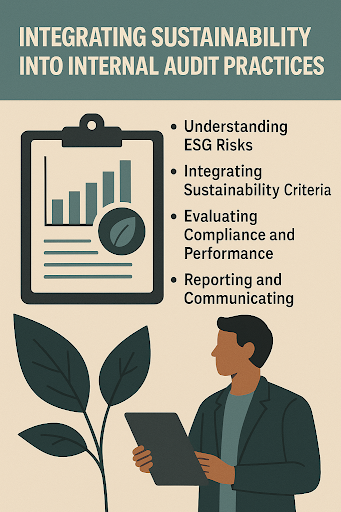
Sustainability audits are a critical step for any organization. Sustainability audits help evaluate how well a business addresses its sustainability goals and sustainable development goals. Some people call sustainability audits a triple bottom line assessment. That means they review performance in social, environmental, and economic areas. Sustainability audits are more than a box to check. They uncover hidden issues—these could be wasteful processes or overlooked supply chain risks. Sustainability audits can also reveal whether certain policies are truly effective. An external perspective in sustainability audits often finds areas that employees may miss. That outside view benchmarks your business against industry standards. This ensures your organization remains aligned with best practices through effective sustainability audits.
3 Core elements of a Sustainability Audits

A sustainability audit frequently examines three categories. These categories often overlap. Yet, each serves a distinct purpose.
The first category is investment practices. An audit might ask: where are we allocating funds? Do we support organizations with green records? Are we exposed to boycotts due to poor practices?
The second category is operations. Here, auditors look at energy usage. They also review recycling programs, carbon footprints, and resource management. Evaluating a company’s operations includes assessing resource usage, waste management, and compliance with environmental regulations.
The final category is customer practices. A sustainability audit might check how you educate customers. It might also access whether you use recycled materials in product design. Customer engagement on sustainability topics is another key consideration. These insights guide better communication strategies.

ESG Integration
An ESG integration approach uses insights into ESG-related risks and opportunities alongside conventional fundamental or quantitative analysis.
ENVIRONMENTAL
- Focus on renewable energy
- Practice recycling efforts
- Consider the environment in their manufacturing processes
- Take steps to limit pollution
- Look for opportunities to innovate in this space
SOCIAL
- Manage employee safety risk proactively
- Take human rights into consideration when creating business goals
- Focus on quality and safety for their customers
- Consider the social impact of their supply chain
GOVERNANCE
- Have an independent board
- Show appropriate diversity in their board members
- Offer transparency in their corporate goals
- Protect shareholder rights
ESG Integration is intended to select companies tackling ESG issues head -on and to to invest in companies that offer potential risk and performance benefits.
Conclusion
A systematic analysis of a company’s sustainability status is an essential starting point for companies wishing to survive on the market and succeed in creating value. In addition to a clear strategy, internal audit is increasingly emerging as a critical factor in the implementation of sustainability targets. A future-proof internal audit is one that includes the review of sustainability issues alongside the previous traditional areas. And there are numerous benefits to be reaped. Processes and procedures around sustainability are improved, which creates direct added value for companies and customers alike. For example, the typical process and project audits of old can also be applied in the area of sustainability, enabling organizations to identify potential for optimization and development within business activities and processes. A well-founded risk audit also significantly increases the profitability that sustainability risks will be flagged at an early stage.
References
[1] J. Elkington, Cannibals with Forks: The Triple Bottom Line of 21st Century Business. Oxford: Capstone Publishing, 1997.
[2] Institute of Internal Auditors (IIA), Internal Audit and ESG: Advancing Sustainability in Business. Altamonte Springs, FL: IIA, 2022.
[3] United Nations, Sustainable Development Goals: Guidelines and Targets. New York: UN Publications, 2015.
[4] CFA Institute, Guidance and Case Studies for ESG Integration: Equities and Fixed Income. Charlottesville, VA: CFA Institute, 2018.
[5] PRI (Principles for Responsible Investment), “ESG integration explained,” [Online]. Available: https://www.unpri.org/investment-tools. [Accessed: Aug. 30, 2025].
[6] KPMG, The Time Has Come: The KPMG Survey of Sustainability Reporting 2022. Amstelveen: KPMG International, 2022.
FAQ’S :
Q1. What are Sustainability Audits in Internal Audit?
Sustainability Audits in Internal Audit evaluate a company’s environmental, social, and governance (ESG) performance alongside financial and operational practices.
Q2. Why are Sustainability Audits in Internal Audit important?
They help identify risks, improve ESG compliance, and uncover inefficiencies in resource use, supply chains, and business practices.
Q3. How do Sustainability Audits in Internal Audit support ESG goals?
They align internal audit with ESG reporting, ensuring companies meet environmental, social, and governance standards effectively.
Q4. What areas do Sustainability Audits in Internal Audit cover?
They typically focus on investment practices, operational efficiency, and customer engagement related to sustainability.
Q5. How do Sustainability Audits in Internal Audit improve operations?
By reviewing energy usage, recycling, and resource management, they help reduce waste and enhance efficiency.
Q6. Can Sustainability Audits in Internal Audit reveal hidden risks?
Yes, they uncover overlooked risks in supply chains, compliance gaps, and ineffective sustainability policies.
Q7. What role does ESG integration play in Sustainability Audits in Internal Audit?
ESG integration ensures audits consider environmental impact, employee safety, ethical governance, and shareholder rights.
Q8. How do Sustainability Audits in Internal Audit benefit investors?
They provide transparency, helping investors evaluate a company’s long-term sustainability and risk profile.
Q9. What is the triple bottom line in Sustainability Audits in Internal Audit?
It measures a company’s performance across social, environmental, and economic dimensions, beyond just profits.
Q10. How do external perspectives strengthen Sustainability Audits in Internal Audit?
External auditors benchmark practices against industry standards, offering unbiased insights into sustainability performance.
Q11. How do Sustainability Audits in Internal Audit align with the UN SDGs?
They assess how business operations and policies contribute to achieving Sustainable Development Goals.
Q12. What tools are used in Sustainability Audits in Internal Audit?
Common tools include carbon footprint assessments, ESG risk analysis, compliance checks, and stakeholder surveys.
Q13. How do Sustainability Audits in Internal Audit enhance governance?
They promote board diversity, transparency in goals, shareholder protection, and ethical decision-making.
Q14. What challenges exist in implementing Sustainability Audits in Internal Audit?
Challenges include lack of expertise, limited budgets, and integrating ESG metrics into traditional audit systems.
Q15. What is the future of Sustainability Audits in Internal Audit?
They will become central to risk management, ensuring companies remain compliant, ethical, and competitive globally.
Penned by Bhoomi Gajwani
Edited by Reeya Kumari, Research Analyst
For any feedback mail us at info@eveconsultancy.in
Finance made simple, fast, and fun! 🏦💡 Sign up for your daily dose of financial insights delivered in plain English. In just 5 minutes, you’ll be smarter already!
Simplify Your Business Compliance with Eve Consultancy
Eve Consultancy is your trusted partner for end-to-end compliance services, including Company Incorporation, GST Registration, Income Tax Filing, MSME Registration, and more. With a quick and hassle-free process, expert guidance, and affordable pricing, we help businesses stay compliant while they focus on growth. Backed by experienced professionals, we ensure smooth handling of all your legal and financial requirements. WhatsApp us today at +91 9711469884 to get started.