Source: chatgpt
Startup fundraising strategies are increasingly important as India’s technology funding market sees fewer deals, requiring founders to demonstrate customer demand, financial discipline, and a clear growth plan.
Raising money is one of the biggest challenges for a startup. Founders need funds to develop their products, hire employees, reach more customers, and grow their businesses. But getting investors interested is not always easy, especially when the funding market becomes more selective.
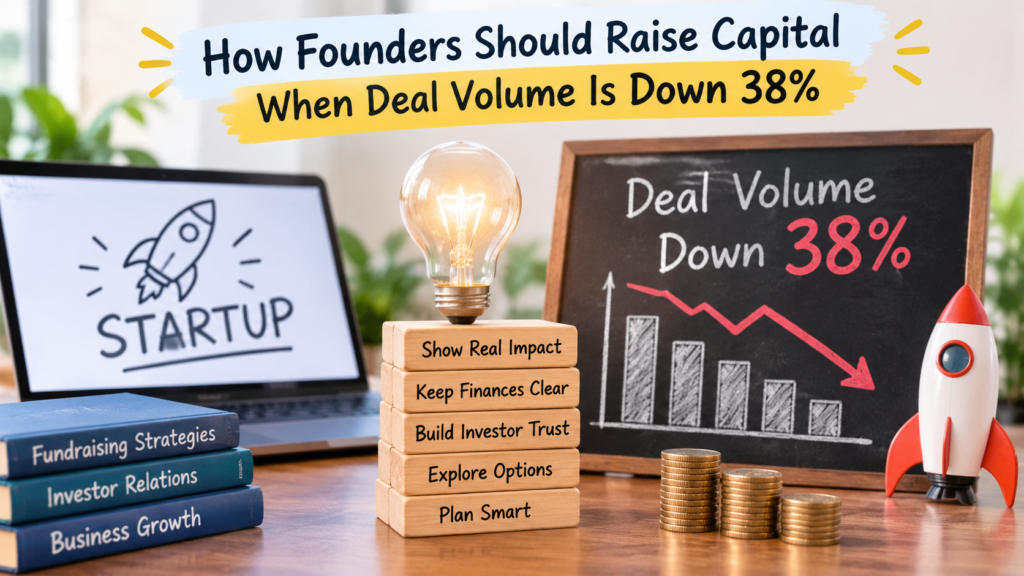
India’s startup funding market has seen a major change in 2026. According to data reported from Tracxn’s India Tech 9M 2026 report, the number of funding rounds fell by 38% to 1,134 between January and September 21, compared with the same period in 2025. At the same time, the total amount raised increased by 7% to $10.3 billion. This means that although money is still going into startups, it is being invested in fewer companies. For founders, this makes fundraising more challenging. Investors are becoming more selective, and startups need to show why their business deserves funding.
Startup Fundraising Strategies: Six Ways Founders Can Attract Investors
When investors have many opportunities, they still need to decide which businesses are worth supporting. During a more selective funding period, they may spend more time checking a startup’s financial position, customers, business model, and plans for growth.
Early-stage startups can face even greater challenges because they may not have a long business history or steady revenue. According to the same 2026 report, seed funding in Indian technology startups fell by 37% to $698 million, while early-stage funding increased by 27% to $4.2 billion.These figures show that funding conditions can differ depending on a startup’s stage. Businesses that have already attracted customers and demonstrated growth may find it easier to make their case than those that are still testing their ideas.
1. Show That Your Business Solves a Real Problem
Before approaching investors, founders should be able to explain what their startup does and why people need it. A good idea alone may not be enough. Investors also want to understand whether customers are interested in the product or service. For example, if a startup offers an online learning platform, the founder should be able to explain how it helps students, what makes it different from other platforms, and whether people are willing to use or pay for it.
Customer feedback, repeat purchases, early sales, and product usage can help demonstrate that a business is solving a real problem. Even a small startup can build a stronger case when it has clear evidence of customer interest.
2. Keep Your Financial Records Clear
Investors need to understand how a startup earns money and how it uses its funds. Founders should maintain clear records of revenue, expenses, cash flow, and existing debts.
They should also know how much money the business needs and what the funding will be used for. Instead of asking for a large amount without a clear plan, founders should explain how the money will help the company reach its next goals.For example, a startup may need funding to improve its product, hire two important employees, or reach customers in a new city. A clear plan makes it easier for investors to understand the purpose of the investment.
3. Prepare a Simple and Strong Pitch
A pitch is a short presentation that explains a startup to potential investors. It should cover the problem the business solves, its product or service, its target customers, its revenue model, its competitors, and its plans for growth. Founders should avoid filling their presentations with complicated words or unrealistic promises. Investors need a clear picture of the business, including its strengths and challenges.It is also important to prepare for questions about competition, costs, customer growth, and future plans. Being honest about what is working and what still needs improvement can help build trust.
4. Look Beyond Traditional Venture Capital
Venture capital is not the only way a startup can raise money. Depending on the business and its stage, founders may explore angel investors, startup incubators, accelerators, grants, or government-supported programmes. Some businesses may also be able to grow through customer revenue rather than depending entirely on outside investment. For example, a startup could test its product on a smaller scale, gain paying customers, and use that income to support further development. Each funding option has different requirements and conditions. Founders should research the available choices carefully and understand what they may need to give in return, whether that means company ownership, repayment, or meeting programme requirements.
5. Build Relationships With Investors
Fundraising is not always a quick process. Founders may speak to several investors before finding someone who understands their business and is willing to invest.Building relationships before urgently needing money can help. Founders can attend startup events, take part in industry discussions, and connect with people who understand their sector.
They should also research investors before approaching them. An investor who supports businesses at a similar stage or works in the same industry may be a better fit than someone whose interests do not match the startup. Regular updates about customer growth, product improvements, and business progress can also help founders maintain professional relationships with potential investors.
6. Plan Spending and Protect Your Cash Flow
When fundraising takes longer than expected, a startup needs to manage its existing money carefully. Founders should understand their monthly expenses and estimate how long their available funds can support the business.This does not mean stopping all growth plans. It means focusing spending on activities that matter most, such as improving the product, serving customers, and generating revenue. Founders should also prepare for the possibility that a funding round may take longer or bring in less money than expected. Having a realistic backup plan can help a business continue operating while fundraising is underway.
Conclusion
A fall in startup deal volume does not mean that all funding opportunities have disappeared. The 2026 figures show that Indian technology startups continued to raise money even as the number of funding rounds declined. However, the market has become more selective, making preparation especially important for founders.
Startups can improve their chances by proving that customers need their products, keeping financial records organised, preparing a clear pitch, and exploring different funding options. They should also build investor relationships and manage their spending carefully.In the end, successful fundraising is not just about finding someone willing to invest. It is about showing that the business has a clear purpose, understands its customers, and has a realistic plan for using the money. When investors are more selective, preparation and trust can make a real difference.
Exploring different startup funding options can help founders identify suitable sources of capital based on their business stage, financial needs, and growth plans.
References
[1] Tracxn — India Tech 9M 2026 Report
Use the original report to support the figures on funding rounds, total funding, seed funding, and early-stage funding.
Source: Tracxn report cited in your article. The direct report URL was not provided.
[2] Financial Express — India Tech Funding in 2026
India tech funding rises 7% to $10.3 billion as investors favour larger bets
Supports the discussion of funding trends and investor selectivity.
[3] Startup India — Government Support for Startups
Startup India official website
Useful for information about startup support programmes, incubators, and government initiatives.
Important: Verify that the report and article support the exact 38% decline and the 2026 figures before publishing. Keep references about GST e-invoicing and SME tax administration out of this article unless you specifically discuss those topics.
AI Report
GRAMMAR REPORT
PLAGIARISM REPORT