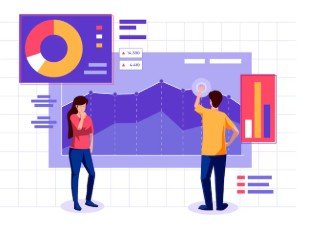
Today’s recruitment environment demands advanced technology solutions that offer real-time feedback on the readiness of candidates and the recruiting effectiveness of organizations. Readiness dashboards are now advanced tools that transform the way businesses track, measure, and optimize their candidate acquisition process. Powerful platforms that include end-to-end improvement tracking capabilities are now necessary, allowing data-driven decisions to be made throughout the recruitment cycle. By leveraging the power of readiness dashboards, organizations can see candidate movement, determine areas of skill deficiency, and intervene with focused activity to speed hiring results. Strategic deployment of improvement monitoring systems via dashboard technology marks a shift away from reactive hiring practices toward proactive talent development tactics that create competitive differentials.
Strategic Foundation of Readiness Monitoring System
Traditional recruiting practices rarely provide the transparency and immediate information required to successfully win talent in high-competition environments. Dashboard technology closes these gaps by aggregating multiple streams of data onto a single, composite view exposing the full picture of candidate readiness across different competency axes.
These new-generation platforms are also integrated with applicant tracking software, testing solutions, learning management solutions, and interview management software to build complete candidate profiles. With integration, recruiters and hiring managers gain end-to-end candidate experiences from first application to last hiring.
The dash-based recruitment trend is a subset of larger trends in data-driven HR management under which quantitative intelligence directs workforce planning strategy. Employers that implement these technologies see substantial value through top performer identification, minimizing time-to-hire, and enhancing aggregate hiring quality performance metrics.
Advanced Metrics and Key Performance Indicators
Productive readiness monitoring calls for an intense selection of measures that most effectively indicate candidate readiness and recruitment success in the company. Top-notch dashboard software tracks a dozen or so significant performance metrics such as application completion rate, test scores, interview rating, skills level, and hiring speed measures.
Flexible metric models enable businesses to assign the highest priority to measures that support personal hiring objectives and company values. Technology firms may focus on technical assessment scores and code challenge success rates, while customer service firms focus on communication skills and personality fit measures.
Real-time metrics update provides the investor with up-to-date information on candidate status and pipeline health. Being real-time, this allows for the prompt response to newly developing issues like candidate fall-off, skills gaps, or competitive hiring challenges.
Data Visualization and Interface Design
Color-coded status indicators allow for instant identification of the level of candidate readiness, with red-yellow-green schemes being most widely utilized to denote candidates needing attention against those moving ahead adequately. Such overt markers facilitate quick recruiter activity and resource allocation prioritization.
Flexible dashboard settings support varied user roles and data requirements. Executive stakeholders may use high-level overviews of hiring pipeline health, while recruiters need detailed candidate-centric data and prescriptive next-step recommendations.
Integration with Talent Development Systems
Readiness monitoring for continuity encompasses continuous talent development procedures that prepare candidates for designated positions. Dashboard systems more and more incorporate learning management systems that provide focused training content addressing defined skill deficiencies.
Synchronization across these systems generates feedback loops wherein test results directly feed into tailored learning paths that attempt to raise candidate capabilities to requisite levels. Candidates are directly told areas in which they need improvement, as well as resources to improve.
Predictive Analytics and AI Integration
Leading readiness dashboards make use of machine learning and AI algorithms that convert static recruitment history into forecasted data. The platforms can detect patterns of successful recruitment and facilitate better candidate assessment and hiring prediction.
Forecast models gauge candidates’ likelihood of accepting offers, performing at work, and keeping companies in the long term. This information directs recruiters to contact high-potential candidates first before other candidates and raise red flags for closer examination.
Natural Language Processing analyzes candidate communication, resume data, and interview transcripts to evaluate personality characteristics, communication ability, and cultural fit metrics that augment traditional methods.
Collaborative Features and Stakeholder Engagement
Permissioned access control ensures candidate sensitive information confidentiality while providing suitable transparency across the hiring staff. Notification processes are configurable by the user to keep stakeholders informed on candidate status and action items awaiting their attention.
Aggregate feedback capabilities condense input from several interviewers and assessors into candidate profiles for use in making final hiring decisions. This aggregate function improves the quality of hiring through collecting multiple viewpoints without retaining effective decision processes.
Mobile Accessibility and Remote Recruitment
Compliance with regulation is a key element of recruitment activity, and organizations need to prove fair, non-discriminatory recruitment processes acceptable by way of employment law. Readiness dashboards facilitate compliance in this regard by logging complete audit trails for all communications with candidates, ratings, and conclusions.
Computer-aided compliance checking can pick up on potential problems like missing required tests, missing records, or test differences that could reveal bias. Preemptive notices allow recruiters to fix issues before they become violations of compliance.
Pre-programmed testing models built into dashboard systems encourage consistency in candidate rating, which minimizes subjectivity that could bring about bias. Interview guide templates and scoring grids ensure equal treatment of all candidates regardless of the judge.
Continuous Improvement and System Optimization
Proactive readiness monitoring is not merely assessing individual candidates to include systematic examination of recruitment process efficacy. Dashboard analysis reveals bottlenecks, inefficiencies, and opportunities for improvement throughout the entire talent acquisition cycle.
Comparative analysis indicates how varied recruitment sources, evaluation processes, and choice criteria measure up to recruitment performance. Strategic resource reallocation and process improvement decisions are based on this insight in order to maximize total recruitment effectiveness.
Comparing organizational performance to industry benchmarks places internal measurement within the context of setting realistic improvement goals. Comparisons from outside allow organizations to establish whether recruitment difficulties are specific problems or manifestations of wider market trends.
Cost Optimization and ROI Measurement
Recruitment is an elevated organizational expense line item that must be managed carefully in terms of costs and accountability. Recruitment dashboards provide visibility into recruitment expenses such as ad spend, agency commission, assessment tool subscriptions, and internal resource utilization.
Quality-of-hire metrics connecting recruiting efforts and candidate performance as well as turnover statistics provide business value to investments in talent acquisition. They validate hiring budgets and expenditures in next-generation monitor technology.
Future Development and Next-Gen Technologies
Faster-paced technology innovation continues to fuel readiness dashboard creation with new-age capabilities such as augmented reality candidate screening, blockchain-validated credentials, and deeper biometric analysis that can potentially revolutionize recruitment processes.
Virtual reality environment integration would ensure that it is possible to have job simulation as a more viable means of assessing the capabilities of candidates under real work conditions. The technology would prove useful in measuring soft skills and cultural adjustments because traditional methods determine them less well.
More AI innovation will probably make forecasting even stronger while raising some serious ethics issues regarding algorithmic bias, data privacy, and human judgment in hiring that companies must meet with caution.
Revolutionizing Talent Acquisition Through Intelligent Monitoring
The advanced readiness dashboards that are presently being developed in contemporary hiring are disruptive technologies that transform organizational hiring competency through end-to-end tracking systems of improvement. The systems offer unprecedented insight into candidate readiness while facilitating data-driven optimization of recruiting functions that support competitive advantage in talent acquisition.
With recruitment technology still in its infancy and the battle for top talent still brewing, companies utilizing the most sophisticated readiness dashboards will be significantly ahead of the pack relative to those utilizing conventional techniques. Systematic deployment of thorough improvement tracking using dashboard technologies is critical infrastructure in the development of high-performing workforces that can drive organizational success in increasingly competitive and dynamic business climates.
References
[1] Penbrothers, “The 10 Best Applicant Tracking Systems (ATS) in 2025,” Penbrothers Blog, 2025. [Online].
Available: https://penbrothers.com/blog/applicant-tracking-systems/
[2] MetricStream, “Your Ultimate Guide to Compliance Dashboards (2025),” MetricStream Learning Center, 2025. [Online].
Available: https://www.metricstream.com/learn/compliance-dashboard.html
[3] Trustcloud AI, “AI-Driven CMMC Compliance: Fast-Track DoD Readiness in 2025,” Trustcloud Resources, Aug. 25, 2025. [Online].
Available: https://www.trustcloud.ai/cmmc/cmmc-readiness-how-ai-powered-platforms-accelerate-dod-compliance/
Penned by Manobal
Edited by Disha Thakral, Research Analyst
For any feedback mail us at info@eveconsultancy.in
Finance made simple, fast, and fun! 🏦💡 Sign up for your daily dose of financial insights delivered in plain English. In just 5 minutes, you’ll be smarter already!
Simplify Your Business Compliance with Eve Consultancy
Eve Consultancy is your trusted partner for end-to-end compliance services, including Company Incorporation, GST Registration, Income Tax Filing, MSME Registration, and more. With a quick and hassle-free process, expert guidance, and affordable pricing, we help businesses stay compliant while they focus on growth. Backed by experienced professionals, we ensure smooth handling of all your legal and financial requirements. WhatsApp us today at +91 9711469884 to get started.