
Policy-Finance Interdependence: How Governance and Money Go Hand-in-Hand
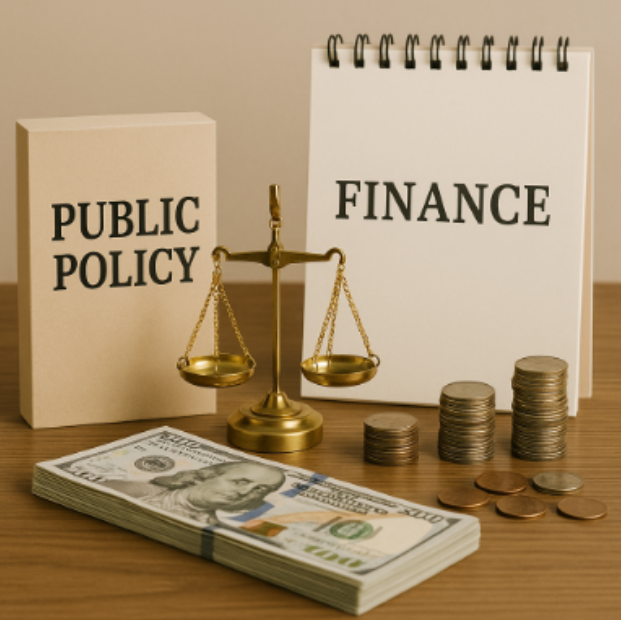
The relationship between public policy and finance is inherently natural as both aspects are interdependent. We are all familiar with the terms ‘public policy’ and ‘finance’ individually, but their mutual dependence on each other is something very interesting to know about. All public policies created by governments or organisations require a substantial investment from individuals, organisations, parties, and the public to support them and carry out the policies efficiently and effectively. This can be termed as financing or providing the appropriate amount of money to implement the policies and get the best outcome from them.
Mutual Benefits Cycle: How Policy Funding Fuels Public Good & Returns Value
Financing for a policy requires the utmost attention of policy framers, focusing on questions like where the money would come from. Who are the main parties to support monetarily, etc? After considering all the important facts and addressing all the necessary questions, the budget is being set out for the implementation of various public policies. For example, let’s say the mid-day meal scheme that was introduced by the government to address the problem of absenteeism and dropout rates of children in rural areas, also focusing on the issue of malnutrition. For this policy, the major target for financing was the governments, public money, and the funds from NGO’s, so that enough food can be provided to children, and with the help of this scheme, children would come to school to meet their nutritional requirements, and the problem of absenteeism would be less.
Another aspect of the relationship between public policy and finance is how these public policies would then provide monetary and resource benefits to the governments and the public itself. For example, the taxation policies that are implemented by the governments on public goods and services help to improve the quality and quantity of goods and services provided to benefit the public directly or indirectly. Thus, with all the above information, it can be stated that the relationship between public policy and finance is intrinsic and provides the vice versa benefits to each other.
Conclusion: Bridging Policy and Finance for Inclusive Growth
In conclusion, I would like to say that both public policy and finance are intrinsically connected, and it is very important to have a deep down knowledge of both the subjects and its relevance in today’s world. The policy makers need to address carefully the issues that surround today’s world so that an adequate and appropriate amount of money can be allocated to the most needed issue or sector rather than mindlessly spending on those who are already full and neglecting those who are in need. Some policies that are made to support the bureaucrats are very heavy and demeaning to the middle-class people who still have to pay high taxes, as in comparison to those who already have a fair amount of that. Understanding the issues of a particular section in need would be beneficial for both the allocation of money and resources, and would help to solve the economic and social issues to some extent.
Written by Sanjam Singh
Edited by Shashank Khandelwal
For any feedback mail us at info@eveconsultancy.in
Finance made simple, fast, and fun! 🏦💡 Sign up for your daily dose of financial insights delivered in plain English. In just 5 minutes, you’ll be smarter already!
Simplify Your Business Compliance with Eve Consultancy
Eve Consultancy is your trusted partner for end-to-end compliance services, including Company Incorporation, GST Registration, Income Tax Filing, MSME Registration, and more. With a quick and hassle-free process, expert guidance, and affordable pricing, we help businesses stay compliant while they focus on growth. Backed by experienced professionals, we ensure smooth handling of all your legal and financial requirements. WhatsApp us today at +91 9711469884 to get started.