Introduction
Privacy by Design helps product teams integrate data protection into digital products from the planning stage, reducing privacy risks while supporting compliance with India’s DPDP framework.
Personal information is a critical concern for businesses in the information revolution. Products always collect and manage user data via mobile applications, web-based eCommerce stores and cloud services. But gathering data without considering privacy risks may result in security incidents, compliance troubles and loss of customer trust.
The Digital Personal Data Protection (DPDP) Act, 2023, is a game-changing piece of legislation that has set a high bar for digital personal data protection in India. It provides businesses the opportunity to think about privacy upfront when developing products instead of only meeting compliance at the end. The concept of this is called Privacy by Design.
6 Essential Privacy by Design Practices for Product Teams
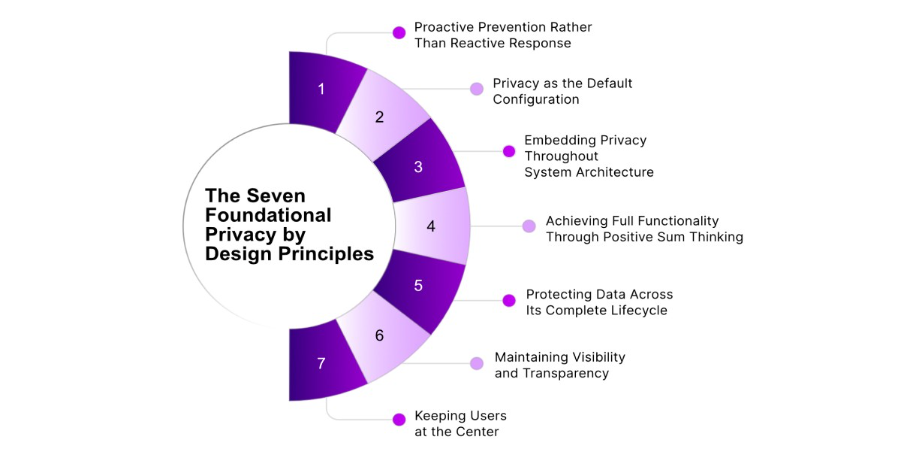
Privacy by Design is an approach for the design of digital products in which privacy protection is taken into account from the initial planning and building stages. Teams integrate privacy safeguards into the product architecture, its functionality, and use, rather than at the end.
For instance, if you just need an e-mail address, don’t make it a point to ask for the person’s contact or physical address or photos. Minimises exposure and improves privacy of the product by limiting the data gathered to what is not essential.
This needs to involve product managers, developers, cyber security experts, designers, legal/compliance teams amongst others.
Product development and development in DPDP—changing landscape.Product development changing and in DPDP.
The DPDP framework is shaping the attitude of organisations towards personal data, user consent, security and accountability. Product teams should take these requirements into account when developing features and determining how information is to be collected, stored, used and deleted.
Only collect information that is needed for the task.
Product teams need to determine for a specific feature what personal data will be needed. The unnecessary collection may be a threat to security and add extra burden to the organisation. These risks are minimised using a data-minimisation approach which improves the user experience.
Make sure Consent is understood and meaningful.
In case of obtaining consent as the legal basis for processing personal data, the user has to be given precise information on the type of data that is being processed and the purpose of the processing. Requests for consent must be presented in a plain, understandable way, and not in the form of a long, complicated “terms and conditions.
This can be aided by product designers who use simple language, ease of setting and easy data practices explanations.
Take a comprehensive approach to Security from the start of the product life cycle.
There is a strong link between Privacy and cyber security. Personal information shall be protected from unauthorized access or use by adopting security measures including, but not limited to, encryption, access controls, secure authentication systems, security testing and periodic security reviews.
The storage, permissions, backups and data access to cloud-based products also needs to be carefully configured. Security shouldn’t be implemented reactively: after you’ve had a security incident.
Make sure that Data Rights and deletion are supported.
Rights exist in the DPDP system, subject to some limitations and exceptions, to be used by individuals. All product teams need to remember the rights of the users, such as the right to information about how their data is processed, corrected, erased and complaints are addressed.
For instance, if it receives a valid erasure request, the organisation should put in place processes and procedures to ensure compliance with a request for erasure under the law, taking into account any retention obligations.
Set up accountability for teams.
The legal department is not the only body that is responsible for privacy. Product managers should understand what privacy risks exist from the start of planning, developers should ensure they build the right privacy protection in and compliance teams can help ensure that the legal requirements are understood.
Teams can perform a privacy impact assessment or other assessment of risk early in development cycle, before the feature is released to identify issues early.
The Product Compliance and the Cloud Security Landscape.Product Compliance as it relates to the Cloud Security Landscape.
Cloud can serve organisations that have the capacity to scale their products efficiently, but there are privacy issues stem from access to data, cloud third-party providers, data storage and retention periods.
The product team should be aware of the location of personal data, who has access to it and how it moves from system to system. They should also be able to assess service providers for the selection and establish applicable contractual and technical protection measures.
Compliance should be included within a documented review process; security testing and should have ownership of privacy related activities during product release should be visible. This allows organisations to identify and alter potential problems earlier, and at a reduced expense, before the product is launched as opposed to after launch.
Some of the benefits of Privacy by Design are listed here below:
There are a number of practical benefits to taking a Privacy by Design approach:
Trust in the product: transparency of data can contribute to the consumers’ trust of the product.
Reduced privacy exposure: fewer data collected and fewer accesses leads to reduced exposure.
More compliant readiness: Privacy is integrated in product decision-making.
The sooner that privacy concerns are found, the less it will cost to redesign features.
This can help improve the quality of the products: Stripping the consent flows, allowing for sensible privacy settings can make these products easier to use.
Conclusion
In India, privacy is significant in the framework of DPDP for the digital business environment. For product teams, it’s more than just functionality and performance, it’s about the collection, protection, use and retention of personal information.
Incorporating the technical, product, security and compliance teams into the early stages of developing digital services can lead to more responsible, secure and trustworthy digital services.
Last but not least, a privacy component shouldn’t just be tacked onto the end of the list of regulations.
Product teams should also understand the DPDP Rules timeline 2026–27 to plan for applicable data protection obligations and implementation deadlines.
REFRENCCES
[1] Source: OneTrust
https://share.google/ZixdYSdLhSgxpzg9Q
[2] Source: ARTiBA
https://share.google/ZzC68HBRWa31KFwmM
Proofreading check [ QUILLBOT]

- AI Detection [ ZeroGPT / GPTZero]
Plagiarism Check [Duplichecker]