
6 Critical Reasons Why China Is Quietly Withdrawing from Gwadar Port
Published: Jul 9, 2026
Key Highlights
- 1 The low levels of shipment through Port Gwadar mean it is operating well below its capacity, and revenues are not being generated to match investment.
- 2. Political instability and lack of state governance have made political and regulatory ambiguity the norm for China in Pakistan, thus deterring further Chinese investment.
- 3. Militant threats and security risks within Balochistan make Chinese operations here unsustainable due to operational danger and investment cost.
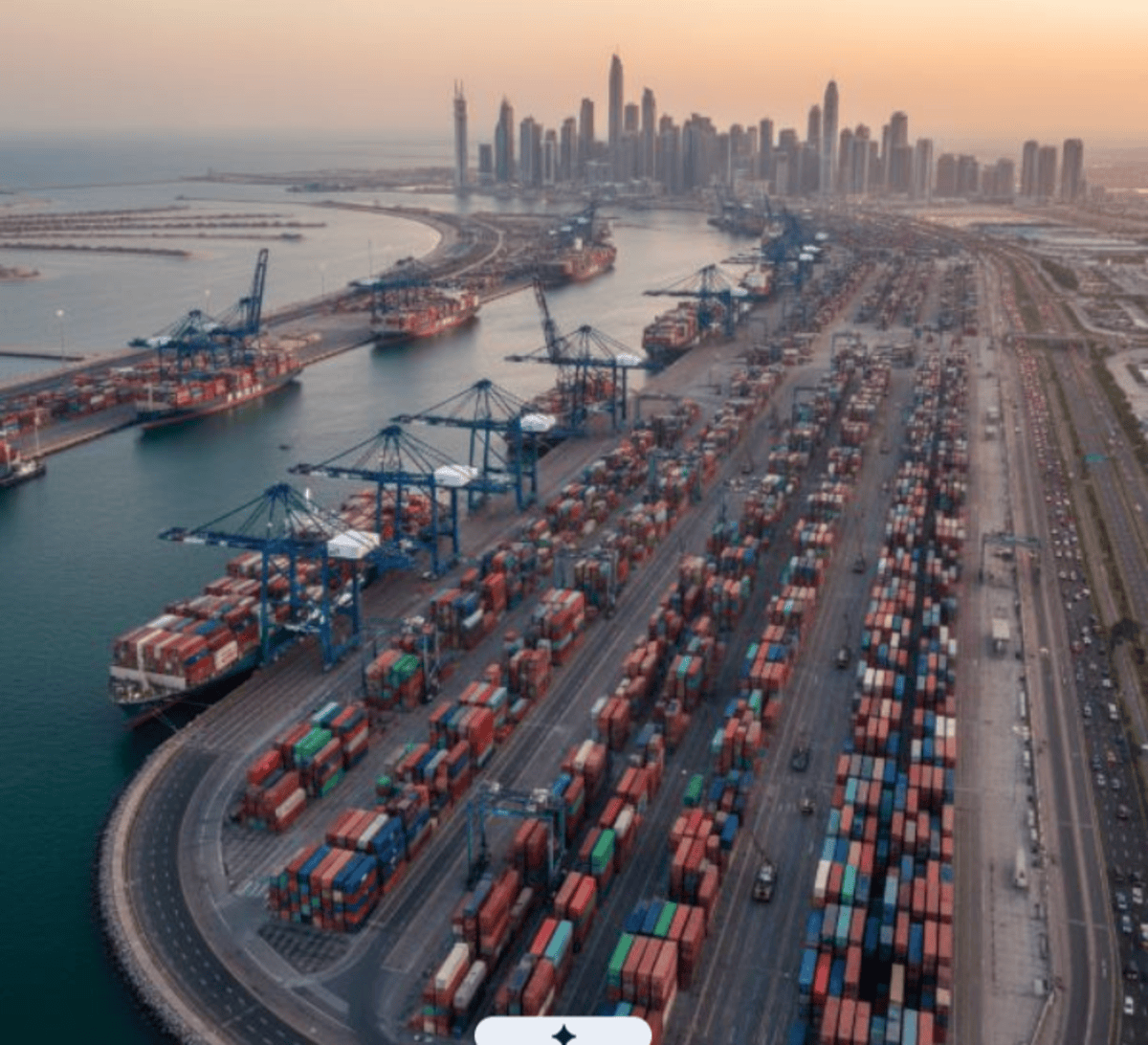
- 4. Established ports such as Dubai and Jebel Ali are making it increasingly unfeasible for Gwadar to establish itself as a regional shipping destination.
- 5. CPEC's increasing debt has led to strained relations with China and restricted investment in much-needed complementary infrastructure simultaneously.
- 6. Gwadar's declining geopolitical relevance with China reevaluating alliances in the region.
Introduction
CPEC was once one of the greatest infrastructure projects of the 21st century. The anchor and lynchpin of this infrastructure corridor- Gwadar port in the Pakistani province of Balochistan-was conceived to be the gateway to the wider world for Pakistan and the crown jewel of China’s BRI. Here we are now, almost ten years after its inception, and China is slowly and steadily, if not surreptitiously, in the process of withdrawing from this pet project; investment flows are glacially slow, implementation has been deferred to an unknown date in the future, and official pronouncements have fallen silent.
1. Financial Losses and Mounting Economic Concerns
Revenues from shipping fees, container handling, port fees, and services were forecast to make Gwadar Port highly profitable. In actual practice, the port works far below capacity with very low volume of cargo movements compared to ports in the UAE, Oman, or even many other ports in the region. Annual revenues have consistently been in the millions instead of the hundreds of millions, proving the billions invested are unsustainable.
Not only on paper, but the port has also become a strategic burden, siphoning funds without a credible payoff, while projected profits seem like distant fantasies as seen from the current figures of cargo movement. The Chinese companies operating it have repeatedly recorded losses, leading Beijing to cut further financial infusion and defer expansion of the port. The dreams of economic development in the southwestern region of Pakistan have become rather distant as many flawed economic principles are at work.
2. Rising Political Instability and Governance Challenges
Political instability in Pakistan is rampant. A constant rotation of leaders, repeated intervention by the military establishment, and a contradictory set of policy aims have all impacted CPEC negatively at each level. Chinese investors seek stability of regulatory regimes and an unwavering commitment to policies, which Islamabad has failed to provide consistently. Changing regimes have sometimes halted or modified arrangements, thereby casting a shadow of uncertainty and discouraging future investment from China.
Pakistan’s bureaucratic inertia and corruptible institutions have made the CPEC process all the more difficult. Chinese businesses complain of continuous delays in obtaining permits and resolving issues with regard to land acquisition, as well as with necessary permits. Institutional mismanagement has turned the flagship project into a poster boy of failures and has now driven China to stay away from the complexities of Pakistani politics.
3. Security Threats and Operational Vulnerabilities
Furthermore, the port is constructed not merely for Balochistan but, on the other hand, it is also one of the most volatile regions of Pakistan wherein armed rebellions, separate movements, and terrorist elements challenge the progress projects and foreign professionals. The constant attacks targeting Chinese nationals and engineers had jeopardised the overall safety as well as work operation on Gwadar port, further threatening CPEC as a whole corridor instead of just the port.
It became unfeasible to continue the investment in such a risky venture, given the spiralling international insurance and security costs that eat into negligible profit margins, port operation needs constant security funding for its Chinese personnel and security, which has become an undue additional cost in a venture that is not earning. This security is showing no sign of abating.
4. Strategic Miscalculations in Regional Competition
Chinese planners are proving to be over-ambitious on the competitive level. Ports in Jebel Ali (Dubai), Port Rashid, or even Aden are far more competitive with the shipping lines. Shipping lines are attracted more towards these ports since they have better networks, efficiency, and are already connected. Gwadar does not have good enough hinterland connections, multimodal connections, infrastructure, or working experience.
Shipping lines have no incentive to route cargo through a new, untried port with few road and rail connections. The notion that mere geographical proximity will create trade was faulty on China’s part. What port facilities need is an entire logistics, warehousing, and transport system, and these are taking a great deal more time and money to build up than initially predicted.
5. Pakistan’s Unsustainable Debt Burden and Loan Pressures
Pakistan’s increasing debt burden, obtained from loans under the CPEC project, has made it difficult for it to repay its debt obligation in the long run. Islamabad has been unable to raise adequate returns to pay Chinese creditors, putting pressure on bilateral relations. International concerns over the debt trap syndrome that Pakistan faces have led many experts to regard CPEC loans as a predatory financing system.
In fact, this debt system has been disadvantageous to the Chinese themselves. Fiscal pressure in Pakistan has made it harder for it to invest in associated infrastructure (connecting roads, rail, and telecom to Gwadar). Without that infrastructure, the port can achieve nothing, but the resources to develop it are simply not present in Pakistan. Beijing is in a painful dilemma between putting more money into an infrastructure development framework, which has been and is to be implemented, or foregoing the returns on money invested in Gwadar.
6. Geopolitical Realignment and Strategic Priorities Shift
The geopolitics in the region has transformed in a major way since CPEC was launched. The growing strategic partnership between the US and India and the problem in the Indo-Pacific has forced China to reconsider its strategic calculation with regard to South Asia. According to this new perspective, the strategic importance of Gwadar Port has significantly decreased because China is gaining influence in the sea lanes in the Indian Ocean, and thus, it is not important for China to view the Gwadar Port, one of the reasons for which was to counter the possibility of a blocked Malacca Strait, anymore, due to the increased strength of the Chinese navy.
Political instabilities within Pakistan, alongside the new political configuration in Afghanistan, have not eased the prospect of CPEC’s development into a truly regional connector. Whereas the concept of the ‘New Silk Road’ was novel when first introduced, it now must compete with other corridors and projects that potentially offer a higher return. Thus, while the investment was originally designed as a forward-looking initiative in an uncertain strategic context, today it looks more like a sunk cost in a context of China’s increased stability in regional partnerships.
Conclusion
The silent departure of China from Gwadar has less to do with recalibrating finances and more to do with reevaluating CPEC itself. Gwadar could only work if it were framed as an economically viable but regionally secure mega project, none of which will actually ever occur. Due to continually rising costs, consistent insecurity, uncontrollable debt, and a catastrophic lack of results, Gwadar is increasingly becoming less of a signature mega project and more of an exemplary failure, an ill-advised warning tale about ill- conceived infrastructure projects.
Despite stating that they are at the heart of CPEC, the reduction in the total amount of finance and the absence of a timeline indicate that China’s enormous economic muscle alone will not see all of these grand ideas through.
Frequently Asked Questions
What is China’s Strategic Retreat from Gwadar Port?
China’s Strategic Retreat from Gwadar Port refers to the gradual slowdown in investments, delayed infrastructure projects, and reduced financial commitments due to economic, security, and geopolitical challenges affecting the China-Pakistan Economic Corridor (CPEC).
Why is the Strategic Retreat from Gwadar Port becoming a major concern?
The Strategic Retreat is raising concerns because Gwadar was expected to be the flagship project of CPEC. Reduced investment could affect Pakistan’s economic development, regional connectivity, and the long-term success of the port.
How have security challenges contributed to China’s Strategic Retreat?
Frequent attacks on Chinese workers, ongoing insurgency in Balochistan, and rising security costs have made operations riskier, encouraging China’s Strategic Retreat from further expansion at Gwadar Port.
Is China’s Strategic Retreat linked to changing geopolitical priorities?
Yes. China’s Strategic Retreat is influenced by shifting geopolitical priorities, including developments in the Indo-Pacific, stronger naval capabilities, and the availability of alternative trade and investment corridors offering better strategic and economic returns.
What does China’s Strategic Retreat mean for the future of CPEC?
China’s Strategic Retreat could slow the pace of CPEC development, delay planned infrastructure projects, and force both China and Pakistan to reassess investment strategies, financing models, and the long-term viability of Gwadar Port.
What are the main reasons behind China’s Strategic Retreat from CPEC?
China’s Strategic Retreat from CPEC is driven by financial losses, security concerns, political instability in Pakistan, rising debt risks, and changing geopolitical priorities that have reduced the project’s expected returns.
How has Gwadar Port been affected by China’s Strategic Retreat?
China’s Strategic Retreat has resulted in slower investment, delayed expansion projects, reduced infrastructure development, and lower expectations for Gwadar Port’s role as a regional trade hub.
Does the Strategic Retreat mean China has completely abandoned Gwadar Port?
No. The Strategic Retreat does not necessarily mean China has abandoned Gwadar Port. Instead, it reflects a more cautious approach, with reduced investment and a focus on evaluating future economic and strategic benefits.
How does Pakistan’s debt crisis influence China’s Strategic Retreat?
Pakistan’s growing debt burden limits its ability to finance supporting infrastructure and repay loans, making China’s Strategic Retreat a response to increasing financial risks and uncertain project returns.
Why is Strategic Retreat considered a shift in China’s Belt and Road Initiative strategy?
The Strategic Retreat signals that China is becoming more selective about Belt and Road Initiative (BRI) investments, prioritizing projects with stronger economic viability, lower security risks, and better long-term returns.
Can Gwadar Port recover despite China’s Strategic Retreat?
Gwadar Port could recover if Pakistan improves security, strengthens governance, expands transport infrastructure, and attracts greater commercial activity, reducing the factors that contributed to China’s Strategic Retreat.
How has regional competition accelerated China’s Strategic Retreat?
Established ports in the Middle East and South Asia offer better logistics, stronger connectivity, and higher operational efficiency, making them more attractive than Gwadar and contributing to China’s Strategic Retreat.
Why has Gwadar Port failed to become a major global trade hub?
Gwadar Port has struggled due to limited cargo traffic, inadequate transport connectivity, security concerns, political uncertainty, and competition from well-established regional ports.
What challenges have slowed the progress of the China-Pakistan Economic Corridor (CPEC)?
CPEC has faced delays because of financial constraints, governance issues, security risks, land acquisition problems, and changing economic priorities in both China and Pakistan.
How do security issues in Balochistan affect foreign investment?
Security threats increase operational costs, discourage international investors, delay infrastructure projects, and create uncertainty for long-term business operations.
Statutory Citations & References
[1] World Bank, “China-Pakistan Economic Corridor: Progress, Challenges, and Outlook,” World Bank East Asia and Pacific Region, 2023. [Online]. Available: https://www.worldbank.org/en/region/eap/publication/cpec-progress-report
[2] A. Hassan and M. Khan, “Gwadar Port: A Strategic Assessment of Investment Returns and Regional Viability,” South Asian Policy Review, vol. 28, no. 3, pp. 45–67, 2023. [Online]. Available: https://www.sapolicy.org/gwadar-strategic-assessment
[3] International Monetary Fund, “Pakistan: Staff Report for the 2024 Article IV Consultation—Debt Sustainability Analysis and CPEC Obligations,” IMF Country Report, no. 24/102, 2024. [Online]. Available: https://www.imf.org/en/Publications/CR/Issues/2024/04/15/pakistan-staff-report
[4] S. Ahmed, “Security Challenges to CPEC Infrastructure Development in Balochistan: Implications for Regional Stability,” Journal of Strategic Studies, vol. 46, no. 2, pp. 234–256, 2023. [Online]. Available: https://www.tandfonline.com/strategic-studies-cpec
[5] B. Li, “China’s Belt and Road Initiative: Regional Reassessment and Strategic Pivot in South Asia,” Asian Economics Review, vol. 35, no. 4, pp. 112–135, 2024. [Online]. Available: https://www.asianeconomicsreview.org/bri-pivot-2024
[6] Pakistan Institute of Strategic Studies, “Gwadar Port: Operational Efficiency, Traffic Patterns, and Future Prospects,” PISS Annual Report, 2024. [Online]. Available: https://www.piss.org.pk/gwadar-port-report-2024
[7] M. D. Zakaria, “CPEC Financing and Pakistan’s Debt Sustainability: A Critical Analysis,” International Relations Quarterly, vol. 31, no. 1, pp. 89–112, 2023. [Online]. Available: https://www.irq-journal.org/cpec-debt-analysis
Simplify your Business
Eve Consultancy is your trusted partner for end-to-end compliance services, including Company Incorporation, GST Registration, Income Tax Filing, MSME Registration, and more. With a quick and hassle-free process, expert guidance, and affordable pricing, we help businesses stay compliant while they focus on growth. Backed by experienced professionals, we ensure smooth handling of all your legal and financial requirements. WhatsApp us today at +91 9711469884 to get started.
Maximize Your Business Potential
Looking for a partner to advise on GST, ITR, Business Registration, or Financial Strategy? Our experts ensure your compliance is seamless and your solutions are optimized.
Book a Strategy ConsultationEve Finance: Your Daily Financial Eve-olution!
Finance made simple, fast, and fun! 🏦💡 Sign up for your daily dose of financial insights delivered in plain English. In just 5 minutes, you’ll be smarter and better!