
Engine of Global Production: China’s Rule in Manufacturing
Published: Jul 6, 2026
Key Highlights
- The ecosystem matters more than the factory. China's manufacturing advantage is not just about cost or capacity, it is also about the dense network of suppliers, logistics, and skills.
- China has moved beyond the low-cost assembly. Electric vehicles, solar, advanced electronics are now there.
- Reshoring is real but slow. Political intent and economic reality are not moving at the same speed. Shifting final assembly is achievable.
Pick up almost any object within arm’s reach and there is a reasonable chance some part of it passed through a Chinese factory at some point. A phone, a pair of shoes, a kitchen appliance, a component inside a medical device — the reach of Chinese manufacturing into everyday life is so extensive that it has become almost invisible. It is one of those things that only becomes obvious when something disrupts it.The pandemic was one such disruption.
Since then, there has been a lot of conversation about reducing dependence on Chinese manufacturing, reshoring production, and diversifying supply chains. Some of that is happening. But the more you look at what China actually built, the clearer it becomes why unwinding it is a much longer project than the headlines tend to suggest.
The infrastructure argument
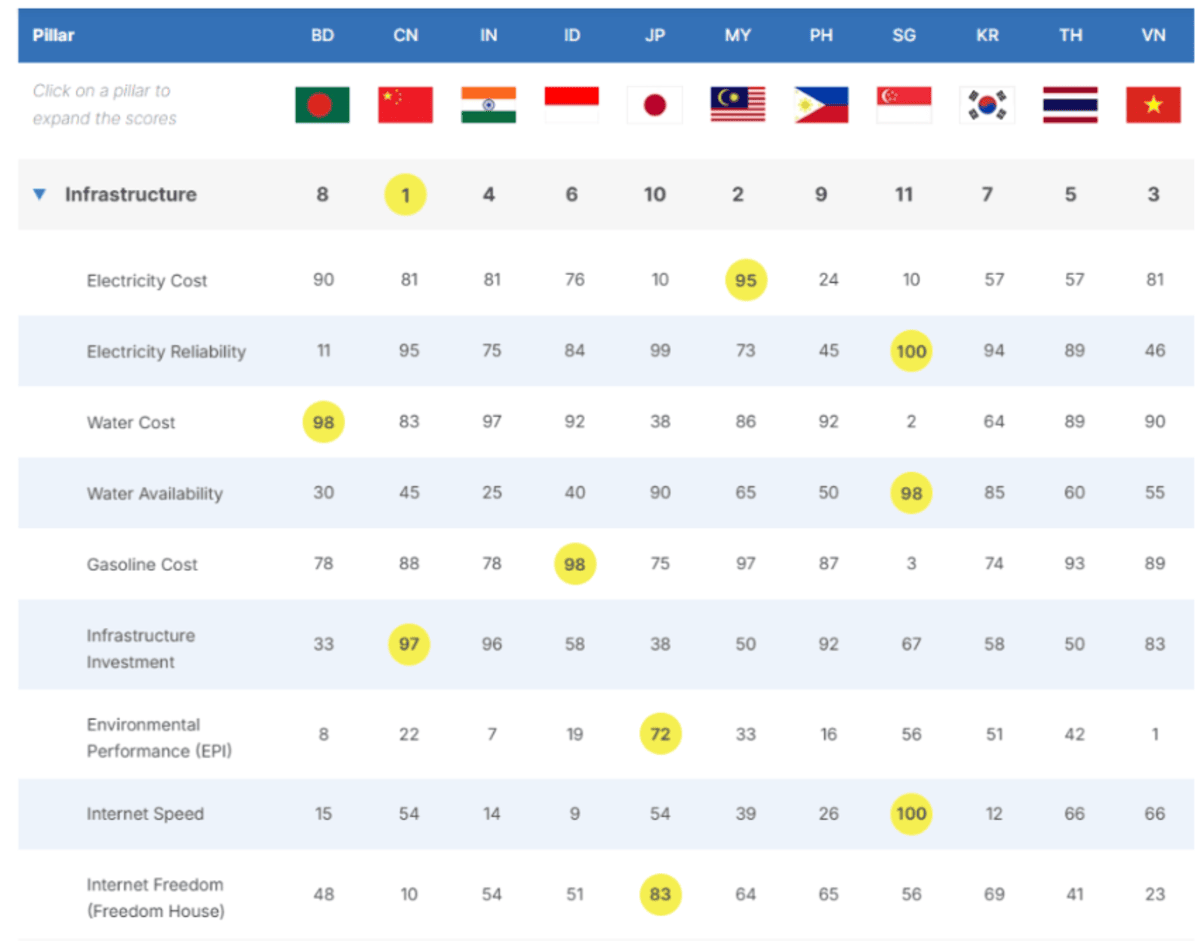
China’s physical infrastructure is a significant part of the story. The country has built more high-speed rail, more port capacity, more industrial parks, and more power generation in the past thirty years than most economies have in their entire modern history. The practical effect is that goods move quickly and cheaply within China — between factories, between cities, between production and export.
The port infrastructure is particularly striking. Several of the world’s busiest container ports are in China, and they are not busy by accident. They were built to handle the volume that Chinese manufacturing generates, with investment in automation and throughput that keeps costs per container lower than almost anywhere else.
It is not just low-cost manufacturing anymore
China has moved steadily up the value chain. Electronics, electric vehicles, solar panels, advanced materials, aerospace components, pharmaceuticals — these are no longer niche exceptions. They represent a significant and growing share of what Chinese factories produce. The country now accounts for a substantial portion of global electric vehicle production and an even larger share of the solar panels installed around the world. These are not industries that relocated to China because of cheap labour. They grew there because of the combination of scale, supply chain depth, and engineering talent.
The reshoring conversation — what is realistic
It is thought that there will be reduction dependence on Chinese manufacturing is real, and it is not going away. Geopolitical tensions, pandemic-era disruptions, and national security concerns around certain technologies have all forced the governments and companies to think more seriously about where things are made. Moving final assembly out of China is relatively straightforward for some products. Moving the supply chain that feeds that assembly is not. The label on the finished good changes; the underlying dependency does not necessarily.
The industries where genuine decoupling is happening are mostly those where national security or strategic considerations override pure economics — semiconductors being the clearest example. For the vast majority of consumer goods and industrial products, the economics still point toward China, and that does not change quickly regardless of political intent.
Future Outlook
China’s manufacturing position is not static. The country is dealing with its own pressures — rising wages in coastal cities, an ageing workforce, and increasing competition from lower-cost countries for the most labour-intensive work.
The more interesting question for the next decade is not whether China’s manufacturing dominance will diminish — it probably will, gradually — but what fills the gap and how quickly. Building the kind of integrated industrial ecosystems that China has developed is a generational project, not a policy cycle. The countries most likely to capture meaningful share are those that start now and sustain the investment for long enough to build real depth.
Conclusion
China’s manufacturing strength was not handed to it. It was built, over decades, through infrastructure investment, industrial policy, and the gradual accumulation of an ecosystem that is genuinely difficult to replicate quickly. Understanding that is not an argument for complacency about supply chain risk — it is an argument for being realistic about what diversification actually requires and how long it takes. The world will keep trying to build alternatives. China will keep building too.
Frequently Asked Questions
Why is industrial infrastructure important for manufacturing growth?
Industrial infrastructure plays a crucial role in manufacturing growth by providing reliable transportation, power supply, logistics, and industrial parks. Strong industrial infrastructure helps businesses reduce costs, improve efficiency, and support large-scale production.
How does industrial infrastructure strengthen global supply chains?
Industrial infrastructure strengthens global supply chains by enabling faster movement of raw materials and finished goods through modern ports, highways, rail networks, and warehouses. Efficient industrial infrastructure also minimizes delays and improves overall supply chain resilience.
Which countries are investing the most in industrial infrastructure?
Several countries, including China, India, Vietnam, and the United States, are investing heavily in industrial infrastructure to attract manufacturing and boost economic growth. These investments focus on transportation networks, smart factories, industrial corridors, and logistics hubs to enhance global competitiveness.
What is industrial infrastructure, and why is it essential for economic development?
Industrial infrastructure includes transportation networks, power systems, industrial parks, ports, and logistics facilities that support manufacturing and economic growth by improving productivity and connectivity.
Statutory Citations & References
[1] “China Manufacturing Overview,” World Bank, 2024.
[2] “China’s Supply Chain Dominance,” McKinsey & Company, 2025.
[3] B. Naughton, The Chinese Economy: Adaptation and Growth, 3rd ed. MIT Press, 2024.
Simplify your Business
Eve Consultancy is your trusted partner for end-to-end compliance services, including Company Incorporation, GST Registration, Income Tax Filing, MSME Registration, and more. With a quick and hassle-free process, expert guidance, and affordable pricing, we help businesses stay compliant while they focus on growth. Backed by experienced professionals, we ensure smooth handling of all your legal and financial requirements. WhatsApp us today at +91 9711469884 to get started.
Maximize Your Business Potential
Looking for a partner to advise on GST, ITR, Business Registration, or Financial Strategy? Our experts ensure your compliance is seamless and your solutions are optimized.
Book a Strategy ConsultationEve Finance: Your Daily Financial Eve-olution!
Finance made simple, fast, and fun! 🏦💡 Sign up for your daily dose of financial insights delivered in plain English. In just 5 minutes, you’ll be smarter and better!