
Why ICAI’s New Guidance on Non-Corporate Financial Statements Matters for Reporting
Published: Sep 13, 2026
When people think of “financial reporting,” they usually picture big listed companies with complicated corporate structures. But honestly, a massive chunk of India’s business world is made up of much simpler setups — proprietorships, partnerships, that sort of thing. And for these businesses, having financial statements that are clear, consistent, and actually make sense matters just as much as it does for the big players.
That’s basically where ICAI steps in. Back in August 2023, they put out a Guidance Note on Financial Statements of Non-Corporate Entities, aiming to bring some real standardization to how these statements get presented. Then in March 2026, they announced a phased rollout — applicable for reporting periods starting from 2025–26 onward.
For accountants, auditors, and business owners, this is genuinely worth paying attention to. Financial statements aren’t just a pile of numbers — how those numbers get classified, presented, and explained can completely change how someone reads and understands a business.
So What’s Actually Changing?
The key thing to get straight — this guidance is specifically about non-corporate entities. So we’re talking proprietorships and partnerships here, not listed companies.
Per ICAI’s March 31, 2026 announcement, the rollout has two phases: Phase I covers accounting periods starting on or after April 1, 2025, but only for entities with turnover above ₹5 crore. Phase II kicks in from April 1, 2026, and covers everyone the guidance applies to. Basically, bigger entities get pulled in first, and everyone else follows a year later.
One thing worth clarifying — don’t mix this up with Ind AS reporting for companies. This guidance is entirely about non-corporate entities, and it works alongside existing Accounting Standards and legal requirements, not instead of them.
Why Standardization Actually Matters Here
Picture two businesses doing roughly the same financially — similar sales, similar expenses, similar assets. Now imagine each one presents its numbers in a totally different format. Suddenly comparing them becomes a genuine headache, even though the underlying numbers might be pretty similar.
That’s the whole point of standardized formats — ICAI’s guidance lays out specific formats meant to improve both the quality and completeness of how non-corporate entities report their finances, while still giving a “true and fair view” that lines up with existing Accounting Standards. For anyone reading these accounts — a lender, an investor, or even just the business owner themselves — this makes life genuinely easier. Information becomes easier to find and actually understand.
The Balance Sheet and P&L — Telling the Financial Story
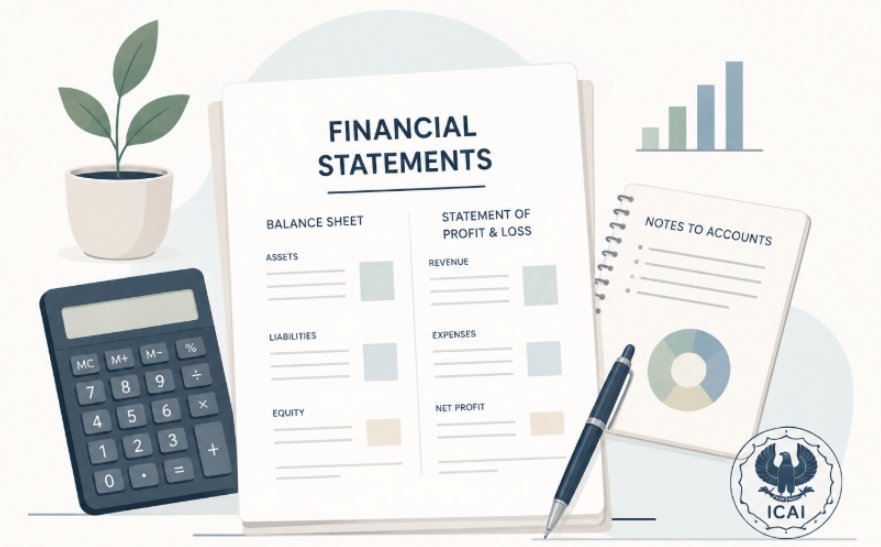
At the end of the day, financial statements are just trying to tell the story of a business. The Balance Sheet shows where things stand — assets, liabilities, owner’s funds — at a specific point in time. The Profit and Loss Statement shows how the business actually performed over a period.
But getting these right isn’t as simple as just dumping numbers out of your accounting software. Items need to be classified properly, relevant disclosures have to be thought through, and honestly, the notes attached to these statements often carry information you simply can’t get from the main numbers alone. ICAI’s guidance is pretty clear on this too — the disclosures it asks for come in addition to what’s already required under existing Accounting Standards, not as a replacement.
Which brings us to something a lot of people underestimate — the notes to accounts.
Why the Notes to Accounts Deserve More Attention Than They Get
For a lot of small businesses, year-end work is basically all about getting the Balance Sheet and P&L ready — and that’s it, done, move on. But financial reporting genuinely doesn’t stop there.
The notes to accounts add real context — narrative explanations, breakdowns of what’s behind certain numbers, details on things that might not even show up directly in the statements themselves. Practically speaking, this means you shouldn’t just glance at the headline number and call it a day. Knowing the total receivables figure is useful, sure — but understanding what those receivables actually represent tells you a whole lot more. Same logic applies to borrowings, fixed assets, expenses, pretty much any significant line item.
What This Actually Means for Accountants Day-to-Day
This guidance really matters for anyone preparing accounts for proprietorships, partnerships, and similar entities. And here’s the thing — year-end reporting was never just about punching numbers into software and hitting print. The books underneath everything need to actually hold up.
That means the boring-but-essential stuff — ledger scrutiny, bank reconciliation, receivable and payable checks, inventory verification, correctly classifying expenses — matters even more now. A single misposted expense can throw off how the P&L reflects reality. Unreconciled bank balances or wrong receivable figures can quietly distort the whole financial position. Good reporting genuinely starts long before anyone sits down to prepare the final statements.
Clearer Reporting Leads to Better Decisions
Here’s maybe the most practical benefit of all this — clear financial statements actually help business owners make better calls. Is the business genuinely profitable? Are expenses creeping up faster than they should? How much cash is stuck in receivables? How much is owed to suppliers? Is there enough cash flow? Has the financial position actually improved from last year?
These aren’t questions you can answer just by glancing at a bank balance. A properly prepared set of financial statements pulls all these scattered pieces together and gives an owner a genuinely clearer picture of where things stand.
It Also Makes Comparisons Way Easier
Consistency matters a lot whenever financial information needs comparing — this year against last year, information for a lender, numbers for another stakeholder. When statements follow a recognized structure, people spend less time trying to decode the format and more time actually analyzing what’s in it. That’s really the deeper reason standardization matters here — it’s not just a compliance checkbox.
Genuinely Useful for Smaller Businesses
Non-corporate businesses tend to be smaller, sure, but that doesn’t make their reporting any less important. If anything, smaller businesses probably benefit more from clearer reporting, since owners are often juggling multiple roles themselves. A well-organized financial statement gives them a structured view of the business without having to dig through hundreds of individual transactions one by one. It also helps accounting professionals bring more consistency to how they prepare accounts across different clients — ICAI’s also put out illustrative formats and FAQs to support this transition.
What Businesses Should Actually Do About This
For entities this guidance applies to, this really shouldn’t be treated as some last-minute scramble at year-end. Start by making sure the underlying books are actually clean — ledgers reviewed, balances reconciled, documents properly maintained. Accountants should get genuinely familiar with the new formats and disclosure requirements well ahead of time.
And importantly — this guidance works alongside existing Accounting Standards and statutory requirements, not instead of them. ICAI makes that distinction pretty clear itself.
Looking Ahead
With the March 2026 announcement, the timeline’s suddenly very real. Phase I entities need to comply starting April 1, 2025, and Phase II brings everyone else in from April 1, 2026. For accounting professionals, this is shifting from “something to study eventually” to “something that needs to actually show up in day-to-day work.”
The bigger takeaway here is pretty simple, honestly — good financial reporting was never just about getting the final numbers correct. It’s about presenting those numbers in a way that’s consistent, transparent, and genuinely useful to whoever’s relying on them. As non-corporate businesses keep playing such a big role in India’s economy, clearer reporting just makes their financial picture easier to understand, compare, and actually use to make decisions. And for accountants, getting comfortable with these requirements is quickly becoming just part of doing the job properly.
Frequently Asked Questions
What is ICAI’s Guidance Note on Financial Statements of Non-Corporate Entities?
It provides standardized guidance for preparing and presenting financial statements of non-corporate entities such as proprietorships and partnerships.
Which businesses are covered by the new financial reporting guidance?
The guidance applies to eligible non-corporate entities, including proprietorships and partnerships, subject to the applicable phased rollout.
When does the ICAI guidance become applicable?
Phase I applies from April 1, 2025, for entities with turnover above ₹5 crore, while Phase II applies from April 1, 2026 to all entities covered by the guidance.
Why is standardization important for financial statements?
Standardized financial statements make financial information easier to understand, compare, and analyze across different businesses and reporting periods.
Does this guidance replace existing Accounting Standards?
No. The guidance works alongside applicable Accounting Standards and statutory requirements rather than replacing them.
What financial statements are covered under the guidance?
The guidance focuses on the presentation of key financial statements, including the Balance Sheet and Profit and Loss Statement, along with relevant disclosures.
Why are notes to accounts important in financial reporting?
Notes to accounts provide additional explanations and breakdowns that help users properly understand the figures reported in the financial statements.
How can accountants prepare for the new requirements?
Accountants should review ledgers, reconcile balances, verify receivables and payables, check inventory, and become familiar with the prescribed financial reporting formats and disclosures.
How can better financial reporting help business owners?
Clear financial statements help owners assess profitability, cash flow, receivables, liabilities, expenses, and the overall financial position of their business.
Will the new guidance make financial statements easier to compare?
Yes. Consistent financial reporting formats allow owners, lenders, and other stakeholders to spend less time interpreting presentation differences and more time analyzing the actual financial information.
Statutory Citations & References
[1] ICAI — Announcement on applicability of Guidance Note for 2025–26 onwards
[2] ICAI — Guidance Note on Financial Statements of Non-Corporate Entities
[3] ICAI Publication Portal — FAQs and resources on the Guidance Note
Maximize Your Business Potential
Looking for a partner to advise on GST, ITR, Business Registration, or Financial Strategy? Our experts ensure your compliance is seamless and your solutions are optimized.
Book a Strategy ConsultationEve Finance: Your Daily Financial Eve-olution!
Finance made simple, fast, and fun! 🏦💡 Sign up for your daily dose of financial insights delivered in plain English. In just 5 minutes, you’ll be smarter and better!