
How Sustainable Sourcing Is Becoming a Competitive Advantage in Commerce
Published: Oct 10, 2026
Key Highlights
- Regulatory Compliance: Sustainable sourcing helps businesses follow applicable environmental, labor, and ethical sourcing regulations.
- Supply Chain Transparency: Businesses should assess suppliers and maintain records to improve accountability and traceability.
- Environmental Responsibility: Sustainable sourcing encourages efficient resource use, waste reduction, and environmentally responsible purchasing.
- Labor Standards: Companies should evaluate supplier practices to identify risks involving worker safety, fair wages, and labor rights.
- Risk Management: Sustainable sourcing can help businesses identify supply-chain risks and reduce potential compliance issues.
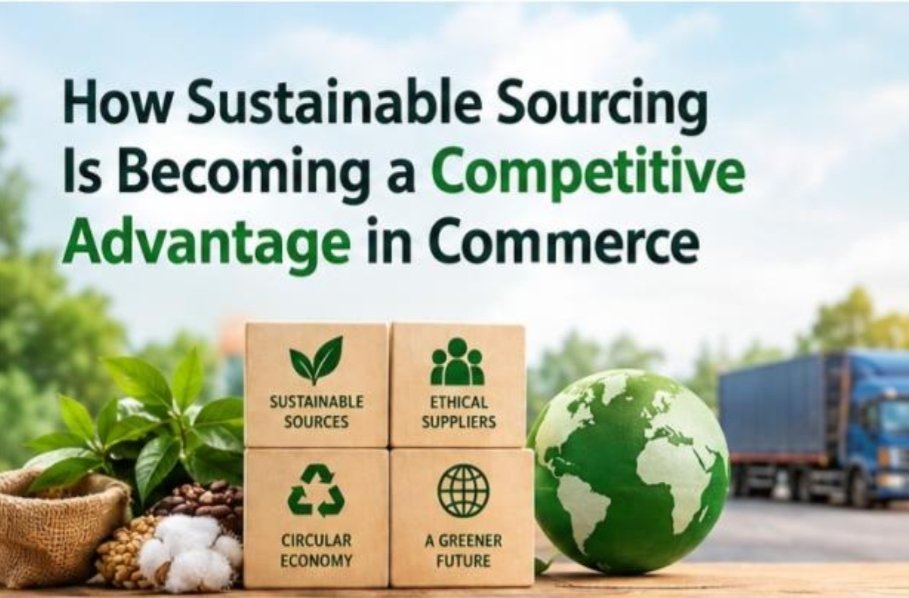
Trend: Sustainability Is Influencing How Businesses Compete
Introduction:
Sustainability is finding its place in the way companies communicate with customers about their products. Businesses are voicing what they know about where their materials come from, what suppliers do and what impact they are able or have to avoid. These practices begin to change sourcing, in that decisions go beyond the purchasing departments’ interest in suppliers.
In turn, this is enhancing the competitiveness of companies that have sustainable sourcing, since the topic of procurement can enhance or shape their brand, or its relationships with its clients.
Understanding Sustainable Sourcing
Sourcing can be sustainable, in that companies look at more than just what a supplier charges for particular products or materials. Businesses can go further in the assessment and choose between suppliers and their approaches based on things like environment impact, labour standards and how much they consume in resources, as well as how the firms operate.
Companies in need of wood for its furniture, for instance, can buy not just whichever supplier has the best rates, but may decide to research which have appropriate sources, conduct their operations fairly in terms of workers, and do not cause any other unnecessary impact with the making of their wood products.
In short, sourcing decisions start to take part in a larger business context.
Why Is Sustainable Sourcing Becoming Important?
Customers Are Looking Beyond the Product
While what a product does or is made up of may be important to some people, this is not the sole aspect of making a choice. Many are interested in how these things are made, and its’ impact on society and the environment. This has caused many businesses to voice more about what goes into them, such as explaining the materials and suppliers that make products possible.
Sustainability is then an enhancement to the companies in this space, with what they can say as part of their offerings. However, the claims on this matter must hold weight, as to not damage the reputation of these firms or their brands.
It Can Help Brands Stand Out
There are businesses in the same spaces and selling the same kinds of goods, some of which can charge similarly, and have comparable traits. Sourcing is another layer that companies can use to enhance their presence, and how they are perceived in contrast to others.
When one sells something similar to another, but the practices are not comparable, the companies can be thought of in completely different lights. Because sustainability is something that firms are able to voice, businesses choose this as a way to build upon the aspects of their products that customers are not comparing of the companies’ competitors. As an enhancement to other aspects of the businesses, sourcing can enhance the brands and what firms are seen to offer beyond their qualities as products.
Benefits Beyond Perception
While this may affect customer appeal and company image, the relevance of sustainable sourcing goes beyond these matters in a commercial setting.
A Better Understanding of the Chains and Risk Factors
Assessing and selecting suppliers that operate appropriately can bring companies awareness of other issues within their supply chains, such as shortages or environmental regulations that may challenge them in the future. Having this information can help a firm make preparations for possible changes in procurement, and how it will navigate such circumstances.
With the focus on these kinds of risks, companies can then find alternative resources as solutions to certain challenges.
More Efficient Use of Resources
With the focus on how sustainable the sourcing process is, businesses may focus further on how much resources they are using. This can be about avoiding unnecessary uses, such as excessive packing materials, reducing unnecessary waste, and focusing on better materials that are not a resource drain. These may begin to make changes to how the firm conducts itself, as well as the amount of its operational costs over time.
Encouraging Innovation Between Companies and Their Suppliers
Sustainable sourcing encourages businesses to build strong relationships with suppliers and develop more responsible purchasing practices. Companies can collaborate with suppliers to reduce environmental impact, replace harmful materials, and introduce sustainable alternatives. For example, a retail chain and its suppliers may work together to reduce product packaging or replace unnecessary components with more environmentally friendly materials. These collaborative efforts can reduce waste, improve resource efficiency, and support long-term business sustainability.
The Challenges Businesses Need to Consider
In its transition towards more sustainable practice, there are practical factors that business have to consider. Materials or suppliers used may not always be as affordable, and new sourcing arrangements require more investment. Companies also need ways to assess supplier claims before considering them for continued partnership – having said something about being environmentally friendly does not automatically mean that a firm will meet particular requirements.
How Businesses Can Develop a Sustainable Sourcing Strategy
While the transition cannot be done overnight, companies do not need to invest in completely overhauling their supply chains and supplier bases. It can just begin with the materials, supplies and areas that most greatly impact business operations. The most straightforward approach can involve finding suppliers that match certain sustainability requirements, and then assessing their abilities. From here, businesses can make their goals for more transparent and sustainable sourcing practices – which should take their business goals, customer expectations and other goals into account. They would need to enhance their knowledge about their chains, and how its resources and waste take place. Companies with long-standing suppliers, on the other hand, have to look at new relationships with other firms, as well as the potential opportunities that it has for the future in the long run. In short, a strategic approach considers how the company can apply sustainability to its sourcing while still remaining honest and transparent to customers.
Conclusion
Sustainable sourcing is gradually becoming a part of how commerce is taking place in today’s social environment. With the increased customer awareness about how sourcing takes place, and how companies can use this in their own marketing, the competitiveness of firms is increasing. What sustainable sourcing is able to do for a business is not solely based on it being able to enhance their image or appeal. By considering real changes in procurement, and implementing transparency, sourcing can begin to be an integral part of a business’ approach to its wider commercial strategy.
Statutory Citations & References
United Nations Environment Programme (UNEP). “Building Circularity into Our Economies through Sustainable Procurement.”
Link
United Nations Global Compact. “The State of Sustainable Supply Chains: Building Responsible and Resilient Supply Chains.”
Link
United Nations Environment Programme (UNEP). “Sustainable Consumption and Production Policies.”
Link
OECD. “Integrating Responsible Business Conduct in Public Procurement Supply Chains.”
Link
Maximize Your Business Potential
Looking for a partner to advise on GST, ITR, Business Registration, or Financial Strategy? Our experts ensure your compliance is seamless and your solutions are optimized.
Book a Strategy ConsultationEve Finance: Your Daily Financial Eve-olution!
Finance made simple, fast, and fun! 🏦💡 Sign up for your daily dose of financial insights delivered in plain English. In just 5 minutes, you’ll be smarter and better!