
8 Essential Strategies for Corporate Network Architecture Design
Published: Aug 10, 2026
Key Highlights
- The assessment of business requirements will be the basis for the successful design of corporate network architecture.
- To support future requirements, scalability must be designed into the network from the beginning.
- By confining the system parts together, the security controls are applied uniformly to them all through network segmentation and micro-segmentation.
- . The Zero Trust Architecture offers a safety level in a modern distributed workplace environment.
- . SD-WAN technology improves the performance and reduces the costs of wide area connectivity.
- . The SASE solutions provide combinations of networking, security and computing services.
- . Teams can allocate more time to take a step back and assess the overall picture through automation and orchestration.
- . Continuous monitoring is needed for all types of network architecture to adapt over a period of time.
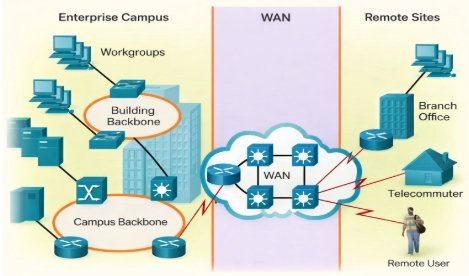
Today, as business has been completely based on digital concepts, enterprise network architecture can be considered the backbone of any organisation. In an age of increased digitalisation, with a move toward cloud-based services, remote working, and bandwidth-intensive technologies, efficiency in enterprise network architecture is more critical than ever. Poor design leads to bottlenecks in work efficiency, security threats, and an inability to grow in the future. The following eight crucial tips on enterprise network design will ensure the development of a strong, extensible, secure and quick enterprise network architecture:
1. Assess Business Requirements and Define Objectives
The first step before designing any network architecture approach is to determine the business requirements. IT will need to investigate business needs, important applications, and the business’s expansion plans, create a diagram of the current network, catalogue every endpoint currently attached to the network, and note every action users perform. The business will have to establish what it will expect from network performance: bandwidth, latency, etc., as well as availability. By setting out the network architecture business goals early in development, there should be no need to redesign the network later.
2. Design for Scalability and Future Growth
Scalability is one of the basic principles for the design of a modern enterprise network infrastructure. The network should be able to expand with minimal major changes. The principle includes making the architecture modular so that expansion can be carried out on a piecemeal basis, choosing hardware with a path to be updated to higher levels, and designing IP addressing for additional machines and locations. It should also support cloud integration, so that resources can scale out as needed. This way, the total cost of ownership can be minimised.
3. Implement Network Segmentation and Security Zones
Segments help control network traffic, limit access to resources, and contain network breaches. This requires us to define valuable company assets and data, create network security zones around them (with least-privilege access), and microsegment them to workloads to stop internal lateral movement. This considerably reduces the attack surface, as a network breach will not spread across the entire infrastructure.
4. Adopt Zero Trust Architecture Principles
The gold standard for corporate network security is Zero Trust Architecture (ZTA). At its core, ZTA follows the philosophy of “never trust, always verify.” The security paradigm treats all users, devices, and applications as untrusted regardless of location, requires every network request to be authenticated, authorised, and encrypted, and consists of authentication and identity verification, context-based access policies, and granular least-privilege security controls. The advantages of organisations adopting Zero Trust Architecture include increased visibility, limited damage from breaches through microsegmentation, and ease of use for remote and hybrid work.
5. Leverage SD-WAN for Wide Area Connectivity
Software-Defined Wide Area Network (SD-WAN) technology provides the framework for connecting remote enterprise locations. Instead of a typical WAN architecture where performance may degrade across multiple connection types, such as MPLS, 5G, or broadband, SD-WAN delivers optimal performance through a multi-link architecture that leverages SDN. This technology monitors traffic conditions and dynamically reroutes traffic to provide optimal performance. Advantages of SD-WAN: Ease of use with centralised management, cost savings with flexible transports, better performance for applications due to traffic optimisation and security via an encrypted tunnel. SD-WAN forms a basic building block of SASE networks.
6. Embrace Cloud-Native and SASE Solutions
This integration of networking and security, called SASE (Secure Access Service Edge), represents a new direction for enterprise network architecture. SASE, as defined by the convergence of wide-area networking (WAN) services with security services, including secure web gateways, cloud access security brokers (CASB), and zero trust network access, is a ground-up cloud native design that moves away from and through the performance pitfalls and security gaps of older, hardware-centric networking systems. In doing so, SASE offers companies unified administration and security across distributed sites, as well as simplified access to cloud applications.
7. Automate Network Operations and Management
Managing a modern enterprise network is a labour-intensive process, as it has grown too complex and large for humans to understand. Performance, risk of human error and time to deploy would all be increased as part of an automated/orchestrated enterprise network. These systems will provide the automation required for configuration management, policy push, troubleshooting, etc. AI automation goes beyond this and uses predictive analysis to detect an impending failure. An overall automation approach will allow IT to dedicate resources to planning rather than maintenance tasks.
8. Ensure Continuous Monitoring and Optimisation
To achieve maximum network efficiency, a business must continuously monitor and reassess its network architecture. A management system for the network that offers up-to-date visibility of traffic levels, the health of systems and possible security threats must be used throughout the business, with network performance analyzed in real-time in order to identify problems in system throughput, efficiently use resources, and confirm that the network architecture still meets the needs of the business, and is not only improved by this ongoing circle of analysis but is also growing along with the demands of the business and its security threats and technologies.
Conclusion
Creating the ideal enterprise network requires a trade-off among these three major factors (performance, security and scalability). As companies transform their digital strategies, the network is expected to become more of a business enabler than just a commodity communications utility. Companies that follow these eight practices have constructed a solid foundation for a network to carry out their business now and into the future. Increased business productivity, greater security, and improved business agility are the returns on the time spent developing a sound network design.
Frequently Asked Questions
What is enterprise network architecture?
Enterprise network architecture is the design and structure of an organization’s network that connects users, devices, applications, and data securely and efficiently.
Why is scalability important in network design?
Scalability allows the network to grow with the business without requiring major redesigns or causing performance issues.
What is Zero Trust Architecture?
Zero Trust is a security model that verifies every user and device before granting access, regardless of their location.
What is SD-WAN?
SD-WAN is a software-based networking solution that improves connectivity, application performance, and management across multiple locations.
How does SASE improve enterprise networking?
SASE combines networking and cloud-based security into a single framework, providing secure access for remote users and cloud applications.
Why is network segmentation important?
Network segmentation separates systems into secure zones, reducing the spread of cyber threats and improving access control.
How does network automation benefit businesses?
Automation speeds up network management, reduces manual errors, and improves operational efficiency.
Why is continuous network monitoring necessary?
Continuous monitoring helps detect performance issues, identify security threats, and keep the network running efficiently.
What factors should be considered before designing an enterprise network?
Businesses should evaluate their operational needs, application requirements, expected growth, and security objectives.
How does a well-designed enterprise network improve business performance?
It enhances reliability, strengthens security, supports business growth, and ensures consistent access to critical applications and services.
Statutory Citations & References
[1] Cisco, “What Is Network Design?” 2025. [Online]. Available: https://www.cisco.com/site/us/en/learn/topics/networking/what-is-network-design.html
[2] NetBox Labs, “An Introductory Guide to Enterprise Network Design,” 2025. [Online]. Available: https://netboxlabs.com/blog/enterprise-network-design-guide/
[3] Cato Networks, “The Ultimate Network Security Architecture Guide for IT Leaders,” 2025. [Online]. Available: https://www.catonetworks.com/network-security/network-security-architecture/
[4] Palo Alto Networks, “What is Zero Trust Architecture (ZTA)?” 2025. [Online]. Available: https://www.paloaltonetworks.com/cyberpedia/what-is-a-zero-trust-architecture
[5] Palo Alto Networks, “What Is SD-WAN? Software-Defined Wide Area Network,” 2025. [Online]. Available: https://www.paloaltonetworks.com/cyberpedia/what-is-sd-wan
[6] LevelBlue, “Building a Resilient Network Architecture: Key Trends for 2025,” 2025. [Online]. Available: https://www.levelblue.com/blogs/levelblue-blog/building-a-resilient-network-architecture-key-trends-for-2025/
[7] Cisco, “2024 Global Networking Trends Report,” 2024. [Online]. Available: https://www.cisco.com/site/us/en/solutions/networking/global-networking-trends/index.html
[8] ConnectWise, “Network Infrastructure Design: Planning and Implementation,” 2025. [Online]. Available: https://www.connectwise.com/blog/network-infrastructure-design-best-practices
Maximize Your Business Potential
Looking for a partner to advise on GST, ITR, Business Registration, or Financial Strategy? Our experts ensure your compliance is seamless and your solutions are optimized.
Book a Strategy ConsultationEve Finance: Your Daily Financial Eve-olution!
Finance made simple, fast, and fun! 🏦💡 Sign up for your daily dose of financial insights delivered in plain English. In just 5 minutes, you’ll be smarter and better!