
GST & Taxation
👁 16 READS
Why Digital Payments Are Becoming a Major Part of Global Financial Infrastructure
Published: Oct 10, 2026
Key Highlights
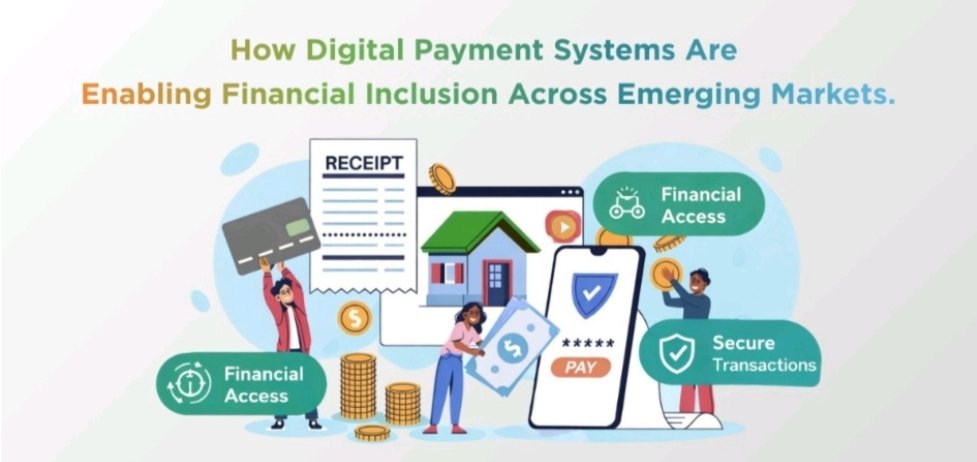
- Digital Payments and Financial Inclusion: Digital payments can improve access to financial services by helping individuals and businesses transfer money conveniently, including in underserved communities.
- Digital Payments and Economic Growth: Digital payment systems support businesses, online shopping, and faster transactions, contributing to economic activity.
- Digital Payments and Cybersecurity: Strong security measures are essential to reduce fraud, unauthorized transactions, and cyberattacks.
- Digital Payments and Data Privacy: Payment providers should protect customers' personal and financial information in accordance with applicable data-protection requirements.
- Digital Payments and RBI Regulations: In India, the Reserve Bank of India (RBI) regulates relevant payment systems and establishes requirements for authorized payment operators.
Ⅰ. Introduction
Digital payments are transforming financial transactions in India and around the world. People can now pay through mobile phones, cards, QR codes, and online banking systems. Digital payments reduce dependence on cash, make transactions quicker, and improve convenience for individuals and businesses. They can also support financial inclusion and strengthen the country’s financial infrastructure.
Every single person uses online payment with the use of different payment apps that government launch it involve the soft payment transaction between the users.
The World Bank notes that payment systems and digital financial services support financial inclusion, economic development, and financial stability of the country. People adopt the new technology and get the financial support such devices.
Ⅱ. Growth of Digital Payments
There are several reasons for the growth of digital payments that support the financial servies such as:
Faster transactions will be available.
Easy mobile access will also be required.
Less dependence on cash through online payment.
Customer easily make online payment of convenient online shopping
Better transaction records are also able for future.
Support for small businesses to make transactions.
Fast payment systems are also spreading globally. According to the World Bank, as of June 2026, people and businesses in 137 countries had access to instant payment services.
Ⅲ. Digital Payments And Financial Infrastructure
Digital payments are not only the way to pay for online product. They are becoming a huge part of financial infrastructure.
Banks, payment companies, businesses, governments, and customers depend on online payment systems for the movement of money from one place to another. Reliable payment infrastructure helps financial activities work smoothly. It also a time saver to the person who involve such payment also avoid mistakes.
Ⅳ. BRICS And Payment System Interoperability
BRICS is also focusing on cross-border payment cooperation. In 2025, BRICS leaders welcomed work by the BRICS Payment Task Force on possible greater interoperability of member countries’ payment systems.
In 2026, the discussion continued around stronger cross-border payment systems and the use of local currencies for trade.
This shows that countries are looking at different ways to make international payments faster, more accessible, and more efficient. That makes the transaction of payment easier and move to different countries.
Ⅴ. Challenges
Digital payments also have some challenges that make difficulties in the payment such as:
Cybersecurity risks
Data privacy concerns are required.
Internet and technology dependence for use digital payment.
Different rules in different countries are applicable.
Difficulty connecting different payment systems because of country difference.
Therefore, payment systems need strong security, clear regulations, and reliable technology to make a correct and easy payment without any mistakes.
Ⅵ. Conclusion
Digital payments are becoming an important part of modern financial infrastructure. They provide speed and convenience, reliability and support financial inclusion. The develop interest in cross-border payment connections through digital payment, including discussions within BRICS, shows that digital payments may play an even larger role in global finance. However, security, regulation, and interoperability will remain important for their future growth.
Key Regulatory Takeaways-
Digital Payments and Financial Inclusion: Digital payments can improve access to financial services by helping individuals and businesses transfer money conveniently, including in underserved communities.
Digital Payments and Economic Growth: Digital payment systems support businesses, online shopping, and faster transactions, contributing to economic activity.
Cybersecurity: Strong security measures are essential to reduce fraud, unauthorized transactions, and cyberattacks.
Data Privacy: Payment providers should protect customers’ personal and financial information in accordance with applicable data-protection requirements.
FAQs
What are digital payments?
Digital payments are electronic transactions in which money is transferred without using physical cash. Common methods include UPI, debit and credit cards, mobile wallets, QR codes, and internet banking.
How do digital payments benefit the Indian economy?
Digital payments support faster transactions, improve payment records, reduce dependence on cash, and help businesses serve customers more conveniently. They can also promote financial inclusion and economic activity.
Statutory Citations & References
World Bank Group: Link
National Informatics Centre: Link
Journal of Internet Banking and Commerce: Link
Share this Insight
Maximize Your Business Potential
Looking for a partner to advise on GST, ITR, Business Registration, or Financial Strategy? Our experts ensure your compliance is seamless and your solutions are optimized.
Book a Strategy ConsultationEve Finance: Your Daily Financial Eve-olution!
Finance made simple, fast, and fun! 🏦💡 Sign up for your daily dose of financial insights delivered in plain English. In just 5 minutes, you’ll be smarter and better!