Topics: Compliance Workshops
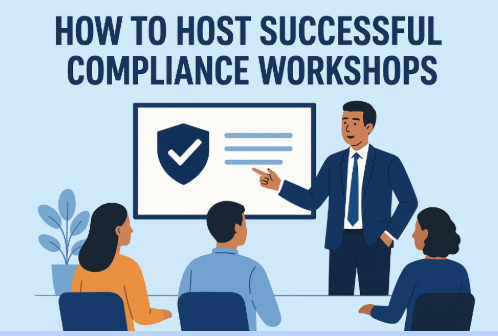
When someone hears the phrase “compliance workshop,” the initial thing that comes to their mind isn’t exactly exciting: rows of employees arrayed before PowerPoint presentations, respectfully nodding and wondering behind closed doors what will be on the menu for lunch. That, alas, has become the fate of most compliance workshops. They are perceived as box-checking events and not so much as opportunities actually to strengthen company culture.
It isn’t simply legal or regulatory compliance—it’s how you protect your company’s brand, establish trust, and empower employees on the spot to make more informed decisions. The secret: holding workshops that do not simply teach rules but inspire ownership.
This is the way to conduct compliance training events that really connect and build long-term employee knowledge.
Start with the “Why.”
Most employees choose not to opt out of compliance training for the very simple fact that they do not understand why it matters. A long body of regulations sounds like handcuffs. But framed as protection—of them, their colleagues, and the company—compliance adds up.
Instead of plunging straight away into law and policy, begin with:
- What are the risks of non-compliance for our company?
- How will employees as individuals be affected?
- What benefits do you get from doing it properly?
Storytelling to the rescue. Offer real-world examples—millions wasted on data breaches, companies fined for incorrect practices, or whistleblowers that have saved lives. Everyone will listen when they see the stakes.
Make It Interactive
Nobody learns best sitting and listening to lectures. Compliance is not something that can be memorized as if it’s history; it has to be practiced with judgment on practical matters. That’s why the best workshop on compliance has to be less lecturing and more dialogue.
Applied methods are:
- Role-playing exercises: Put staff in imaginary situations and have them decide what they should do.
- Case studies: Recreate real events from your industry and ask participants how they would do differently.
- Quizzes or live polls: Make use of interactive tools for knowledge assessment in a fun way.
The greater the employee involvement, the greater the sense of ownership regarding compliance.
Tailor Content for Your Audience
A one-size-fits-all workshop on compliance will not suffice. The risks for the finance team are not identical with those of IT, or of HR, or of frontline staff.
Split your training:
- Finance departments may need additional training on anti-bribery and corruption.
- HR may be more interested in workforce harassment and diversity compliance.
- Operations staff may need guidance on safety protocols.
When employees see the material translate directly to their frontline taskwork, their employee awareness skyrockets.
Focus on Culture, Not Rules
Rules are not enough for all cases. Culture provides the space for rules. A workshop that ceaselessly provides rules for employees will risk breeding robotic obedience and people going through the form and not the substance of law.
Instead, talk about values. Highlight the ways that integrity, accountability, and transparency guide decisions when there is no clear direction from the rulebook. Challenge employees to detail how they personally incorporate these values on the job.
This approach flips the concept of compliance from “what you can’t do” to “how we choose to collaborate.”
Utilize Real-Life Scenarios That Employees Can Relate to
You’ll lose your audience quickest with abstract examples that do not translate to their job. Instead of saying, “Data privacy matters,” show how flawed administration of a single attachment on an email can put thousands of customers’ records at risk.
Scenario examples that you can incorporate into your workshop on compliance:
- A team member gets offered a gift from a supplier. What should they do?
- An employee hears unprofessional comments at work. How do they respond?
- A contractor needs access to confidential information. What must be done?
Real-life examples make compliance go from abstraction to reality.
Encouraging Questions and Open Debate
It intimidates individuals, as workers are afraid of asking “dumb” questions. A good facilitator encourages curiosity and will not have any qualms telling participants there are no bad questions.
Even some organizations assemble anonymous questions prior so people will feel comfortable. Others include breakout groups so smaller groups will be able to freely discuss tough scenarios.
When employees feel free to talk of gray areas, employee awareness really grows.
Using Technology for Engagement
You need not confine your workshops within the space of a physical room. Take advantage of electronic methods of keeping participants engaged:
- Computerized tests and gamifying knowledge assessment.
- Virtual simulations that let employees practice decision-making.
- Brief follow-up videos or newsletters as reinforcement of learning.
Technology isn’t just a frill, since it also creates a means for the workshop effects to carry on beyond a single day.
Measure the Impact
A successful workshop doesn’t stop at closing time when workers leave the room. You must also determine if it actually altered behavior.
Techniques of impact measurement are:
- Pre- and post-workshop questionnaires for assessing change in knowledge.
- Monitoring compliance incident reports—are they decreasing?
- Employee input—are they more comfortable with managing compliance matters?
Results measurement keeps workshops as active, dynamic instruments and not mere rituals.
Regular Follow-Up
One workshop on compliance will not suffice. As with exercise, awareness will wane if not regularly practiced. Reinforce key points with brief mini-refresher courses, staff discussions, or occasional reminders.
View compliance as part of your culture that will take years to develop, not as an annual checklist.
Conclusion
A workshop on compliance doesn’t have to be a feared appointment on the calendar. Done properly, it becomes an opportunity for establishing trust, for reinforcing values, and for enabling employees to do the right thing when it counts most. It’s truly all about protecting people and the company they represent. When workshops are organized for developing genuine employee awareness, at that stage, compliance isn’t paper rules any longer, and it more concerned with how your people think, do, and lead on a day-to-day level.
References
- E. Johnson, “How to Host Successful Compliance Workshops,” Compliance Today. [Online]. Available: https://www.compliancetoday.com/how-to-host-successful-compliance-workshops. [Accessed: Aug. 31, 2025].
- A. Smith, “Effective Strategies for Compliance Training: From Rules to Culture,” Journal of Corporate Compliance, vol. 12, no. 3, pp. 45–53, 2024.
- K. Brown, “Employee Engagement Through Interactive Compliance Workshops,” HR Insights Blog. [Online]. Available: https://www.hrinsights.com/interactive-compliance-training. [Accessed: Aug. 31, 2025].
FAQ: Compliance Workshops
1. What are compliance workshops?
Compliance workshops are structured training sessions that help employees understand regulations, company policies, and ethical practices. These workshops promote awareness and reduce risks by making compliance part of daily work culture.
2. Why are compliance workshops important for companies?
They ensure employees follow laws, protect company reputation, and prevent costly penalties. More than rules, compliance workshops build trust and accountability across the workforce.
3. How do compliance workshops improve employee awareness?
By using interactive activities, real-life case studies, and open discussions, compliance workshops make employees more confident in handling compliance-related decisions.
4. What topics are usually covered in compliance workshops?
Topics often include data privacy, anti-bribery, workplace ethics, diversity, safety, and reporting procedures. Each compliance workshop is tailored to the company’s industry and risks.
5. How often should companies conduct compliance workshops?
Experts recommend holding compliance workshops at least once a year, with follow-up refresher sessions to keep knowledge fresh and relevant.
6. Are compliance workshops effective compared to online modules?
Yes. While e-learning provides flexibility, compliance workshops add interactive discussions and peer learning, making them more engaging and memorable.
7. How can compliance workshops be made more engaging?
Workshops can include role-playing, quizzes, group discussions, and scenario-based exercises. This approach ensures compliance workshops feel less like lectures and more like collaborative learning.
8. Who should attend compliance workshops?
Every employee, from entry-level staff to senior management, should attend compliance workshops. Each role faces unique compliance risks that need tailored guidance.
9. What role does technology play in compliance workshops?
Technology enhances compliance workshops with tools like gamified quizzes, virtual simulations, and online feedback systems that improve participation and retention.
10. How do compliance workshops strengthen company culture?
They go beyond teaching rules by focusing on values such as integrity, accountability, and transparency, helping compliance become part of everyday decision-making.
11. Can compliance workshops reduce legal risks?
Yes. Properly trained employees are less likely to violate regulations, reducing the risk of fines, lawsuits, and reputational damage for the company.
12. How do you measure the success of compliance workshops?
Success can be tracked through pre- and post-training surveys, reduced compliance incidents, and improved employee confidence in addressing compliance concerns.
13. What challenges do companies face in hosting compliance workshops?
Common challenges include low employee engagement, generic content, and treating compliance workshops as box-checking exercises instead of culture-building opportunities.
14. How do compliance workshops support long-term business growth?
By fostering trust, protecting data, and reducing risks, compliance workshops help companies maintain sustainable growth and enhance stakeholder confidence.
15. What is the future of compliance workshops?
Future compliance workshops will combine traditional training with AI tools, real-time risk tracking, and interactive digital platforms, making compliance learning more adaptive and impactful.
Penned by Shrutt
Edited by Seema Acharya, Research Analyst
For any feedback mail us at info@eveconsultancy.in
Finance made simple, fast, and fun! 🏦💡 Sign up for your daily dose of financial insights delivered in plain English. In just 5 minutes, you’ll be smarter already!
Simplify Your Business Compliance with Eve Consultancy
Eve Consultancy is your trusted partner for end-to-end compliance services, including Company Incorporation, GST Registration, Income Tax Filing, MSME Registration, and more. With a quick and hassle-free process, expert guidance, and affordable pricing, we help businesses stay compliant while they focus on growth. Backed by experienced professionals, we ensure smooth handling of all your legal and financial requirements. WhatsApp us today at +91 9711469884 to get started.