
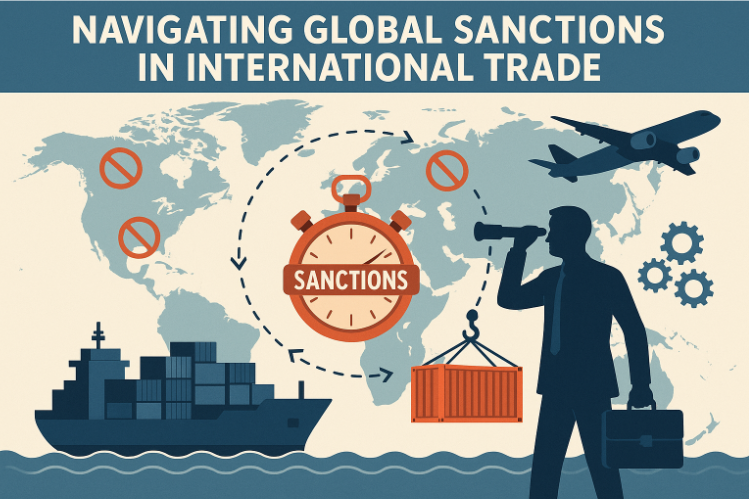
Topics: global sanctions compliance, cross-border regulation
In an economically interdependent world, global trade is not merely a matter of supply and demand—it is also an influential force of geopolitics. Global sanctions, economic, diplomatic, and trade, are used more and more by nations and blocs to exert influence short of war. Such sanctions pose very substantial difficulties for global businesses, banks, and even governments operating in the tricky landscape of world commerce.
With sweeping restrictions put in place against nations such as Russia, Iran, North Korea, and Venezuela, trade sanctions have become more prevalent in the previous decade. For example, after the 2022 Russia-Ukraine war, the EU, the US, and other Western countries placed more than 13,000 new sanctions on Russia, making it the most sanctioned nation in the world. Commodity supply chains, financial systems, and energy markets have all been affected.
As companies grow internationally, it is crucial to learn how to effectively comply with and strategically react to sanctions. This article examines the environment of global sanctions, their mechanisms and types, their economic implications, compliance strategies, and the future of sanctions in a changing world order.
Understanding the Structure: Sanction Type and Sanction Mechanism
Sanctions are official bans imposed by one nation (or nations) against another to alter political conduct, discourage aggression, or convey disapproval. There are a variety of types:
- Economic and Trade Sanctions
These are most likely the most typical and involve bans on trade, exports, imports, and money transactions. For instance, the U.S. Treasury Department’s Office of Foreign Assets Control (OFAC) forbids U.S. businesses from conducting business with individuals on its Specially Designated Nationals (SDN) list.
The EU nevertheless has both thematic and national sanctions, such as terrorist or cyberattack sanctions. More than 34 states faced chronic sanctions from the world’s major powers in 2023.
- Diplomatic and Travel Sanctions
These involve bans on traveling and issuing visas for political figures, soldiers, and powerful oligarchs. They are usually symbolic but might restrict global mobility and impact diplomacy.
- Arms Embargoes and Freezes on Assets
Arms sanctions restrict the transfer or sale of weapons and military equipment. Asset freeze entails blocking such assets or bank accounts. The United Nations Security Council also imposes them frequently in instances of terrorism or genocide.
An example is when the UN froze assets of leaders for those engaging in the South Sudan conflict as part of a bid to curb violence and abuse of human rights in 2021.
Economic Impact

Sanctions have winners and losers in global markets. Although they are meant to sanction targeted regimes, their spillovers manage to find their way across borders.
- Impact on Targeted Economies
The targeted economies are generally exposed to economic decline, currency devaluation, inflation, and withdrawal of investors. Russia’s economy, for instance, was initially estimated to contract 10% in 2022 following the imposition of sanctions, despite strong oil exports and alternative trade routes softening the blow.
Iran, also under U.S. and EU sanctions since 2018, has experienced 70% declines in oil exports and 40% inflation, impacting its middle class and public services.
- Supply Chain and Trade Disruptions
Sanctions tend to produce world shortages of supplies. For example:
The Russian oil and gas embargo compelled Europe to import energy from other nations, adding a 35% boost to the price of energy in 2022.
Food exports from Russia and Belarus were impacted by fertilizer and agricultural product embargoes, which resulted in a world fear of food shortage.
- Unintended Consequences
Sanctions tend to rebound. They might force the sanctioned nation to strengthen relations with nonaligned nations. Russia, for example, increased trade with China (34% growth in 2023) and India (18% growth), diluting the effect of Western sanctions.
Furthermore, companies in nontargeted nations can be negatively impacted by “secondary sanctions” or compliance issues.
Compliance Strategies and Risk Mitigation
Firms that are involved in global trade are increasingly coming under pressure to ensure they do not violate sanctions law. Noncompliance can lead to huge fines, reputational damage, and even criminal charges.
- Know Your Customer (KYC) and Due Diligence
Good due diligence starts with effective sanctions compliance. Firms have to screen customers, suppliers, and business counterparts on current lists of sanctions such as the OFAC SDN list or the EU Consolidated List. Automated screening software is increasingly being used to identify suspicious transactions.
British American Tobacco was fined more than $635 million by the U.S. in 2022 for selling its products in North Korea via third-party intermediaries—demonstrating indirect due diligence is needed.
- Sanctions Compliance Programs
Multinational companies are now expected to maintain broad Sanctions Compliance Programs (SCPs). These often include:
- Appointment of a compliance officer/team
- Regular training programs
- Internal audits and controls
- Whistleblower reporting mechanisms
The U.S. The Department of Justice advises that companies customize their SCPs to the size, industry, and geography of the company.
- Legal and Strategic Advising
Legal advice with international trade law experience can guide companies through gray areas, obtain permits (for example, humanitarian exceptions), and evaluate geopolitical risk. Even some companies make use of geopolitical fore
The Evolving Environment
Sanctions regimes are evolving in line with advancing technology and global reorganization and present new challenges and opportunities.
- Cryptocurrency and Evasion Techniques
Cryptocurrencies are being utilized as a medium of evasion of the traditional banking system. Iran and North Korea have been said to employ Bitcoin mining and blockchain wallets to bypass sanctions.
The U.S. Treasury sanctioned a cryptomixing service, Tornado Cash, in 2023 for enabling more than $1.5 billion of money laundering associated with North Korea’s Lazarus Group.
In response, regulators around the world brought crypto exchanges tighter under control such as KYC requirements and open transactions.
- Dedollarization and Shifting Alliances
Sanctionshit nations are increasingly encouraging nondollar trade. Russia and China carry over 70% of bilateral trade in rubles and yuan, bypassing the American financial system. Likewise, India’s Reserve Bank enforced rupee-based trade settlements for some nations in 2023.These shards in the world financial system erode the U.S. dollar and Western sanctions regimes’ stranglehold in the long term.
- Sanctions Fatigue and Reform Debates
Critics also lament that the sanctions ultimately hurt civilian populations rather than political elites. There is, therefore, mounting outcry for “smart sanctions” targeting individuals, sectors, or assets rather than having far-reaching economic impacts.
Such bodies as Amnesty International and Human Rights Watch have urged sanction authorities to apply tougher humanitarian exceptions and enhance monitoring.
Sanctions are today part of global business strategy and no longer an instrument of statecraft in the globalised world. Technology embargoes, blacklists, and similar measures have altered patterns of trade, introduced new risks, and compelled businesses and governments to rebalance their strategies.
There is much to lose, despite the fact that sanctions have vital political and moral functions, including inhibiting aggression, fighting terrorism, and standing up for human rights. Aside from enforcement, they also rely on the cooperation of many states, voluntary compliance by nonstate actors, and sensitive calibration to minimize the killing of civilians or the distortion of global markets.
Companies must adopt a vision of long-term global interconnectedness, invest in geopolitical insight, and build responsive compliance systems. It is a call to policymakers for something more sophisticated, one which balances strategic deterrence and humanitarian effects, and is both coercive and egalitarian.
Response and comprehension of international sanctions will be a critical concern and opportunity in world trade as the international system continues to evolve because of rising powers, emerging technology, and complicated coalitions.

FAQ Section: Global Sanctions Compliance
1. What is global sanctions compliance?
Global sanctions compliance refers to the processes businesses use to follow international trade restrictions, including bans on exports, imports, and financial transactions.
2. Why is global sanctions compliance important for businesses?
It helps companies avoid fines, reputational damage, and trade disruptions while ensuring they can operate safely across borders.
3. Who enforces global sanctions compliance?
Agencies like the U.S. Treasury’s OFAC, the European Union, and the United Nations set and enforce sanctions that companies worldwide must follow.
4. What are the risks of ignoring global sanctions compliance?
Noncompliance may result in multi-million-dollar fines, frozen assets, supply chain breakdowns, or even criminal liability for executives.
5. How do companies build a global sanctions compliance program?
They establish compliance officers, conduct regular audits, implement automated screening tools, and provide ongoing employee training.
6. What role does technology play in global sanctions compliance?
AI-driven screening, blockchain monitoring, and automated due diligence tools help companies detect violations and reduce human error.
7. What industries are most affected by global sanctions compliance?
Finance, energy, defense, and shipping industries face higher risks because they often deal with sanctioned goods, funds, or jurisdictions.
8. How can financial institutions manage global sanctions compliance?
Banks use Know Your Customer (KYC) checks, transaction monitoring, and customer due diligence to avoid dealings with restricted entities.
9. What are secondary sanctions, and why are they important in compliance?
Secondary sanctions penalize third-party businesses that indirectly support a sanctioned country, making global sanctions compliance more complex.
10. How does global sanctions compliance affect supply chains?
Companies must carefully vet suppliers, distributors, and transport networks to avoid unintentionally breaching restrictions on goods.
11. What is the role of cross-border regulation in global sanctions compliance?
Cross-border regulation ensures that companies trading internationally follow multiple countries’ sanctions frameworks without conflicts.
12. Can small businesses manage global sanctions compliance effectively?
Yes—by leveraging compliance software, consulting experts, and training employees, even small firms can reduce risks.
13. How do whistleblower programs support global sanctions compliance?
Anonymous reporting systems encourage employees to flag violations, strengthening compliance integrity within organizations.
14. What are humanitarian exceptions in global sanctions compliance?
Certain sanctions allow for trade in medicine, food, or aid to reduce harm to civilians while maintaining political pressure.
15. How does cryptocurrency impact global sanctions compliance?
Crypto introduces challenges since sanctioned entities may use it to bypass traditional banking, requiring tighter monitoring.
16. What lessons have recent sanctions taught about compliance?
Cases like Russia’s sanctions in 2022 highlight how fast rules can change, requiring businesses to update compliance strategies constantly.
17. How do companies train employees for global sanctions compliance?
They use workshops, e-learning modules, and real-world case studies to ensure employees understand sanctions risks.
18. Can global sanctions compliance improve corporate reputation?
Yes—showing strong compliance practices can boost trust with regulators, investors, and international partners.
19. How do evolving geopolitical tensions affect global sanctions compliance?
Shifts in alliances and conflicts change sanction lists frequently, making compliance a moving target for businesses.
20. What is the future of global sanctions compliance?
It will likely involve stronger cross-border regulation, smarter technologies, and stricter enforcement, requiring constant adaptation by companies.
Penned by Harmeet
Edited by Reeya Kumari, Research Analyst
For any feedback mail us at info@eveconsultancy.in
Finance made simple, fast, and fun! 🏦💡 Sign up for your daily dose of financial insights delivered in plain English. In just 5 minutes, you’ll be smarter already!
Simplify Your Business Compliance with Eve Consultancy
Eve Consultancy is your trusted partner for end-to-end compliance services, including Company Incorporation, GST Registration, Income Tax Filing, MSME Registration, and more. With a quick and hassle-free process, expert guidance, and affordable pricing, we help businesses stay compliant while they focus on growth. Backed by experienced professionals, we ensure smooth handling of all your legal and financial requirements. WhatsApp us today at +91 9711469884 to get started.