
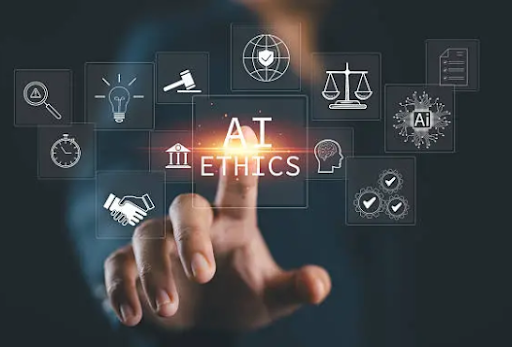
Introduction
Rapid adoption of AI tech has shifted discussion towards new frontier of accountability swiftly nowadays. Various stakeholders including government agencies private entities and civil society organisations are fervently seeking answers on governing AI fairly and transparently nowadays. Matters pertaining to compliance with stringent AI ethics regulations and robust moral codes governing multifaceted AI system constructs require utmost attention now. Components critical for AI technology’s proliferation are emerging rapidly nowadays everywhere.
The Circumstances for Regulating AI
Suddenly, numbers appear quite irregularly. Advances in AI tech spur societal progress pretty rapidly in areas like healthcare diagnostics, autonomous vehicles, or even super sophisticated fraud detection systems nowadays. Same technologies potentially amplify ubiquitous surveillance, prejudiced decisions, and job displacement significantly across various sectors nowadays, rather quickly. High-profile cases involving discriminatory facial recognition tech and obscure hiring algorithms have spawned public outcry, revealing a lack of regulation. AI technology’s intricate ethical perimeters are inextricably linked with its very fabric, so regulatory measures must intensify drastically nowadays. Regulation can offer a framework for responsibility from developer companies and governments in applying AI somewhat effectively nowadays. Countering the fluidity of the technology domain proves rather difficult a feat. AI functions unpredictably in some cases and learns rapidly, thereby necessitating regulation that is more dynamic and rooted in sound principles.
Global Trends in Ethical AI Regulations
Every nation is trying to define “ethical AI,” which poses a new problem globally. The EU is developing the AI Act, which treats AI systems by risk categorization and imposes requirements on them. The U.S. is promoting fairness and transparency with the Algorithmic Accountability Act, which is comparatively less strict. Canada, Japan, and Singapore are adopting voluntary standards and sandbox models for regulatory supervision. UNESCO and OECD have set non-binding guidelines to encourage responsible AI development. These are all steps in the right direction; however, not having a singular global agreement on the issue remains a problem. For multinational companies, the problem of having to navigate at times conflicting legal environments for “ethical AI regulations” is very cumbersome. This is accelerating the need for unified “compliance frameworks” that function in all jurisdictions.
Creating Compliance Frameworks That Work Well
Compliance frameworks act as internal policies that help organizations ensure that their AI systems are ethical and legally compliant. They integrate technical governance measures with tools such as bias detection algorithms, policies on data usage, and human systems to enhance the accountability of AI systems. Some firms may implement self-governing AI ethics boards, perform internal audits, and enforce transparent logging of their decisions to improve accountability. Frameworks like NIST’s AI Risk Management Framework or ISO/IEC 42001 provide great examples of comprehensive compliance frameworks that integrate best practices. A well- compliant and managed integrated framework must have: Tools for risk assessment to prevent possible harms from being flagged Automation systems that ensure that the human side is integrated Systems that log algorithm-based decisions Systems that project algorithms’ outcomes and help to assess them These measures are fundamental to effective compliance while protecting public perceptions, minimizing risk, and enabling sustainability in the ligong term.
Challenges and the Road Forward
Implementing compliance frameworks with fervor is fraught with perilous obstacles ahead, despite earnest good intentions being in place normally. Organizations often lack the requisite technical acumen or sufficient financial clout and legal savvy for designing and maintaining such intricate systems. AI systems frequently incorporate third-party data or open-source components, thereby making accountability tracing significantly more arduous and problematic to determine afterwards. Regulatory landscapes hover perplexingly in flux nowadays beneath layers of frenzied bureaucratic reshuffling. Laws become antiquated rather quickly as novel AI capabilities emerge rapidly, and overregulation could severely stifle much-needed innovation nationwide. Balancing knotty ethical dilemmas with sweltering economic expansion remains a profoundly central, befuddling challenge for policymakers, ostensibly nationwide. Industry collaboration alongside open standards and super-transparent policy-making can pretty much help bridge gaps fairly effectively nowadays. Global alignment in ethical AI regulations is being pushed by various multi-stakeholder initiatives involving governments and civil society, already rapidly.
Conclusion
Future AI development depends heavily on machine intelligence, and our deliberately cautious approach to governing these emerging technologies is very responsible now. Nations and companies frantically integrating artificial intelligence necessitate building stringent guardrails grounded deeply in nebulous moral principles simultaneously. Robust ethical AI regulations and adaptable compliance frameworks enable the creation of a rather innovative yet fairly accountable technological future.
References
- European Commission. (2024). The Artificial Intelligence Act. https://digital-strategy.ec.europa.eu
- U.S. Congress. (2023). Algorithmic Accountability Act. https://congress.gov
- OECD. (2021). OECD Principles on Artificial Intelligence. https://oecd.ai
- UNESCO. (2021). Recommendation on the Ethics of Artificial Intelligence. https://unesdoc.unesco.org
- National Institute of Standards and Technology (NIST). (2023). AI Risk Management Framework. https://nist.gov
FAQ : Ethical AI: Navigating the Regulatory Landscape
Q1. What are ethical AI regulations?
A1. Ethical AI regulations are legal and policy frameworks designed to ensure AI is developed and used responsibly, with fairness, transparency, and accountability.
Q2. Why are ethical AI regulations important?
A2. They help prevent bias, discrimination, and misuse of AI while safeguarding human rights, trust, and long-term societal benefits.
Q3. What global examples of ethical AI regulations exist?
A3. The EU AI Act, the U.S. Algorithmic Accountability Act, UNESCO guidelines, and OECD principles are major global efforts.
Q4. How do ethical AI regulations differ by region?
A4. The EU enforces strict risk-based rules, the U.S. focuses on transparency, and countries like Japan and Singapore use voluntary standards.
Q5. What is the biggest challenge in ethical AI regulations?
A5. A lack of unified global standards creates conflicts, making it difficult for multinational companies to comply across jurisdictions.
Q6. How do compliance frameworks support ethical AI regulations?
A6. They provide internal policies and technical tools like bias detection, logging, and audits to ensure AI accountability.
Q7. What are examples of AI compliance frameworks?
A7. The NIST AI Risk Management Framework and ISO/IEC 42001 are widely used for building ethical and compliant AI systems.
Q8. How do ethical AI regulations impact businesses?
A8. They require companies to design AI responsibly, which can increase costs but also build trust, reduce risks, and ensure sustainability.
Q9. What risks exist without ethical AI regulations?
A9. Risks include biased decisions, surveillance abuse, reputational damage, lawsuits, and stifled innovation due to public backlash.
Q10. Can overregulation harm AI innovation?
A10. Yes. Excessive regulation may slow down AI research and adoption, so laws must balance innovation with ethics.
Q11. How do ethical AI regulations affect AI in healthcare?
A11. Regulations ensure fairness, patient data privacy, and transparency in AI diagnostics, reducing risks of misdiagnosis and bias.
Q12. What role do governments play in ethical AI regulations?
A12. Governments create laws, fund research, and collaborate internationally to ensure safe and ethical AI deployment.
Q13. How do companies implement ethical AI regulations internally?
A13. Many firms set up AI ethics boards, conduct internal audits, and use bias detection algorithms to comply with standards.
Q14. Why is global alignment in ethical AI regulations necessary?
A14. Unified global standards prevent conflicting rules, making it easier for businesses to operate across borders responsibly.
Q15. What is the future of ethical AI regulations?
A15. Future regulations will likely focus on adaptability, global cooperation, and embedding AI accountability directly into development processes.
Penned by Umesh
Edited by Hamid Ali, Research Analyst
For any feedback mail us at info@eveconsultancy.in
Finance made simple, fast, and fun! 🏦💡 Sign up for your daily dose of financial insights delivered in plain English. In just 5 minutes, you’ll be smarter already!
Simplify Your Business Compliance with Eve Consultancy
Eve Consultancy is your trusted partner for end-to-end compliance services, including Company Incorporation, GST Registration, Income Tax Filing, MSME Registration, and more. With a quick and hassle-free process, expert guidance, and affordable pricing, we help businesses stay compliant while they focus on growth. Backed by experienced professionals, we ensure smooth handling of all your legal and financial requirements. WhatsApp us today at +91 9711469884 to get started.