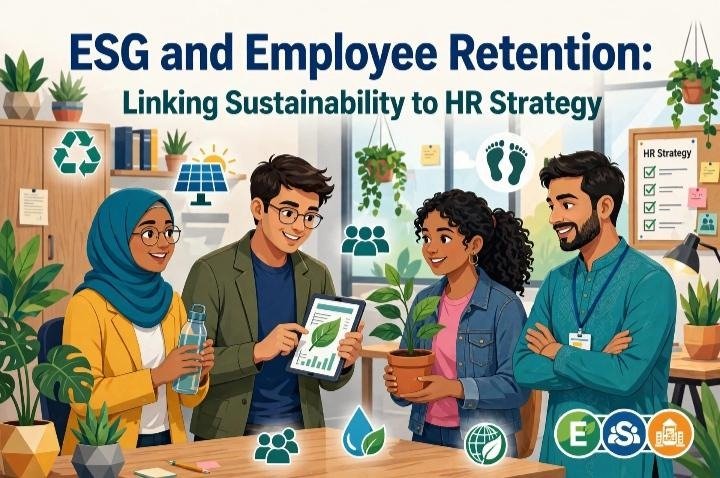
ESG and employee retention are increasingly connected as employees look for organisations that demonstrate sustainability, ethical leadership and a supportive workplace culture.
Today if you ask the same question to someone who is 24, the answer is different.
A friend of mine in Gurgaon did something last month that made me think. She had two offers. One was from a big MNC with almost 1.8 lakhs more package. The other was smaller, but that smaller company had a proper sustainability policy, work from home for women, and they actually do beach cleanups. She picked the second one.
She told me, I want to work where I can actually feel okay about my work.That is the whole scene right now. Young people in India are not just chasing money. Young talent increasingly values sustainability. They check Glassdoor, they check news, they ask in interviews – what does your company really do for environment? And if the answer is weak, they leave, even if pay is good.
ESG and Employee Retention: Why Sustainability Matters
See, we spend our whole day at work. Around 9-10 hours. If you know your company is doing shady things – like dumping waste or having zero female leaders – you feel weird inside. Even if your own manager is nice. That feeling builds up and one day you resign.But when you see your company trying – maybe they have a recycling setup, maybe they give mental health offs, maybe their board is actually diverse – you feel proud.
You tell your family, yeah my company does this. That pride is what makes you stay.This is what esg hr actually means. ESG is not some report for investors. For employees, it is a signal. E says, are we caring for planet? S says, are we caring for people? G says, are we honest? If these three are strong, employee retention becomes easy. People don’t quit places where their values match.Studies also say companies with good sustainability scores have less attrition. Not surprising at all.
How HR is secretly using ESG to stop people from quitting?
Good HR heads have already figured this out. They are not keeping ESG and HR separate anymore.First is hiring. Go check job posts of Tata Steel or Infosys now. They write about green campuses, volunteer leaves, inclusive culture right in the first para. That filters in people who actually care about these things.Second is culture.
The S part of ESG is literally HR’s job. Fair pay, no harassment, support for new mothers, safety. When HR shows that these are part of a bigger ESG goal, not just a policy document, people trust it more. It feels real, not fake.Third is giving ownership. Instead of making people sit through a boring PPT on sustainability, some companies ask teams to own it.
Like one team will manage composting, another will manage a donation drive. When you own something, you connect with it. You don’t feel like just an employee ID.So retention today is not about giving a 5k bonus. Its about asking – does my job allow me to be part of something good?
What can companies actually do?
Don’t just throw money to keep people. That works for two months max.Be honest. Share your ESG report with everyone, not just top management. Tell people where you are failing. Youngsters respect honesty more than fake perfection.
Reward small green actions. If someone starts carpooling or finds a way to save paper, call them out in meetings. Give tiny benefits like cycle allowance, extra leave for social work, flexible hours. These small things stick in mind.Because honestly, replacing someone costs a lot. To hire, train, make them productive again – it can take 30% of their yearly salary. So keeping them with purpose is actually profitable.
Conclusion
ESG has moved out of boardrooms. For today’s generation, it is very personal. If you want your best people to stay, you can’t treat sustainability and HR as two different departments. You have to mix them. The companies that understand this link between purpose and people will keep their talent. The rest will keep posting the same job openings every 3 months.
Companies can strengthen employee trust by tracking social ESG metrics such as workplace diversity, employee wellbeing, fair labour practices and inclusion.
References
1. “Environmental, social, and corporate governance,” _Wikipedia, The Free Encyclopedia._, Environmental,social,andgovernance
2. “Employee retention,” _Wikipedia, The Free Encyclopedia._, Employee_retention
3. “Sustainable business,” _Wikipedia, The Free Encyclopedia._, Sustainable business
UN Global Compact – Labour and human rights
Great Place To Work – Employee retention