
Best Practices for Environmental Regulation Compliance—Thinking Beyond the Checklist
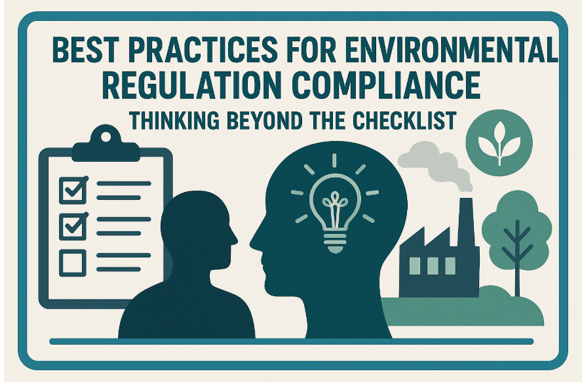
Come on—most environmental compliance articles sound like the boring compliance guide: “Know the regulations. Train your employees. Document everything.” Yes, all of those are important, but when your company is going about environmental regulations like a begrudging student studying for a test, the point is being missed.
Compliance with the environment isn’t merely about not getting fined or pleasing the government. It’s future-proofing your company, preserving the integrity of your brand, and—radical concept here—becoming the business people are proud to be associated with.
Then let’s have a new, human examination of the best practices—moving on from the tick-box law requirements.
7 Game-Changing Best Practices for Environmental Regulatory Compliance
1. Refrain From Describing Regulation as “Barriers”
The first mental shift: stop treating environmental laws as red tape. Think of them as the world’s “safety rails” for our collective survival. When seatbelts were made mandatory, some people complained. Now, we’re thankful they did so. Environmental regulations are the seatbelts of industries—they prevent planetary catastrophic crashes.
Out-of-the-box thinking: Don’t ask, “What is the minimum I can do to get by?” Ask, “How can I top these requirements so I’m not racing the clock when the regulations are sure to become even tougher?” You will prevent costly retrofits and awkward PR backtracking down the road.
2. Audit Like a Detective, Not a Bureaucrat
Compliance audits often get treated like a routine chore—clipboards, checklists, and yawns. But real environmental due diligence requires detective work. Where is the waste actually coming from? Which part of your supply chain has the biggest hidden footprint? Might the unscrupulous dumping of a supplier hurt your image?
Pro tip: Utilise tech like real-time air/water quality monitors or blockchain-based supply chain tracking. The point isn’t so much to show you conform—it’s to identify problems even before regulators or customers do.
3. Develop a Culture, Rather than Just a Policy
Here’s the thing: a shiny “Environmental Policy” PDF in the drawer of HR isn’t going to prevent someone from nonchalantly disposing of chemicals down the drain when he thinks no one is looking. World-class companies integrate environmental responsibility into daily decision-making.
That means:
- Honoring employees who propose environmentally friendly enhancements.
- Including environmental KPIs in the performance reviews.
- Incorporating sustainability into onboarding—as a complement to workplace safety.
When individuals feel as though they belong to something greater than bottom lines, regulations are a natural fit.
4. Treat Transparency as a Power Move
Most businesses cover their tracks with generic “we comply with all regulations” statements. But consumers and investors today are digital bloodhounds—they can smell corporate doublespeak from a mile away. Better practice: Publish plain-language progress reports on the environment. Make your targets, your progress, and even your failures transparent. Against intuition, apologising for faults gains trust. It demonstrates you are human and keen on making amends.
5. Partner with Regulators Instead of Dreading Them
Regulators are often viewed by companies as aggressive referees hovering to blow the whistle. But the trade secret is this: most regulators hope companies succeed at complying. Invite them early in the design of new processes or plants. Ask for their opinions. Include them in workshops. Not only will you keep them on your good side, but you’ll also forestall expensive mistakes from misinterpretations of the rules.
6. Look Beyond the Factory Fence
You are 100% compliant in your plant, and yet are causing environmental damage if you do not look after your supply chain. Example: A fashion brand might comply with waste disposal laws at home but source cotton from suppliers who pollute rivers abroad. Legally? Maybe fine. Ethically? Not so much. Forward-looking companies conduct supplier audits, insist on eco-certifications, and—if necessary—step away from partners who refuse to improve.
7. Future-Proof with Innovation
All of the environmental regulations on the books today are there because of yesterday’s damage. To stay one step ahead, consider tomorrow’s regulations before the ink is on the paper.
That may involve:
- Switching to renewable energy before it’s mandated.
- Product redesigning for recyclability in advance of landfill use bans.
- Investing in closed-loop manufacturing before waste tariffs rise.
- It’s not compliance—it’s insurance for your business model.
The Bottom Line
Environmental regulatory compliance is not about plants, rivers, or polar bears—it’s about people. Your people breathe that air, your consumers drink that water, and your future generations will live with the decisions you’re making today. Compliance is the minimum. Leadership is converting “We have to” into “We choose to.” And in a world where trust and responsibility are the final currencies, the companies that think in such a manner not only will not encounter any penalties but will win over hearts, minds, and share of the market.
FAQ
1. What is environmental regulatory compliance?
Environmental regulatory compliance means adhering to all environmental laws, regulations, and standards set by authorities to protect natural resources and public health. It ensures that businesses manage waste responsibly, control emissions, minimise pollution, and operate sustainably. Beyond avoiding fines, environmental compliance enhances brand reputation and demonstrates corporate responsibility.
2. Why is environmental regulatory compliance important for businesses?
Environmental regulatory compliance is crucial because it:
- Protects communities by ensuring clean air, safe water, and healthy ecosystems.
- Reduces legal and financial risks by avoiding penalties and lawsuits.
- Builds brand trust with investors, consumers, and employees who prioritise sustainability.
- Future-proof business models against evolving regulations and market demands.
- Drives innovation in sustainable practices, energy efficiency, and product design.
Ultimately, compliance strengthens both environmental stewardship and long-term profitability.
3. What are the best practices for environmental regulatory compliance?
Some proven best practices include:
- Reframing regulations as safety measures, not obstacles.
- Conducting detective-style audits to uncover hidden risks.
- Building a compliance culture that integrates sustainability into daily operations.
- Practising transparency by publishing plain-language progress reports.
- Partnering with regulators for guidance and collaboration.
- Looking beyond the factory fence to monitor supply chains.
- Futureproofing with innovation in renewable energy, circular economy models, and sustainable design.
4. What challenges do companies face in achieving environmental compliance?
Companies often face:
- Complex regulations that vary across regions and industries.
- High costs for compliance systems, audits, and technology upgrades.
- Resistance to change within organisations where compliance is seen as a burden.
- Supply chain risks, such as sourcing from non-compliant partners.
- Data management issues are making it hard to track environmental performance.
Overcoming these challenges requires leadership commitment, smart investments in technology, and a shift from compliance as a chore to compliance as a growth strategy.
5. How does transparency improve environmental compliance?
Transparency builds trust and credibility. Instead of vague claims like “we comply with all regulations,” companies that publish clear, measurable reports on emissions, energy use, and progress toward sustainability goals demonstrate accountability. Even admitting shortcomings can strengthen trust, as stakeholders value honesty and continuous improvement over perfection.
6. How can technology support environmental regulatory compliance?
Technology plays a vital role in modern compliance, including:
- Real-time monitoring of air and water quality.
- Blockchain-based tracking for supply chain transparency.
- Data analytics and AI to identify risks and predict future regulations.
- Sustainability software to manage reporting, certifications, and performance metrics.
These tools make compliance more efficient, accurate, and proactive.
7. What is the future of environmental regulatory compliance?
The future lies in proactive and innovation-driven compliance. Businesses will increasingly adopt renewable energy, closed-loop manufacturing, eco-design, and circular economy principles before regulations mandate them. Compliance will shift from a defensive strategy to an offensive one—building competitive advantage, enhancing resilience, and winning stakeholder loyalty. Companies that move beyond checklists and embrace environmental responsibility as a core value will lead the way in the coming decades.
References
[1] U.S. Environmental Protection Agency, “Environmental Compliance Assistance Program,” EPA, 2024. [Online]. Available: https://www.epa.gov/compliance/environmental-compliance-assistance-program. [Accessed: Aug. 17, 2025].
[2] International Energy Agency, “Renewables 2024: Analysis and outlook,” IEA, Jul. 2024. [Online]. Available: https://www.iea.org/reports/renewables-2024. [Accessed: Aug. 17, 2025].
[3] Ellen MacArthur Foundation, “Towards the Circular Economy: Accelerating the scale-up across global supply chains,” 2023. [Online]. Available: https://ellenmacarthurfoundation.org/publication/towards-the-circular-economy-accelerating-the-scale-up-across-global-supply-chains. [Accessed: Aug. 17, 2025].
[4] OECD, “Global Forum on Environment: Waste and the Circular Economy — Policy Outlook 2024,” OECD, 2024. [Online]. Available: https://www.oecd.org/environment/global-forum-environment-waste-and-circular-economy-policy-outlook-2024.htm. [Accessed: Aug. 17, 2025.
Penned by Shrutt
Edited by Seema Acharya, Research Analyst
For any feedback mail us at info@eveconsultancy.in
Finance made simple, fast, and fun! 🏦💡 Sign up for your daily dose of financial insights delivered in plain English. In just 5 minutes, you’ll be smarter already!
Simplify Your Business Compliance with Eve Consultancy
Eve Consultancy is your trusted partner for end-to-end compliance services, including Company Incorporation, GST Registration, Income Tax Filing, MSME Registration, and more. With a quick and hassle-free process, expert guidance, and affordable pricing, we help businesses stay compliant while they focus on growth. Backed by experienced professionals, we ensure smooth handling of all your legal and financial requirements. WhatsApp us today at +91 9711469884 to get started.