
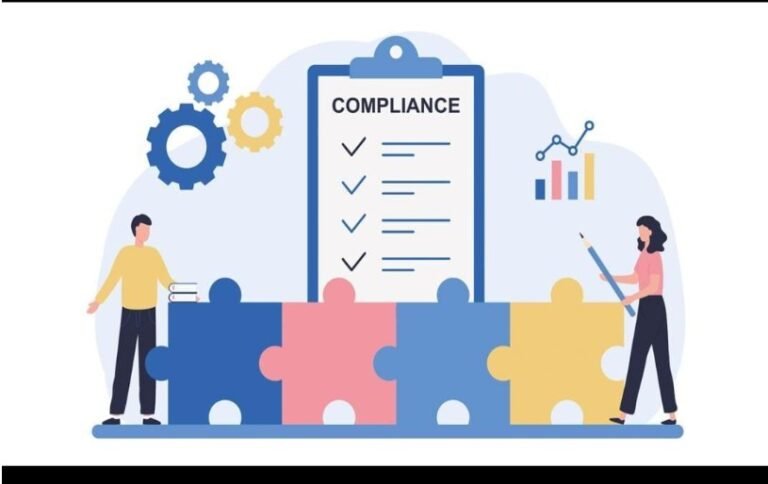
Employee-owned startups thrive when backed by smart compliance strategies.
Employee-owned compliance and new company models are vital concepts as startups transition into corporations owned by their employees. I once read about a tiny tech startup that became employee-owned. While energy and teamwork increased considerably, there was soon a realization that compliance was not something that took care of itself. In this article, I will discuss ways in which these novel company models and employee-owned compliance can be set up with a very strong framework to achieve fairness and efficacy.
Employee-Owned Compliance
Since employees own the company sometimes through ESOPs, employee trusts, or co-ops, the company then faces a different legal and regulatory landscape. You’re no longer just a startup; you might qualify for a number of exemptions; meanwhile, you take on reporting duties, tax liabilities, and governance expectations. Employee ownership models walk a fine line between furthering the company’s prosperity and allowing for transparency and fair treatment on all levels.
Choose Your Ownership Model
There are a handful of ways to structure employee ownership. Some companies select ESOPs, while others would rather go for an Employee Ownership Trust (EOT) or a worker co-operative.Each entity has its own compliance demands; a few need to be subjected to a financial audit periodically when there are ESOPs, to name one, whereas cooperatives need governance clarity and such interests. Having the right novel company models ensures a match between the goals of the startup and manageable regulation.
Governance and Communication Setup
A big struggle in employee-owned startups is to make sure expectations are crystal clear to all parties. The ESOP Association advises communicating the ownership concept regularly, promoting and supporting the setting of roles, and the clarification of limits on decision-making . Good governance practices like regular meetings and defining the ownership council can prevent confusion and aid in accountability. These are smart moves for employee-owned compliance.
Handling Legal and Administrative Compliance
ESOP adoption for your startup entails complying with IRS rules and corporate filings. Advisors emphasize working closely with tax and legal professionals in tackling such complexities . Besides that, employee-owned should be properly valued, planned for sustainability, and reported on a timely basis. Setting up the right structures from day one will keep the company healthy and compliant.
Learning from Real-World Examples
Such companies, which are employee-owned, tend to do better than traditional companies during recessions or economic slowdowns. Research indicates that employee-owned companies were much higher on the likelihood of retaining jobs during the crises, such as COVID-19 . Still, it all depends on fairness and communication. In the UK, Employee Ownership Trusts have facilitated business growth, only when culture and management have been supportive of this approach .
Conclusion
Employee-owned startups represent a powerful shift in how businesses can be built and sustained, but ownership alone does not guarantee success. True resilience and fairness emerge only when compliance is treated as a cornerstone rather than an afterthought. There are effective and efficient ways in which these novel company models and employee-owned compliance can be set up with a very strong framework to achieve fairness and efficacy. They not only safeguards the company’s future but also strengthens trust ensuring that both people and the business thrive together.
References
[1] National Center for Employee Ownership, “How an Employee Stock Ownership Plan (ESOP) Works,” NCEO.org. [Online]. Available: https://www.nceo.org/what-is-employee-ownership/esop-employee-stock-ownership-plan
[2] IRS, “IRS Warns Plan Sponsors of ESOP Compliance Risks,” groom.com, Aug. 15, 2023. [Online]. Available: https://www.groom.com/resources/irs-warns-plan-sponsors-of-esop-compliance-risks/
[3] Project Equity, “Proof for employee ownership,” Jan. 2021. [Online]. Available: https://project-equity.org/news/employee-ownership-insider/proof-for-employee-ownership/
[4] NCEO, “Research Findings on Employee Ownership,” nceo.org. [Online]. Available: https://www.nceo.org/research/research-findings-on-employee-ownership
[5] The Times (UK), “Benefits and pitfalls of employee ownership trusts,” 2025. [Online]. Available: https://www.thetimes.co.uk/article/the-benefits-and-pitfalls-of-employee
FAQs on Compliance Strategies for Employee-Owned Startups
- What is an ESOP and how does it work?
An ESOP (Employee Stock Ownership Plan) allows employees to acquire shares in the company, aligning incentives and promoting long-term commitment.
2. How do trusts function in startup ownership models?
Trusts hold shares on behalf of employees, offering collective ownership and long-term governance stability.
3. What makes co-ops different from other ownership structures?
Co-ops are democratically run, giving each member equal voting rights and emphasizing shared decision-making.
4. Are there legal requirements for setting up an ESOP?
Yes, ESOPs must comply with specific tax, valuation, and reporting rules under national regulations.
5. Do ownership models affect company culture?
Absolutely. They often foster transparency, accountability, and a sense of shared purpose.
6. What governance practices support employee ownership?
Clear voting rights, board representation, and open communication are essential governance tools.
7. Can startups transition to employee ownership gradually?
Yes, many begin with partial ownership through stock options or profit-sharing before moving to full employee-owned structures.
8. What are the tax implications of employee ownership?
Tax treatment varies—ESOPs may offer deferral benefits, while co-ops and trusts have distinct reporting obligations.
9. How does ownership impact fundraising?
It can be both a strength and a challenge—investors may appreciate the stability but require clarity on share distribution.
10. Are there risks in shared ownership models?
Yes, without proper planning, issues like unclear governance or valuation disputes can arise.
11. What role do advisors play in ownership transitions?
Legal and financial advisors help structure the transition and build effective compliance strategies.
12. Is employee ownership suitable for all industries?
While common in tech and services, it’s adaptable across sectors with the right planning.
13. How do companies educate employees about ownership?
Workshops, onboarding sessions, and transparent documentation help employees understand their rights and responsibilities.
14. Can shared ownership improve retention?
Yes, it often boosts loyalty and engagement, especially when paired with strong compliance strategies.
15. What’s the first step in building compliance strategies?
Start by selecting the right ownership model and consulting experts to design governance and reporting frameworks.
Penned by Saloni Sagar
Edited by Ridhima Sharma, Research Analyst
For any feedback mail us at info@eveconsultancy.in
Finance made simple, fast, and fun! 🏦💡 Sign up for your daily dose of financial insights delivered in plain English. In just 5 minutes, you’ll be smarter already!
Simplify Your Business Compliance with Eve Consultancy
Eve Consultancy is your trusted partner for end-to-end compliance services, including Company Incorporation, GST Registration, Income Tax Filing, MSME Registration, and more. With a quick and hassle-free process, expert guidance, and affordable pricing, we help businesses stay compliant while they focus on growth. Backed by experienced professionals, we ensure smooth handling of all your legal and financial requirements. WhatsApp us today at +91 9711469884 to get started.