
Introduction
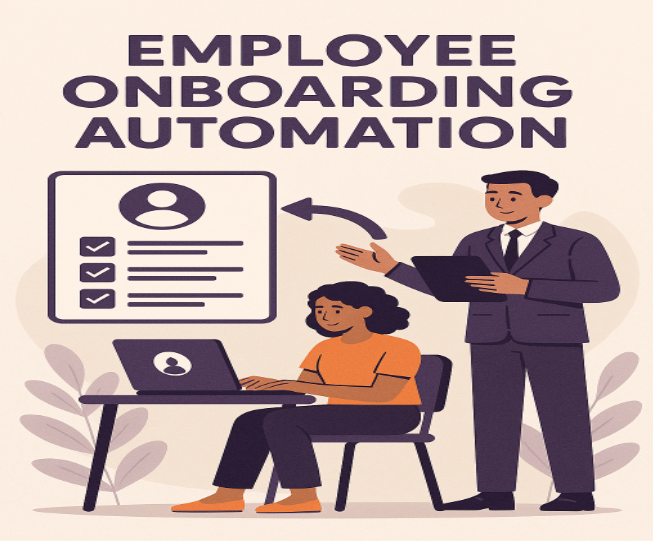
In today’s fast-paced digital workplace, organizations are increasingly adopting automation to improve efficiency, accuracy, and employee experience. One of the most significant areas where automation is making a powerful impact is employee onboarding. Onboarding is no longer limited to paperwork and basic orientation; it has evolved into a strategic process that directly influences employee engagement, productivity, and retention. Employee onboarding automation refers to the use of digital tools, software, and artificial intelligence to streamline and enhance the onboarding process. This article explores what employee onboarding automation is, how it can be improved, why it is necessary, the common challenges faced, and concludes with its future significance in modern organizations.
What is Employee Onboarding Automation?
Meaning and Concept:
Employee onboarding automation is the use of technology-driven systems to manage and execute onboarding tasks with minimal human intervention. These tasks typically include offer letter generation, document collection, background verification, training assignments, policy acknowledgments, payroll setup, system access provisioning, and employee orientation scheduling. Instead of manual paper-based processes, automation relies on integrated HR software, cloud platforms, artificial intelligence (AI), and robotic process automation (RPA).
Key Components of Automated Onboarding
Digital Documentation:
Online forms, e-signatures, and secure document uploads replace physical paperwork.
Workflow Automation:
Automated task assignments and reminders ensure that no step is missed.
System Integration:
Seamless connection between HRMS, payroll, IT, and learning management systems (LMS).
Employee Self-Service Portals:
New hires can complete tasks independently through a personalized dashboard.
Training Automation:
Automatic enrollment into learning modules and compliance training.
Difference Between Traditional and Automated Onboarding
Traditional onboarding is time-consuming, prone to errors, heavily dependent on HR staff, and often inconsistent. In contrast, automated onboarding is faster, standardized, cost-efficient, and provides a smoother experience for both employees and employers.
How Can Employee Onboarding Automation be Made Better?
While automation already delivers strong benefits, organizations can further improve its effectiveness through strategic implementation and continuous refinement.
1. Integration with Artificial Intelligence and Analytics –
AI-powered onboarding systems can personalize onboarding journeys based on job roles, departments, and employee profiles. Predictive analytics can identify engagement risks and recommend corrective actions. Chatbots can provide 24/7 support to answer employee queries instantly.
2. Personalization of the Onboarding Experience –
A one-size-fits-all approach reduces effectiveness. Automation platforms should customize content for different roles like – technical staff, management, interns, or remote employees. Personalized welcome messages, role-specific training modules, and tailored performance goals increase employee engagement.
3. Enhancing User Experience (UX) –
User-friendly design is crucial. Platforms should have intuitive interfaces, mobile accessibility, and seamless navigation. Complicated systems discourage employee participation and reduce the effectiveness of automation.
4. Integration with IT and Security Systems –
Automated onboarding should be tightly integrated with IT systems to ensure timely provisioning of email access, software licenses, and security credentials. This ensures new employees are productive from day one.
5. Feedback and Continuous Improvement Mechanisms –
Automated surveys and feedback forms allow organizations to measure onboarding effectiveness in real time. Based on feedback, organizations can continuously refine processes and eliminate inefficiencies.
6. Compliance and Data Security Enhancement –
Automation tools must comply with labor laws, data protection regulations, and cybersecurity standards. Strong encryption, audit logs, and access controls ensure trust and legal compliance.
Why is Employee Onboarding Automation Necessary?
1. Rising Competition for Talent-
In a highly competitive job market, the onboarding experience often shapes a new employee’s first impression of the organization. A smooth and professional onboarding process gives organizations a clear employer branding advantage.
2. Improving Employee Retention –
Studies show that employees who experience structured onboarding are more likely to stay longer with an organization. Automation ensures consistency and clarity, reducing early-stage confusion and dissatisfaction.
3. Increasing Operational Efficiency-
Manual onboarding involves repetitive administrative work, consuming significant HR time. Automation drastically reduces administrative burden and allows HR teams to focus on strategic initiatives like talent development and workforce planning.
4. Reducing Errors and Compliance Risks –
Manual data entry increases the risk of errors in payroll, tax documentation, and compliance forms. Automated systems minimize errors and ensure regulatory adherence.
5. Supporting Remote and Hybrid Work Models –
With the rise of remote work, physical onboarding is no longer practical for many organizations. Automated onboarding enables remote employees to complete all formalities from anywhere in the world.
6. Faster Time-to-Productivity –
Automation ensures that employees receive tools, credentials, and training immediately. This significantly reduces the time required for new hires to become productive contributors.
Problems Usually Faced in Employee Onboarding Automation
Despite its advantages, onboarding automation also presents certain challenges that organizations must carefully address.
High Initial Implementation Costs –
Implementing automation platforms requires significant investment in software licenses, IT infrastructure, and system integration. Small and medium-sized enterprises (SMEs) often find these costs difficult to afford.
Resistance to Change –
Employees and HR professionals accustomed to traditional processes may resist adopting new automated systems. Lack of digital literacy and fear of job displacement also contribute to resistance.
Data Privacy and Security Risks –
Automated onboarding involves handling sensitive personal and financial data of employees. Cybersecurity threats, data breaches, and unauthorized access pose serious risks.
Lack of Human Touch –
Over-automation can make onboarding feel impersonal. Human interaction remains essential for building trust, emotional connection, and organizational culture.
Integration Challenges Across Systems –
Many organizations use multiple legacy systems that may not easily integrate with modern automation tools. Poor integration can result in data silos and incomplete workflows.
Technical Failures and Downtime –
System outages, software bugs, and server failures can disrupt onboarding processes. Without proper backup systems, organizations may face operational delays.
Customization Limitations –
Some onboarding platforms offer limited flexibility in customizing workflows and content. This restricts organizations from aligning onboarding with unique corporate needs.
Training and Skill Gaps –
HR teams must be trained to operate automated systems effectively. Lack of technical expertise can reduce the efficiency and adoption rate of onboarding automation.
How Organizations can Overcome these Problems
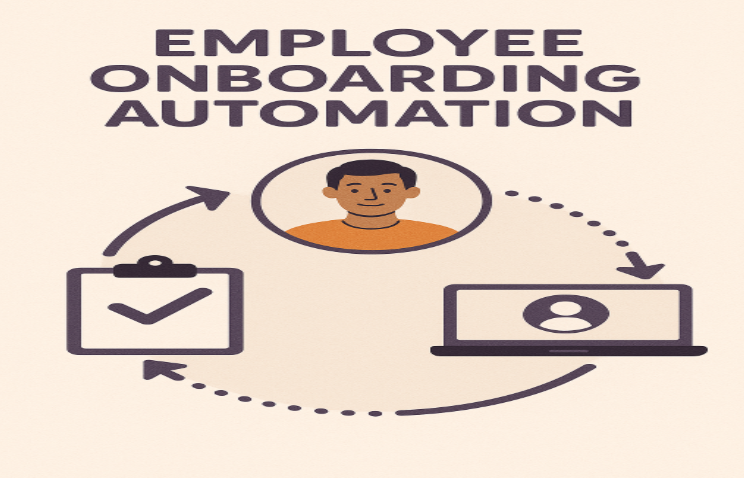
To address these challenges effectively, organizations can adopt the following strategies: Phased Implementation: Gradual rollout reduces risk and allows system adjustments. Employee Training Programs: Proper training builds confidence and acceptance of new systems.
Cybersecurity Measures:
Implement strong data protection policies and secure access controls.
Hybrid Onboarding Models:
Combine automation with human interaction to retain emotional engagement.
Vendor Evaluation:
Choose reliable vendors with strong after-sales support and customization options.
Continuous Monitoring:
Regular audits and system upgrades ensure long-term success.
The Strategic Role of HR in Onboarding Automation
HR professionals play a central role in ensuring the success of onboarding automation. They act as process designers, system coordinators, change managers, and employee advocates. HR must ensure that automation aligns with organizational culture, business goals, and employee expectations. Technology should support HR strategy not replace human judgment and empathy.
Future Trends in Employee Onboarding Automation
The future of onboarding automation is expected to be driven by advanced technologies such as:
Artificial Intelligence and Machine Learning:
For predictive engagement analysis.
Virtual Reality (VR):
For immersive onboarding and training experiences.
Blockchain:
For secure verification of credentials and documents.
Advanced Chatbots:
For real-time onboarding assistance.
Data-Driven Personalization:
Hyper-customized onboarding journeys.
These trends will further enhance efficiency, personalization, and employee satisfaction.
Conclusion
Employee onboarding automation has transformed the way organizations welcome and integrate new employees. By digitizing documentation, streamlining workflows, improving compliance, and enhancing employee experience, automation plays a crucial role in modern HR management. It is not merely a technological upgrade but a strategic investment that directly impacts retention, productivity, and organizational success.
However, onboarding automation is not without challenges. High implementation costs, resistance to change, cybersecurity risks, and lack of personalization must be carefully managed. The key lies in adopting a balanced approach—leveraging automation for efficiency while preserving the human connection that builds trust and engagement.
As organizations move toward digital transformation and remote work environments, employee onboarding automation will continue to gain importance. When implemented thoughtfully, it becomes a powerful tool that not only enhances HR operations but also strengthens the overall employee experience and organizational culture.
References:
[1] “What is Onboarding Automation.”IBM.[Online]. Available:https://www.google.com/url?q=https://www.ibm.com/think/insights/onboarding-automation&sa=U&sqi=2&ved=2ahUKEwjM3u-in6eRAxW7SWwGHWOcFuUQFnoECB4QAQ&usg=AOvVaw33zghptET7CpS5qqiEz8NJ
[2] “What is employee onboarding automation, and why does it matter,”.[Online]. Available:https://www.google.com/url?q=https://www.automationanywhere.com/solutions/human-resources/employee-onboarding-automation&sa=U&sqi=2&ved=2ahUKEwjM3u-in6eRAxW7SWwGHWOcFuUQFnoECB8QAQ&usg=AOvVaw0DHElcdoJdbdk6doDFzKHH
[3] “Employee onboarding automation process: what is it about+benefits,”. [Online]. Available:https://www.google.com/url?q=https://www.zendesk.com/in/blog/onboarding-automation-guide/&sa=U&sqi=2&ved=2ahUKEwjM3u-in6eRAxW7SWwGHWOcFuUQFnoECCQQAQ&usg=AOvVaw1zKj5f5BAnI4A2KaU6vVFw
[4] “How automating your employee onboarding can improve the employee experience,”.[Online].
Available: https://www.google.com/url?q=https://peoplespheres.com/how-automating-your-employee-onboarding-can-improve-the-employee-exp/&sa=U&sqi=2&ved=2ahUKEwjM3u-in6eRAxW7SWwGHWOcFuUQFnoECGQQAQ&usg=AOvVaw2bp7o3aDKmrJslt_9xh_6v
[5] “Why employee onboarding automation is no longer optional,”.[Online]. Available:https://www.google.com/url?q=https://convin.ai/blog/employee-onboarding-automation&sa=U&sqi=2&ved=2ahUKEwjM3u-in6eRAxW7SWwGHWOcFuUQFnoECGwQAQ&usg=AOvVaw1j-at4JCee6EV7JdN0NZq4
FAQs
Q1. What is employee onboarding automation?
Employee onboarding automation is the use of digital tools, HR software, and AI technologies to manage onboarding tasks like documentation, training, and workflow tracking.
Q2. Why is onboarding automation important?
It improves accuracy, speeds up processes, reduces workload, enhances employee experience, and supports remote onboarding.
Q3. How does automation improve employee retention?
Automation ensures structured, clear, and organized onboarding, reducing confusion and helping new employees adapt quickly, which improves long-term retention.
Q4. What challenges occur in employee onboarding automation?
Common challenges include high setup costs, resistance to change, system integration issues, and data security concerns.
Q5. Can small businesses use onboarding automation?
Yes. Many cloud-based HR tools now offer affordable onboarding automation options for SMEs.
Q6. Does automation remove the human touch?
No, unless overused. A hybrid model combining automation + human interaction provides the best onboarding experience.
Q7. What future trends will shape onboarding automation?
AI, VR onboarding, blockchain verification, advanced chatbots, and hyper-personalized onboarding paths.
Penned by Krushna
Edited by Pranjali, Research Analyst
For any feedback mail us at info@eveconsultancy.in
Finance made simple, fast, and fun! 🏦💡 Sign up for your daily dose of financial insights delivered in plain English. In just 5 minutes, you’ll be smarter already!
Simplify Your Business Compliance with Eve Consultancy
Eve Consultancy is your trusted partner for end-to-end compliance services, including Company Incorporation, GST Registration, Income Tax Filing, MSME Registration, and more. With a quick and hassle-free process, expert guidance, and affordable pricing, we help businesses stay compliant while they focus on growth. Backed by experienced professionals, we ensure smooth handling of all your legal and financial requirements. WhatsApp us today at +91 9711469884 to get started.