
5 Policies Transforming Responsible Deployment in 2025
Artificial intelligence touches every aspect of our lives in these times. In times of rapid technological progress, ethical responsibility allied with artificial intelligence has become the cornerstone of AI governance. AI systems decide on diagnoses in healthcare and financial services, among others, affecting millions of people every day. But with huge power comes great responsibility, and the call for robust policies on its deployment is more critical than ever. The question isn’t whether to regulate but how-how governments create frameworks which foster innovation while protecting fundamental human rights and values of society from Cape Town to Beijing to New York and Brasilia.
Governance around AI is in constant flux, as governments, corporations, and international bodies rush to establish far-reaching regulatory frameworks. Indeed, most such policies have focused on the most critical areas: algorithmic bias, data privacy, and transparency and accountability of AI systems.
AI Governance: the Core Constituent Elements of its Makeup
AI governance means all policies, standards, and sets of practices that define and control how the development and putting to responsible use of artificial intelligence systems are performed. It is in this sense that good governance weighs innovation against ethics to ensure AI technologies work in the best interest of humanity by limiting possible harm.
Accountability structures, clarity in algorithmic decision-making, protection of individual privacy rights, and nondiscrimination are just a few of the more important objectives contributing towards AI governance. In fact, any organization considering the deployment of an AI system will have to consider much more than technical performance but also wide social considerations. That holistic approach requires technologists to work with policymakers, ethicists, and communities being impacted.
Meanwhile, other jurisdictions are developing their regulatory regimes in forms taking inspiration from a variety of sources. Of the latter, one of the most ambitious schemes is the proposed EU AI Act, which adopts a system of categorizing AI systems and associated requirements based on risk. The United States has taken more sectoral approaches: agencies like the FDA and the SEC have been developing sector-specific guidance.
Key Policies Shaping Responsible AI Deployment
Governance of artificial intelligence is based on policies that make sure AI is deployed responsibly and supports real pathways to action by organisations. The transparency requirements mean that whenever a critical decision is made affecting the well-being of people, especially in high-stakes settings such as employment, lending, or criminal justice, such a decision will need to be disclosed as being made by an AI system in the first place, so people will know they are dealing with an AI and can challenge such decisions when and if necessary. This means that organizations should make the origin of their data transparent and document any steps taken to mitigate historical biases in training data.
The requirements of the impact assessment may create an opportunity for an organization to think ahead about the probable impacts of AI systems on society. These will also highlight disparities in outcomes for different demographics, potential job losses, environmental impacts, and widespread social consequences. Early understanding of such risks will, therefore, allow an organization to institute mitigation strategies or revisit plans for deployment in particularly problematic applications.
Accountability policy-framing algorithms outline lines of responsibility for consequences brought about by AI systems. Whether an AI system would cause harm-for example, biased algorithms in hiring or malfunctioning autonomous vehicles-the policy would ascribe responsibility to someone. That includes placing requirements on human oversight of key decisions and the creation of mechanisms for redress when systems fail.
The Regulatory Landscape: International Perspectives
Everything is different from nation to nation: cultural values, economic priorities, and even philosophies of governance. In other words, regulations touching on AI really run the gamut. Understanding this diverse landscape will be important both for organizations operating across borders and policymakers seeking effective approaches.
The EU has thus been leading in the setting of regulations with respect to AI on the international plane. Among many others, under the AI Act, it laid down a set of requirements along the lines of risk-the high-risk AI systems were defined as those where either fundamental rights are affected, safety, or critical infrastructure. Far-reaching requirements are set concerning conformity assessments, documentation obligations, and mandates for human oversight. Protection of basic rights and democratic values reflects priorities of Europe over privacy and human dignity.
While the Chinese approach links up AI innovation promotion with state control and standards development focused on domestic technology leadership, Chinese regulation so far has been focused on: the recommendation of algorithms, deep synthesis technologies, and data security-all reflecting concerns about social stability and state security. Of special note are the mechanisms regarding algorithm registration, security assessment, and, in particular, those influencing public opinion.
The government pursued voluntary approaches sector by sector: scores of different federal agencies issued guidelines with respect to their domain. The National Institute of Standards and Technology developed an AI Risk Management Framework; executive orders obliged the agencies to use AI responsibly in the meantime. To this day, federal legislation has not been comprehensive. It is the states that increasingly fill in the regulatory gap with their own legislation.
Artificial Intelligence Governance Frameworks: Implementation
These are organizations that will actually deploy strong AI governance, and it is they that will have to devise elaborate frameworks through which the technical, organizational, and ethical dimensions of this are governed-including formulating governance structures with clearly defined roles and responsibilities from board-level oversight down to teams responsible for its operational implementation.
An ethics committee or review board on AI would institutionalize mechanisms that review proposed projects in AI in light of ethical principles and organizational values. If representative, it would include a variety of points of view, including technical experts, ethicists, legal advisors, and representatives of the wide array of communities affected by decisions, such that decisions take into account multiple points of view and different types of implications.
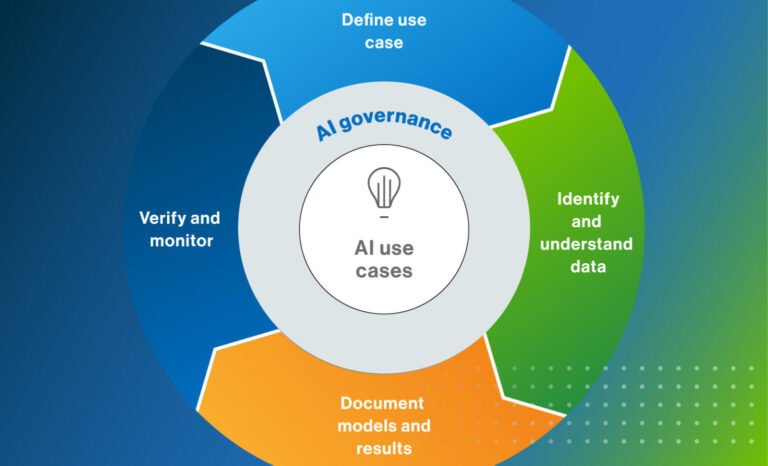
It would involve the setting of standards and best practices for each step of the AI life cycle, from model development and testing protocols to deployment procedures and continuous monitoring. Proper documentation practices, which allow the decisions to be traceable and the system explainable when needed, are also part of the approach.
Training and capacity building are very important in order for everybody to know their place in the governance framework: Developers should be trained on responsible AI development practices, while business leaders need to be educated on the capabilities, limitations, and risks of AI. Continuous education and reinforcement of ethical principles are required in creating a culture of responsible AI in organizations.
Implementation Challenges of AI Governance
While there is crystallizing a consensus on the need for governance of AI, obstacles in the way of successful policy that would secure the responsible deployment of AI remain extremely great. This is linked at least in no small measure to the root problem of technical complexity: most AI systems, in particular deep learning models now in prevalent usage, are “black boxes” in which decisions they arrive at cannot be explained in any direct fashion. The presence of such black boxes creates a problem for any mechanisms of accountability and associated requirements for transparency.
The challenge lies in rapid technological evolution, meaning that the development of governance frameworks will risk being out of date almost from the instant they come into being. What this means is that policies developed with an eye on today’s capability in AI might prove inept against emergent technologies such as artificial general intelligence or machine learning improved through quantum computing. Regulation, to be effective, should strike a good balance between specificity and adaptability; it must outline guidelines while allowing enough flexibility for innovation.
Resource constraints are of particular concern for small and medium-scale enterprises lacking compliance teams or technical infrastructure to cope with full-scale AI governance. The demanding nature of the framework indeed warrants investment in people, technology, and processes that stretch already limited budgets. Going forward, the risk is indeed that regulatory compliance becomes a source of competitive advantage for well-resourced firms and an entry barrier to smaller players.
Cross-border complexity: The diverging regulatory regimes demand immense knowledge from organizations of multinational scope-from the comprehensive AI Act of Europe, via the algorithm registration requirements of China to the sectoral approaches of America-in both legal and technical fields. This generally means a set of compliance frameworks running parallel with each other, plus extra layers of complexity and costs.
Governance of AI in the Future
International coordination will be further refined day in, day out. New technologies in classes such as explainable AI and algorithmic auditing tools will, in turn, enable organizations to put into effect even more criteria concerning transparency and accountability. These technical developments underpin improved policy for responsible deployment, making systems more interpretable and their results traceable.
International cooperation on the challenges of AI will increasingly be necessary, as more and more countries realize that many of the challenges have a global dimension. Full harmonization of values and priorities is unlikely to be plausible, while further coordination of core values related to safety, transparency, accountability, and protection of human rights is feasible. International organizations like OECD and UNESCO foster dialogue and provide a framework that guides national approaches while allowing for national sovereignty.
AI governance is of growing concern, as artificial intelligence not only changes industries but whole societies. The policies laid down today on responsible deployment will determine how AI affects humanity for generations to come. It demands a far-ranging governance framework that opens huge potentials while guarding against its risks, balancing innovation with ethics, transparency with efficiency, progress with protection. The regulatory landscape will change; the commitment to responsible development and deployment of AI cannot. It is now up to the organizations, policymakers, and above all, the citizens of this world, to ensure AI governance serves the common good by forging technological futures that are powerful, yet just and equitable in concert with human values.
References
[1] European Commission, “The AI Act”, European Union Official Website, 2024. [Online].
Available: https://digital-strategy.ec.europa.eu/en/policies/regulatory-framework-ai
[2] National Institute of Standards and Technology, “AI Risk Management Framework,” NIST, 2023. [Online].
Available: https://www.nist.gov/itl/ai-risk-management-framework.
[3] OECD, “OECD AI Principles”, Organization for Economic Co-operation and Development, 2024. [Online].
Available: https://oecd.ai/en/ai-principles
Penned by Manobal
Edited by Disha Thakral, Research Analyst
For any feedback mail us at info@eveconsultancy.in
Finance made simple, fast, and fun! 🏦💡 Sign up for your daily dose of financial insights delivered in plain English. In just 5 minutes, you’ll be smarter already!
Simplify Your Business Compliance with Eve Consultancy
Eve Consultancy is your trusted partner for end-to-end compliance services, including Company Incorporation, GST Registration, Income Tax Filing, MSME Registration, and more. With a quick and hassle-free process, expert guidance, and affordable pricing, we help businesses stay compliant while they focus on growth. Backed by experienced professionals, we ensure smooth handling of all your legal and financial requirements. WhatsApp us today at +91 9711469884 to get started.