
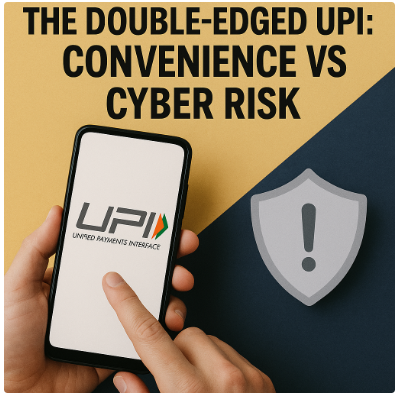
UPI — India’s Digital Payment Revolution That’s Inspiring the World
When it comes to global fintech, United Payments Interface or UPI in India is often regarded as a transformative innovation, and rightly so. With the advent of UPI, the entire scene of money transfer has changed in the country. All one needs is a smartphone and a bank account, and send across the desired sum in a flash. It is fast, seamless, free of cost, and fully integrated into the everyday life of Indians. Built by the National Payments Corporation of India, a virtual ID is all that’s required, unlike more cumbersome methods that preceded it, like debit card numbers and IFSC codes. Its 24/7 availability and applicability across several banks and apps make it more interoperable than even global counterparts such as Zelle in the USA or SEPA Instant in Europe. Other Asian countries, marvelled at its success, have attempted to follow suit and adopt similar systems, such as in Singapore and the UAE. The seamless and accessible nature of this system has accelerated financial inclusion and boosted transparency across trade. As UPI digital payment in India becomes more widespread, it has also attracted attention from global markets. Countries like Singapore and the UAE are replicating India’s model due to its success in promoting financial inclusion and transparency.
However, with any revolution comes reason to be wary. Just as the ease of transactions has skyrocketed, so have the scams and frauds. With UPI usage, digital payment frauds have also shown a sharp increase, according to reports by the Reserve Bank of India. Especially vulnerable are groups of the population who remain unfamiliar with the rapidly evolving digital landscape, especially aged populations. Fraudsters are noted to pose as customer support agents and lure victims with a variety of fraudulent schemes, such as phishing links disguised as refund requests or fabricated job offers. Generating false QR codes is an unfortunately common practice to trick users into sending money, unbeknownst to them, where or how it is going. UPI transactions are irreversible, and a robust grievance redressal system remains to be put in place, unlike the case of credit card fraud, where safeguards like chargebacks are common practice.
Safeguarding UPI — Balancing Innovation with Security and Accountability
How can one protect oneself if one finds oneself at the receiving end of such a scam? The advent of this sort of crime stems from taking advantage of the general lack of awareness and the lack of consumer protection, making it more important than ever for the public to educate themselves about these malicious practices and be wary about the transactions they make. Additionally, there exists a privacy concern too – while verification on UPI is made easy due to its collection of user data, which is often linked to personal details such as mobile numbers and Aadhaar IDs, it would be remiss not to consider questions about data protection, considering how fintech companies stand to benefit from monetising user behaviour.
That said, it is important to take the good with the bad and understand that a good system evolves with the needs of the customer. India’s fintech story is only growing, and given its success, it needs guardrails to have it continue as a success. Whether it’s stricter regulations of third-party apps, more effective fraud-reporting mechanisms, or public educational campaigns of digital finance literacy and UPI usage, various measures can be taken. It is thus important to see any revolutionary system like upi payment as not merely a technology but as a public utility, making accountability and awareness essential facets. The success of UPI digital payment in India highlights the importance of balancing innovation with user safety. With stronger protections and awareness, UPI can continue to lead the world in secure digital finance.
FAQs: The Double-Edged Sword of UPI: Convenience vs Cyber Risk
Q1: What is UPI and why is it so popular in India?
UPI (Unified Payments Interface) is a real-time payment system that allows instant money transfers between bank accounts via mobile devices. Its convenience and zero transaction fees have made UPI extremely popular in India.
Q2: Is UPI safe for daily transactions?
While UPI is encrypted and backed by the Reserve Bank of India, users must be cautious of phishing links, fake QR codes, and frauds. Awareness is key to safe UPI use.
Q3: How do cyber criminals exploit UPI?
Cyber criminals trick users into sharing UPI PINs, clicking phishing links, or scanning fake QR codes to gain unauthorized access to their bank accounts.
Q4: Can a UPI transaction be reversed if scammed?
No, UPI transactions are generally irreversible. Unlike credit card payments, there is no chargeback facility, making fraud resolution challenging.
Q5: What are common types of UPI scams?
Popular UPI scams include fake customer care calls, job offer frauds, refund traps, and links disguised as official bank messages.
Q6: How can I protect my UPI account from fraud?
Never share your UPI PIN or OTP, avoid scanning unknown QR codes, and always double-check the recipient’s name before sending money.
Q7: Is it safe to link my Aadhaar or phone number to UPI?
Though UPI requires a mobile number for registration, privacy concerns arise if the data is mishandled. Use only trusted apps and check privacy settings.
Q8: Which UPI apps are most secure?
Well-known apps like Google Pay, PhonePe, Paytm, and BHIM offer UPI services with advanced security, but user vigilance is still necessary.
Q9: Why is UPI considered a double-edged sword?
UPI offers unmatched speed and ease, but it also introduces cyber risks due to its irreversible nature and increasing fraud activities.
Q10: How has UPI improved financial inclusion in India?
UPI has empowered millions by simplifying payments, especially for those without access to traditional banking infrastructure.
Q11: What should I do if I fall victim to a UPI scam?
Immediately report to your bank, block your UPI ID, and file a complaint on the NPCI or cyber crime portal.
Q12: Are there any charges for using UPI?
Currently, most UPI transactions are free for users, which adds to its appeal in everyday digital payments.
Q13: Can businesses use UPI securely?
Yes, many businesses use UPI for transactions, but they must educate staff on fraud prevention and use verified UPI platforms.
Q14: Does UPI collect personal data?
Yes, UPI systems access linked mobile numbers and bank details, raising questions about data protection and ethical usage.
Q15: What is the future of UPI in India’s digital economy?
UPI is expected to grow further, with added layers of fraud detection, public awareness, and improved regulations to manage cyber risks.
Penned by Tapasmi Ray Chaudhuri
Edited by Shashank Khandelwal , Research Analyst
For any feedback mail us at info@eveconsultancy.in
Finance made simple, fast, and fun! 🏦💡 Sign up for your daily dose of financial insights delivered in plain English. In just 5 minutes, you’ll be smarter already!
Simplify Your Business Compliance with Eve Consultancy
Eve Consultancy is your trusted partner for end-to-end compliance services, including Company Incorporation, GST Registration, Income Tax Filing, MSME Registration, and more. With a quick and hassle-free process, expert guidance, and affordable pricing, we help businesses stay compliant while they focus on growth. Backed by experienced professionals, we ensure smooth handling of all your legal and financial requirements. WhatsApp us today at +91 9711469884 to get started.