
Topics: Jan Dhan Account, Unified Payment Interface (UPI)
Introduction to Financial Inclusion in India
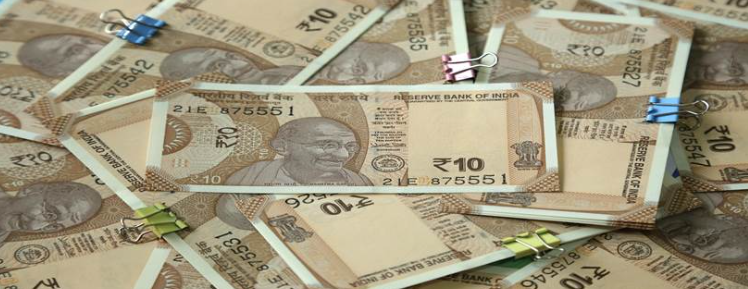
India has had a sea change in how it views financial inclusion. Financial services are no longer just regarded as economic instruments but also as citizens’ rights empowering them. The objective of inclusion is to provide every individual, irrespective of income or geography, with access to basic financial tools like savings accounts, credit, insurance, and digital payments. India has created an inclusive, scalable, and affordable digital financial ecosystem over the last ten years. This revolution started with the Pradhan Mantri Jan Dhan Yojana and continued through the JAM trinity and real-time payments through the Unified Payments Interface. Combined, these interventions are getting the unbanked into the formal economy and making financial services available to millions of people who were once left behind.
Jan Dhan Yojana: India’s Banking Revolution for the Masses
The Pradhan Mantri Jan Dhan Yojana (PMJDY) program introduced in 2014 turned out to be a starting point for increased access to banking for the underserved. The program provided zero-balance savings accounts with the benefits of RuPay debit cards and accidental insurance. Its core objective was to eradicate financial exclusion by making banking access available for each household. According to a 2025 press release by the Press Information Bureau, more than 523 million Jan Dhan accounts have been opened up to now, with a vast majority being from rural and poor sectors.
The effect extended beyond mere figures. The direct transfer of government subsidies and benefits into the hands of beneficiaries through Jan Dhan accounts to cut down on intermediaries’ reliance and enhance transparency in the delivery of welfare. Financial identity, previously a privilege, was made a right for the common citizen. It also gave a firm ground for other digital services by associating accounts with Aadhaar and mobile numbers. Jan Dhan opened banking services at scale and brought the country one step closer to a financially included society.
JAM Trinity: The Backbone of India’s Digital Inclusion
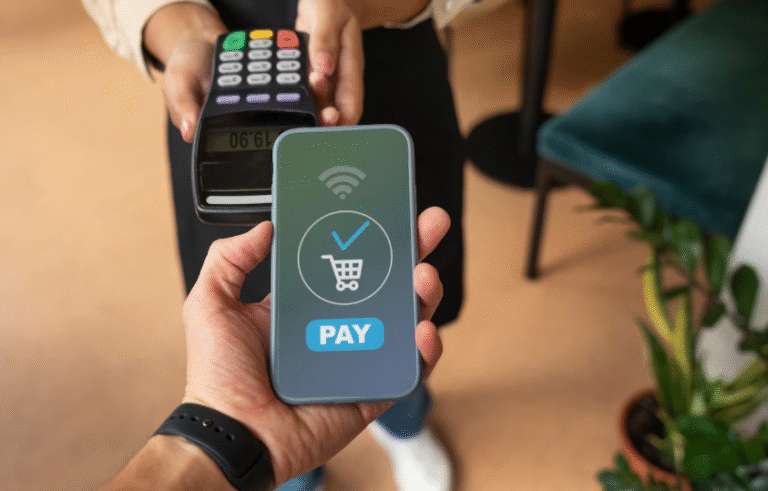
The JAM trinity of Jan Dhan, Aadhaar, and Mobile served as a digital enabler for India’s financial inclusion initiatives. Aadhaar gave each person a unique biometric identity that facilitated safe authentication for financial services and welfare programs. Mobile penetration enabled millions of citizens to avail themselves of financial services from anywhere in real-time and track their accounts in real-time. This combination paved the way for paperless, presence-less, and cashless service delivery.
A working paper by Rasheed and Baag (2023) at IIM Kozhikode describes how the JAM framework enabled the implementation of a “phygital” model—one that merges physical banking infrastructure with digital delivery. The writers point out that this model has been pivotal in reaching distant and rural areas, where conventional banking services are usually constrained. JAM has made it possible for the government to take services directly to target beneficiaries with lower costs and improved efficiency. It has also set the stage for the next massive leap in financial innovation—real-time digital payments.
UPI and India’s Digital Payments Revolution
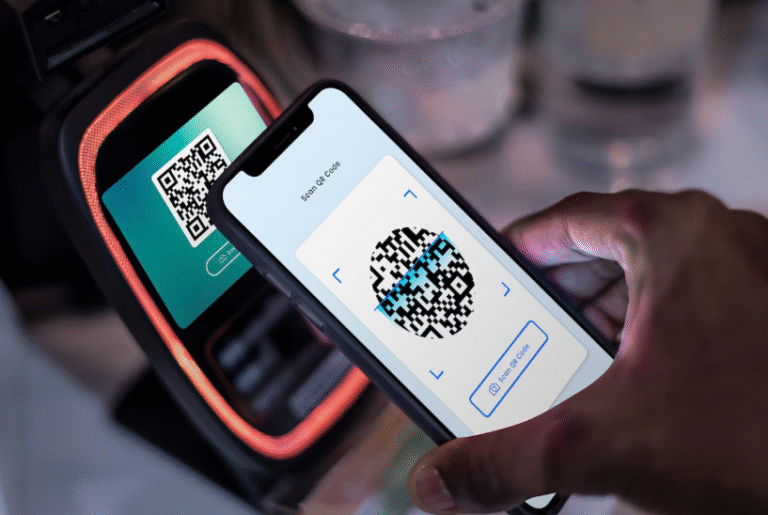
The National Payments Corporation of India introduced Unified Payments Interface (UPI), which as we all are aware is now the most popular way of digital payments in India. UPI, which came out in 2016, lets you send or receive money from one bank account to another using just a mobile number or virtual ID.
This dispensed with the necessity of using complicated bank details or cards and brought digital payments to everyone’s reach who has a simple smartphone or feature phone.
According to the NPCI’s official UPI statistics, UPI processed over 106 billion transactions in the 2024–25 fiscal year. This expansion is a reflection not just of growing smartphone use, but also of increased public confidence in digital networks. More recently, UPI Lite and 123PAY are among the attempts to take digital payment solutions to users with feature phones or poor connectivity.
Women’s World Banking’s “UPI for Her” is a great example of gender-oriented financial inclusion. It seeks to bring more than 200 million Indian women onto digital payments by overcoming obstacles like access shortages, digital literacy, and social norms. UPI is not technology alone—it’s an instrument of money empowerment. It allows small traders, gig economy workers, and daily wage earners to take payment, build credit history, and access loans or insurance. This new digital culture is making the economy more fair and open to everyone.
India’s Path to Inclusive
With the power of effective policy and innovation, India successfully shifted from financial exclusion to digital empowerment. Even as this success has been achieved, there are still some challenges. Some of Jan Dhan’s accounts remain dormant. Risks concerning cybersecurity, digital fraud, and financial literacy are also there, particularly among elderly and rural communities. Inclusion for everybody will happen with ongoing investments in digital literacy initiatives, robust fraud prevention systems, and offline infrastructure catering to the underserved.
As per the Press Information Bureau and recent NPCI and IIM Kozhikode studies, India’s financial inclusion model is being eyed across the world today. Its magnitude, velocity, and ease of implementation make it replicable as well as sustainable. While India is refining its systems further and working on the remaining gaps, it is a world leader in promoting inclusive finance through digital technology.
References
- Press Information Bureau. (2025, January). JAM (Jan Dhan Aadhaar Mobile) Trinity and PMJDY Success. Government of India. Retrieved from https://www.pib.gov.in/PressReleasePage.aspx?PRID=2086611
- National Payments Corporation of India. (n.d.). Unified Payments Interface (UPI): Product Statistics. Retrieved July 9, 2025, from https://www.npci.org.in/what-we-do/upi/product-statistics
- Rasheed, A. K. and Baag, P. K. (2023). Enabling Financial Inclusion in Rural India through a Phygital Model (IIMK Working Paper No. IIMK/WPS/569/FIN/2023/03). Indian Institute of Management Kozhikode. Retrieved from https://iimk.ac.in/uploads/publications/IIMKWPS569FIN202303.pdf
● Women’s World Banking. (2024, September). UPI for Her: Unlocking the Power of 200 Million Women in India’s Digital Payments Revolution. Retrieved from https://www.womensworldbanking.org/insights/upi-for-her-unlocking-the-power-of-200-million-women-in-indias-digital-payments-revolution/

FAQ Section
Q1. What is the Jan Dhan Account and how does it benefit rural populations?
The Jan Dhan Account is a zero-balance bank account introduced under the Pradhan Mantri Jan Dhan Yojana. It provides rural and underserved populations access to formal banking, including debit cards, insurance, and subsidy transfers.
Q2. What is the Unified Payment Interface (UPI)?
The Unified Payment Interface is a real-time payment system developed by the National Payments Corporation of India (NPCI) that enables users to transfer funds instantly between bank accounts using a mobile device.
Q3. How does the Jan Dhan Account contribute to financial inclusion?
A Jan Dhan Account allows individuals to store savings, receive direct benefit transfers (DBTs), and access credit, thus drawing unbanked populations into the financial system.
Q4. Can Jan Dhan Account holders use the Unified Payment Interface?
Yes, many banks link Jan Dhan Accounts to the Unified Payment Interface, allowing account holders to make seamless digital transactions even with limited banking infrastructure.
Q5. What are the security features of the Unified Payment Interface?
The Unified Payment Interface uses two-factor authentication and encrypted transactions to ensure secure and fast money transfers for users across the country.
Q6. How has Jan Dhan Account enrollment impacted women’s financial empowerment?
Over 55% of Jan Dhan Account holders are women. These accounts have enabled women to independently manage money, receive subsidies, and participate in digital banking via platforms like the Unified Payment Interface.
Q7. Is there a limit to how much money can be held in a Jan Dhan Account?
Yes, Jan Dhan Accounts are subject to certain deposit and withdrawal limits, especially in their initial stages. However, they can be converted into regular savings accounts over time.
Q8. What types of payments can be made using the Unified Payment Interface?
The Unified Payment Interface supports peer-to-peer fund transfers, utility bill payments, mobile recharges, e-commerce payments, and more.
Q9. How does UPI improve access for Jan Dhan Account holders without smartphones?
Using UPI services like 123PAY, people with feature phones linked to their Jan Dhan Account can perform essential banking transactions without internet access.
Q10. Can students and gig workers benefit from Jan Dhan Accounts and UPI?
Yes, students and gig workers often use Jan Dhan Accounts to receive government stipends or wages and use the Unified Payment Interface for managing finances.
Q11. What are the eligibility criteria for opening a Jan Dhan Account?
Anyone above 10 years of age with valid KYC documents can open a Jan Dhan Account, even without a minimum deposit.
Q12. What role does the Unified Payment Interface play in small business growth?
Small business owners can use the Unified Payment Interface to receive instant payments from customers and maintain transparent transaction records, enhancing credibility and efficiency.
Q13. Are there special features of UPI designed for Jan Dhan Account holders?
Yes, simplified onboarding, low transaction charges, and compatibility with feature phones make the Unified Payment Interface ideal for Jan Dhan Account holders.
Q14. How are Jan Dhan Accounts linked to Aadhaar and mobile numbers?
The Jan Dhan Account is integrated into the JAM trinity—Jan Dhan, Aadhaar, and Mobile—which allows users to access services like the Unified Payment Interface with biometric authentication and mobile banking.
Q15. Can UPI be used for international transactions?
While the Unified Payment Interface is primarily domestic, NPCI is expanding its global reach. Future updates may allow Jan Dhan Account holders to engage in cross-border transactions.
Penned by Gargi Garg
Edited by Sneha Seth, Research Analyst
For any feedback mail us at info@eveconsultancy.in
Finance made simple, fast, and fun! 🏦💡 Sign up for your daily dose of financial insights delivered in plain English. In just 5 minutes, you’ll be smarter already!
Simplify Your Business Compliance with Eve Consultancy
Eve Consultancy is your trusted partner for end-to-end compliance services, including Company Incorporation, GST Registration, Income Tax Filing, MSME Registration, and more. With a quick and hassle-free process, expert guidance, and affordable pricing, we help businesses stay compliant while they focus on growth. Backed by experienced professionals, we ensure smooth handling of all your legal and financial requirements. WhatsApp us today at +91 9711469884 to get started.