
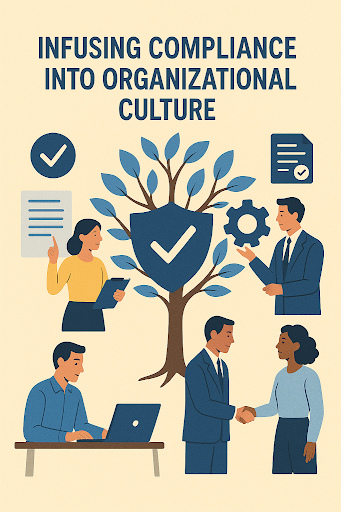
With the speed of developments in artificial intelligence in the present business environment, organizations are under greater scrutiny not just by the regulatory agencies but also by workers, clients and society as a whole. Those times when compliance was considered an easy procedural exercise to appease outside stakeholders are gone. In the present, it becomes part of the business’s compliance corporate culture, sustaining development pace and also demonstrating accountability through ethical governance that builds trust and long-term credibility.
However, what is the actual problem? Which persists?
To make compliance second nature to all, from top management to the lowest staff, there needs to be a grounding of compliance in organisational culture. Such positioning not only ensures regulatory compliance but also lays the foundation for ethical leadership, openness and even long-term corporate success.
4 Keys to Embedding Compliance into Organizational Culture
The Significance of Conformity in Modern-Day Situations
Modern organizations are faced with an array of regulations across data privacy, workplace safety, environmental and financial integrity standards. One small slip-up can cost them hefty fines, reputation loss, stakeholder confidence loss and much more.
But compliance is not just avoidance of sanctions; it is the building of trustworthiness. Compliance becomes the fabric of an organisation, which includes:
- Demonstrates compliance with ethical principles.
- Safeguards brand reputation.
- Builds stakeholder trust.
- Provides a safe and fair working environment.
In short, we can say, corporate compliance culture is no longer discretionary or optional; it’s a business imperative.
“Compliance can be defined as an element of company culture and not just a set environment’’– What does this complex sentence mean?
Let’s delve in deeply and understand in easy words.
So, the biggest mistake companies make is: making compliance someone’s department. Successful willingness thrives when it is part of the company culture and informs everyday decision-making.
Culture is what individuals do when they are not being watched. If staff perceive compliance as a constraint, they will do their best to avoid it. However, if they perceive it as a shared value, then consent is second nature. This cultural change needs leadership acceptance, openness and frequent reinforcement.
Let’s assume that we choose an example of two firms. And those are-
- In a company, workers obey rules only when auditors are present.
- In the second scenario, workers voice fears, ask ethical questions and choose openness, even though cutting corners seems more convenient to everyone.
In short, we can say that the difference lies in how deeply and perfectly compliance has been woven into culture.
Steps for integrating compliance into organisational culture
It takes work, consistency and clarity to create a compliance-driven culture. Here are some effective methods, which hopefully help every single person in several ways:
Leadership Commitment:
Compliance starts from the top. The leaders must exhibit by example and both in words and deeds, not only just reading bookish theories, that ethical governance is non-negotiable. When employees see the leaders making the tough but ethical choices, it establishes a high tone for the entire organisation.
- Clear Communication:
Policies must be easy to understand, easily accessible and jargon-free. It is also crucial that organizations consistently convey the importance of compliance rather than just the rules. By connecting compliance to the central values of trust, fairness, and responsibility, which gradually become more significant.
- Training & Awareness:
Conventional compliance training is far too often a dry lecture. To become successful, training must be engaging, scenario-based, interactive, etc. Using workshops, role-playing activities, and e-modules allows employees to grasp the implications of compliance in everyday life.
- Employee Empowerment:
Without fear of bad results, employees should speak up on possible misconduct. That means management should provide honest, open reporting and clear protection against retribution.
- Incentives and Recognition:
Reward the staff members who uphold the law by encouraging compliance and ethical conduct. In addition to ethical conduct, the company appreciates immediate gain enormously.
- Continuous Monitoring & Improvement:
Compliance is an ongoing process. Companies regularly evaluate how to make changes to ensure that their policies align with new laws and circumstances.
Ethical Governance: A Broader View
Compliance with regulatory structures and organisational culture goes beyond the law; besides that, it also entails embracing ethical governance practices. This entails the encouragement of fairness, openness & and accountability in all business undertakings.
Ethical leadership transcends legal compliance. For instance:
- Though a company may have the right to use consumer data in a particular manner, it can still go above and beyond in terms of privacy to safeguard the data. A company can be green with the environment even though the activity in question is mainly needed to meet its sustainability objectives.
- Such companies acquire the trust of their stakeholders, customer retention, as well as long-term viability. On the other hand, ethical leadership forms companies that people want to be a part of, invest in and buy from.
The Rewards of a Compliance Corporate Culture
Such organizations that can infuse compliance into culture enjoy several benefits:
- Reputation Shield: A sturdy compliance culture reduces the risk of scandals or crises.
- Employee Confidence: Employees are secure, respected and encouraged in an ethically controlled workplace.
- Customer Loyalty: Customers increasingly desire brands that they believe will “do the thing, what is right”.
- Sustainable Development: Ethical leadership guarantees sustainable profitability and upholds integrity.
Compliance is not basically rule-following; it is a part of good business practice.
Conclusion
Compliance corporate culture being strung into business culture, which is more than a tick-in-the-box exercise, but a process of development. The process requires strong leadership buy-in, dedicated staff engagement, and an ongoing focus on ethical governance. Where compliance becomes part of the cultural fabric, organizations not only escape risks but also prosper with moral integrity. In an environment where trust is paramount, organizations that embrace a culture of compliance become the business and moral leaders. Because at the end of the day, success without integrity is just failure in disguise.
References
[1] Christine Parker & Sharon Gilad, March 2011, ‘Internal Corporate Compliance Management Systems: Structure, Culture and Agency’, [Online] Available:
[2] Ralph Foorthuis, on 9 Aug 2020, ‘Tactics for Internal Compliance: A Literature Review’, [Online] Available: https://arxiv.org/abs/2008.03775
[3] Ahmed Alkabani, Hepu Deng, Booi Kam, on 28 May 2016, ‘Investigating the Role of Socio-organizational Factors in the Information Security Compliance in Organizations’ [Online] Available: https://arxiv.org/abs/1606.00875?utm_source=chatgpt.com
[4] Shukri Ali, Peter Green, Michael Parent, January 2009, ‘The role of a culture of compliance in information technology governance’, [Online] Available:https://www.researchgate.net/publication/43525412_The_role_of_a_culture_of_compliance_in_information_technology_governance
[5] Neil M Barofsky, Matthew D Cipolla, Erin R Schrantz, 25 April 2022, ‘Changing Corporate Culture’, [Online] Available:https://globalinvestigationsreview.com/guide/the-guide-monitorships-archived/third-edition/article/changing-corporate-culture?utm_source=chatgpt.com
FAQ : Infusing Compliance into Organizational Culture: A Guide to Ethical Governance
Q1. What does organizational compliance culture mean?
A1. Organizational compliance culture means embedding compliance values into daily business practices so employees act ethically and responsibly without external pressure.
Q2. Why is organizational compliance culture important?
A2. It helps companies avoid penalties, build stakeholder trust, protect reputation, and ensure sustainable business growth.
Q3. How is organizational compliance culture different from standard compliance programs?
A3. Standard programs focus on rules and audits, while organizational compliance culture integrates compliance into values, leadership, and employee behavior.
Q4. What role does leadership play in organizational compliance culture?
A4. Leaders set the tone by modeling ethical governance, making responsible decisions, and showing that compliance is non-negotiable.
Q5. How can organizations build a strong organizational compliance culture?
A5. By fostering leadership commitment, clear communication, employee training, open reporting systems, and recognition of ethical behavior.
Q6. What are the main benefits of organizational compliance culture?
A6. Key benefits include reduced risks, enhanced brand reputation, employee confidence, customer loyalty, and long-term profitability.
Q7. How does organizational compliance culture affect employee behavior?
A7. Employees act ethically, report misconduct openly, and align decisions with company values rather than just following rules out of fear.
Q8. What challenges do companies face in developing organizational compliance culture?
A8. Challenges include resistance to change, lack of leadership commitment, poor training, and viewing compliance as a burden instead of a value.
Q9. How does organizational compliance culture connect to ethical governance?
A9. It ensures transparency, fairness, and accountability, turning compliance into a driver of ethical governance rather than just legal obligation.
Q10. Why is training important for organizational compliance culture?
A10. Interactive training helps employees understand real-world compliance scenarios, making compliance practical and easier to adopt daily.
Q11. How can employees be empowered in organizational compliance culture?
A11. By providing safe channels to report issues, protecting against retaliation, and encouraging them to ask ethical questions.
Q12. Can incentives strengthen organizational compliance culture?
A12. Yes, rewarding employees for ethical conduct reinforces positive behavior and shows compliance is valued.
Q13. How does continuous monitoring improve organizational compliance culture?
A13. Regular evaluation ensures compliance policies remain effective, align with new regulations, and adapt to evolving risks.
Q14. What industries benefit most from organizational compliance culture?
A14. All industries benefit, but especially finance, healthcare, technology, and manufacturing, where regulatory risks are high.
Q15. What is the long-term impact of organizational compliance culture?
A15. It builds a trustworthy brand, fosters employee loyalty, ensures regulatory compliance, and supports sustainable success.
Penned by Sampriti Sen
Edited by Shashank Khandelwal, Research Analyst
For any feedback mail us at info@eveconsultancy.in
Finance made simple, fast, and fun! 🏦💡 Sign up for your daily dose of financial insights delivered in plain English. In just 5 minutes, you’ll be smarter already!
Simplify Your Business Compliance with Eve Consultancy
Eve Consultancy is your trusted partner for end-to-end compliance services, including Company Incorporation, GST Registration, Income Tax Filing, MSME Registration, and more. With a quick and hassle-free process, expert guidance, and affordable pricing, we help businesses stay compliant while they focus on growth. Backed by experienced professionals, we ensure smooth handling of all your legal and financial requirements. WhatsApp us today at +91 9711469884 to get started.