
Topics: political risk management
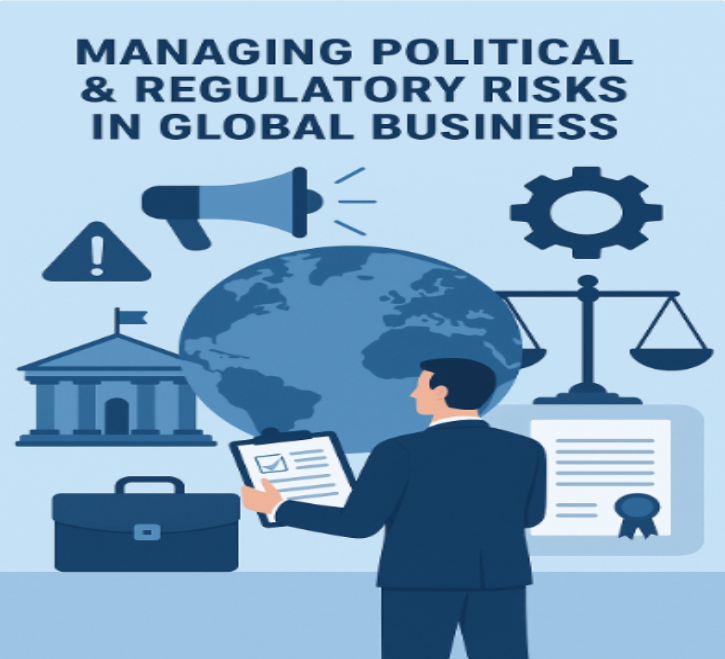
Dealing with politics and regulations is a part of doing business. You’ve got to keep an eye on what’s happening in each country. It can quickly blow up in your face. From government officials, to changes in the rules there’s a lot that can go wrong.. If you’re smart you can find ways to work with the system and come out on top. It’s all, about knowing how to manage the risks and adapt to the way of doing things. One wrong move and you’re out. So you’ve got to be careful. In the world of business politics and regulations are just part of the game.
The thing is, most companies don’t take these risks seriously until they become a problem. When a business moves into a market, they’re usually thrilled about the tax breaks and government handouts. They rarely think about what might happen if a new government comes in and suddenly cancels those perks. It’s like constructing a skyscraper without preparing for earthquakes. You don’t realize the danger until it hits you. Basically ignoring regulatory risks can be a recipe for disaster. You just don’t see it coming until it’s too late.

Understanding Political & Regulatory Risks
Regulatory risks. It’s a business. What are they exactly? For starters, there are the downsides that come with changes in a country’s politics or rules. But it’s not just about things going wrong. It’s also about the unpredictability of it all. When we talk about this kind of risk, we’re really looking at how governments can affect businesses. One day a new law comes along. Boom. Your business model is turned down. It’s not always easy to see these things coming either. That’s what makes them so scary. Basically, if you’re doing business in a place, you need to think about the politics and rules of that place. It makes sense.
Political and regulatory risks are a beast. Unlike the kind of risks you can quantify and manage with some neat tools, these ones are messy and about as straightforward as human nature.
They’re complex with lots of factors at play. They involve people. Which is where things can get really tricky. Some of the stuff that falls under this category includes.
When a country’s leader is ousted or there’s a shift in power, that’s when you see regime instability. This can happen through changes in leadership coups. Where one group seizes control from another. Or changes in the landscape. Essentially it’s an overhaul of who’s running the show.
One of the headaches for anyone trying to follow the rules is when laws are really unclear. I mean, it’s frustrating when regulations are open to interpretation, inconsistent, or enforced randomly. That’s when complying with the law becomes a never-ending challenge. It’s, like trying to hit a target thats constantly on the move.
What happens in Washington or Brussels can have reaching effects, like ripples on a pond. Take the US sanctions on Russia, for instance. They had an impact on energy flows.. Lets not forget Brexit, which ended up rearranging supply chains all over Europe. It’s crazy to think that a decision made in one part of the world can be felt in places like Mumbai, Shanghai, or Nairobi instantly. These global markets are all connected, all.
A lot of companies still think of managing risk as having some kind of safety net. They hire lobbyists, send out checklists to make sure they’re complying with rules or buy insurance to protect themselves from losses. The problem is, this approach is pretty outdated and only really kicks in after the damage is done. When the crisis is already looming large. It’s like waiting for a storm to hit before looking for an umbrella.
Just look at what happened to tech companies that poured a lot of money into China. They had a market at their fingertips for years. Things took a turn when data laws started to get stricter and regulators began to breathe down their necks. Suddenly they were struggling to keep up and lost their edge. It wasn’t like this risk came out of nowhere. It was pretty predictable. The thing is, you need to think beyond the few months if you want to see these kinds of problems coming. Quarterly profits can be blinding.
Fresh ways to manage risk. Forget the rules. What are some new ideas to handle problems that might come up? Think outside the box when it comes to managing risk. New approaches are.
They don’t have to follow the script.
Businesses can’t just play it safe if they wanna survive in todays world. They need to stop reacting and start taking charge. So how do they make that switch, from playing defense to actually taking control?
Let’s get real predicting whats going to happen in politics is one thing. Actually understanding what it means is another. To really make a difference, we need to build a sense of foresight rather than just making forecasts. This means looking beyond just whats likely to happen and thinking about what it could mean for the future.
Look beyond places when thinking about variety. Geography is one part of it. In terms don’t just focus on locations.
You can’t really expect a boardroom, in New York to fully understand the intricacies of land disputes in India or labor issues, in South Africa. I mean these are problems that require insider knowledge.. What if companies could tap into that wisdom? By teaming up with experts, community groups and even journalists businesses can gain an advantage. They can anticipate changes before they become news giving them a head start on adapting to situations. That’s where local intelligence really pays off.
In my view, the 21st century is only going to make politics more of a mess. Climate change is already causing a lot of turmoil. We can expect more as governments scramble to impose carbon taxes and green compliance standards. The rise of intelligence is going to raise some tough questions, too. Like, who gets to spy on us, who owns all the data being collected, and what happens to people’s jobs… If that’s not enough, the populist movement is basically a challenge to globalisation itself. It’s not looking like a future ahead.
If a company wants to thrive, managing political risk can’t be an afterthought. Honestly, it’s a part of any strategy. Boards that don’t get this are basically rolling the dice with their company’s future. That’s a reckless move.
That’s basically it.

Conclusion
Doing business globally can be a ride. One day you’re cruising along; the next you’re hit with tariffs, sanctions, or some new law that throws everything off. It’s like sailing through waters where the storms aren’t about the weather. They’re about politics. Here’s the thing: the same things that can sink you can also be an opportunity.
Companies that acknowledge this and plan ahead will be the ones that come out on top in these times. They’ll be able to roll with the punches and make the most of the opportunities that come their way. In the end, it’s really quite simple; if you want to succeed in the economy, you need to be aware of the landscape and factor that into your decision-making.
References
[1] IBM, “What is data compliance?,” Nov. 8, 2023. [Online]. Available: https://www.ibm.com/think/topics/data-compliance. [Accessed: Aug. 13, 2025].
[2] MetricStream, “Compliance Dashboard in 2025: A Complete Guide,” 2025. [Online]. Available: https://www.metricstream.com/learn/compliance-dashboard.html. [Accessed: Aug. 13, 2025].
[3] Deloitte, “Global risk management survey: 13th edition,” Deloitte Insights, 2024. [Online]. Available: https://www2.deloitte.com/insights/us/en/industry/financial-services/global-risk-management-survey.html. [Accessed: Aug. 13, 2025].
[4] World Bank, “Political risk insurance and guarantees,” 2024. [Online]. Available: https://www.worldbank.org/en/topic/politicalriskinsurance. [Accessed: Aug. 13, 2025].

SEO FAQ Section on Political Risk Management
Q1. What is political risk management in global business?
Political risk management is the process of identifying, assessing, and mitigating risks caused by political events, policy shifts, or regulatory changes that can affect business operations across countries.
Q2. Why is political risk management important?
Political risk management is crucial because changes in government policies, instability, or sanctions can disrupt supply chains, increase costs, or even force companies to exit a market.
Q3. What are common types of political risks businesses face?
Typical risks include regime change, expropriation, trade restrictions, sanctions, labor unrest, and unclear or rapidly shifting regulatory frameworks.
Q4. How does political risk management differ from regulatory compliance?
Regulatory compliance focuses on meeting existing legal requirements, while political risk management looks ahead to anticipate changes in policies, leadership, or global trade rules.
Q5. What role do governments play in political risk management?
Governments shape the regulatory environment, taxation policies, trade rules, and political stability—all of which determine the scale of risk businesses must manage.
Q6. How can businesses assess political risk before entering a new market?
Companies use tools like country risk analysis, political risk indices, local intelligence, and scenario planning to evaluate exposure before committing resources.
Q7. Can political risk management help businesses gain a competitive edge?
Yes. Companies that proactively manage political risk can adapt faster to disruptions and often capture opportunities competitors miss.
Q8. What industries are most vulnerable to political risk?
Energy, mining, technology, healthcare, and finance are highly vulnerable because they are tightly regulated and directly impacted by political decisions.
Q9. How do sanctions impact political risk management?
Sanctions can restrict trade, limit financial transactions, or cut access to markets, making political risk management vital for compliance and survival.
Q10. What is the role of insurance in political risk management?
Political risk insurance protects businesses from losses due to expropriation, political violence, or currency inconvertibility, helping manage uncertainty.
Q11. How does political risk management tie into supply chain resilience?
By identifying unstable regions or restrictive policies early, businesses can diversify suppliers and routes, strengthening supply chain resilience.
Q12. How does climate change influence political risk management?
Climate-related regulations such as carbon taxes and green compliance laws are reshaping global business, making climate foresight essential.
Q13. What strategies exist for effective political risk management?
Key strategies include scenario planning, building government relations, diversifying investments, and partnering with local stakeholders.
Q14. Can technology improve political risk management?
Yes. AI, big data, and predictive analytics can monitor trends, detect early warnings, and enhance political risk management strategies.
Q15. How does political risk management affect investors?
Investors consider political risk management when evaluating long-term business stability, as unmanaged risks can erode shareholder value.
Q16. Why do many businesses fail at political risk management?
Companies often focus only on short-term profits and ignore long-term political signals, leading to costly surprises.
Q17. How do multinational corporations practice political risk management?
They combine global monitoring with local expertise, engage in lobbying, and adjust investment portfolios based on risk levels.
Q18. What is the connection between globalization and political risk management?
As businesses expand globally, they face greater exposure to political instability, making political risk management more critical than ever.
Q19. What lessons can businesses learn from past failures in political risk management?
Past cases show that ignoring regulatory shifts or over-relying on government incentives without backup plans often leads to major losses.
Q20. How can small businesses implement political risk management?
Small firms can partner with local advisors, use political risk insurance, and monitor global regulatory trends to stay prepared.
Penned by Shrutt
Edited by Seema Acharya, Research Analyst
For any feedback mail us at info@eveconsultancy.in
Finance made simple, fast, and fun! 🏦💡 Sign up for your daily dose of financial insights delivered in plain English. In just 5 minutes, you’ll be smarter already!
Simplify Your Business Compliance with Eve Consultancy
Eve Consultancy is your trusted partner for end-to-end compliance services, including Company Incorporation, GST Registration, Income Tax Filing, MSME Registration, and more. With a quick and hassle-free process, expert guidance, and affordable pricing, we help businesses stay compliant while they focus on growth. Backed by experienced professionals, we ensure smooth handling of all your legal and financial requirements. WhatsApp us today at +91 9711469884 to get started.