
Topics: student engineering challenge, innovation contests
Engineering design competitions are full of chances to learn by doing, creativity, teamwork, and visibility—even for beginners. College societies that tap into engineering challenges open up real-world experience, networking, and possibly funding or recognition. In this article, we’ll explore beginner-friendly competitions that are accessible, exciting, and skill-building.

WHAT to choose?
First decide your domain—mechanical, chemical, aerospace, renewable energy, robotics, or civil. Pick competitions that match what your society is into and what resources you have.
For example, want to try out some cool green engineering ideas? Try the Human Powered Vehicle Challenge (HPVC)—teams design,
build, and race human-powered vehicles, judged on design, speed, and endurance. It is organized by ASME and has an India edition too and has lots of teams and learnings.
Into chemical engineering? Chem‑E‑Car Competition (AIChE) challenges you to build a small car powered by a chemical reaction, stopping without electronic brakes! Great for creative, eco‑friendly design.
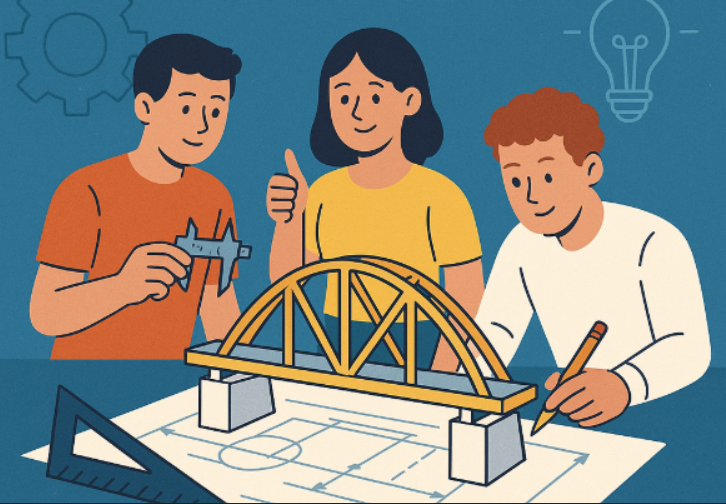
Structural or civil inclinations? Student Steel Bridge Competition—design, fabricate, and assemble a steel bridge following strict specs. Perfect for hands-on design and teamwork.
If renewable energy interests you, Solar Decathlon pushes you to design/build efficient, solar-powered structures—amazing for a big‑picture engineering‑architecture blend.
For vehicle and automobile enthusiasts in India, Formula Bharat is ideal—design, build, and race formula-style cars; includes static (design, cost, presentation) and dynamic events (acceleration, endurance).
WHERE to begin?
- Start small: begin with HPVC or Chem‑E‑Car—they have clear rules, manageable scales, and established student support.
- Explore local/national versions: Formula Bharat is India‑specific, while many ASME or AIChE events have India branches or virtual participation.
- Use your college society meetings as a brainstorming hub: choose a competition, assign roles (design, fabrication, and presentation), and set timelines.
Now, this is the topic we’ll focus on the most in this article:
How to get started on your very first competition:
- Form a small, motivated team: Even 3–5 members with diverse skills (CAD, materials, presentation) work amazingly well. Divide responsibilities early.
- Learn the rules inside-out: Read the official guidelines (like size or chemical limits for Chem‑E‑Car, bridge specs, etc.)—this avoids last-minute surprises.
- Lean on resources: Use society tools—or seek software access (Ansys for Design Challenge, CAD tools for HPVC). Many competitions provide team resources.
- Iterate early prototypes: Build simple models or simulations first, then improve. For example, start with cardboard or small motor prototypes for a vehicle, then scale up.
- Document as you go: Keep logs, photos, and design notes. This helps in presentations or for future society promotions.
- Use competitions in your society content: Share the journey—post stories of design sketches, team meetings, and trial runs. Authentic, behind-the-scenes content builds connection.
- Partner with departments: Connect with faculty, labs, or alumni for mentorship or access to workshops. Many faculty support student teams for capstone projects or competitions.
- Consistency is again the key : Even if you can’t field a team every semester, keep the channel alive—share ideas, plan ahead, encourage new members to take over.
- Munching on trends: Short clips of test runs or bridge assembly often go viral. Use trending music or reels to show your journey.
Collaborate with other societies:
Team up with your mechanics society or coding club—for robotics or vehicle competitions. Shared skills, shared following.

Conclusion
You may think that a first engineering design competition is life-changing because it is the time when you start your skills and confidence and connections that begin to start with. Start small, use whatever you have and work on your ideas until they are of the best they can be. Whether you are building a vehicle, a bridge, or something powered by the sun you will get experiences and memories that may remain with you years after the competition has been completed.
References
- HPVC by ASME – human‑powered vehicle design and race competition
- Chem‑E‑Car – chemical reaction powered miniature car with eco set‑ups
- Student Steel Bridge Competition – design, fabricate, assemble steel bridge
- Solar Decathlon – renewable energy efficient building design and build
- Formula Bharat – Indian formula‑style car build & race competition

FAQ Section: Student Engineering Challenge
1. What is a student engineering challenge?
A student engineering challenge is a competition where students apply design, creativity, and teamwork to solve real engineering problems.
2. Why should beginners join a student engineering challenge?
It builds technical skills, problem-solving ability, and teamwork experience while giving exposure to real-world engineering projects.
3. What are some beginner-friendly student engineering challenges?
Popular options include ASME’s Human Powered Vehicle Challenge, AIChE’s Chem-E-Car, the Student Steel Bridge Competition, and Formula Bharat.
4. How do I choose the right student engineering challenge?
Start with your interest area—mechanical, chemical, civil, robotics, or renewable energy—and select competitions that fit your team’s strengths.
5. Are student engineering challenges expensive to enter?
Some require materials and tools, but many provide support, sponsorships, or faculty guidance to reduce financial burdens on students.
6. Can first-year students join a student engineering challenge?
Yes. Many challenges encourage first-year students to participate, learn from seniors, and build foundational experience early on.
7. What skills do I need for a student engineering challenge?
CAD design, materials knowledge, project management, and presentation skills are helpful, but enthusiasm and teamwork matter most.
8. How do teams prepare for a student engineering challenge?
Teams divide roles, study official rules, design prototypes, test frequently, and document progress to ensure strong competition entries.
9. What makes the Chem-E-Car a unique student engineering challenge?
It requires building a small car powered only by a chemical reaction, testing creativity, chemistry skills, and eco-friendly design approaches.
10. Why is the Human Powered Vehicle Challenge a great student engineering challenge?
It combines mechanics, design, endurance, and creativity, making it beginner-friendly while offering practical lessons in teamwork.
11. How does the Student Steel Bridge Competition help future engineers?
It allows civil engineering students to design, fabricate, and assemble bridges, giving hands-on structural and teamwork experience.
12. What role does renewable energy play in student engineering challenges?
Competitions like the Solar Decathlon push students to design efficient, sustainable solutions, combining engineering with environmental awareness.
13. Are student engineering challenges only about winning?
No—learning, collaboration, and exposure to real-world problems are equally valuable, even if your team doesn’t win first place.
14. How can student societies support a student engineering challenge team?
Societies can provide meeting space, resources, faculty mentorship, and networking opportunities to strengthen participation.
15. What mistakes should beginners avoid in a student engineering challenge?
Ignoring rules, skipping early prototypes, or poor documentation can hurt performance—planning and testing are key.
16. How can students showcase their student engineering challenge journey?
Teams can post behind-the-scenes updates, design sketches, and test runs on social media to build visibility and attract sponsors.
17. Can student engineering challenges help with careers?
Yes. Employers value candidates with competition experience since it shows technical skill, teamwork, and practical problem-solving.
18. How does Formula Bharat stand out as a student engineering challenge?
It allows students to design and race formula-style cars, testing skills in design, endurance, cost, and presentation.
19. Are there virtual options for a student engineering challenge?
Yes. Some global competitions offer online design contests or hybrid formats, making participation accessible to all.
20. What is the long-term value of joining a student engineering challenge?
Beyond technical skills, students gain confidence, connections, and experiences that shape both careers and personal growth.
Penned by Khushi Basediya
Edited by Seema Acharya, Research Analyst
For any feedback mail us at info@eveconsultancy.in
Finance made simple, fast, and fun! 🏦💡 Sign up for your daily dose of financial insights delivered in plain English. In just 5 minutes, you’ll be smarter already!
Simplify Your Business Compliance with Eve Consultancy
Eve Consultancy is your trusted partner for end-to-end compliance services, including Company Incorporation, GST Registration, Income Tax Filing, MSME Registration, and more. With a quick and hassle-free process, expert guidance, and affordable pricing, we help businesses stay compliant while they focus on growth. Backed by experienced professionals, we ensure smooth handling of all your legal and financial requirements. WhatsApp us today at +91 9711469884 to get started.