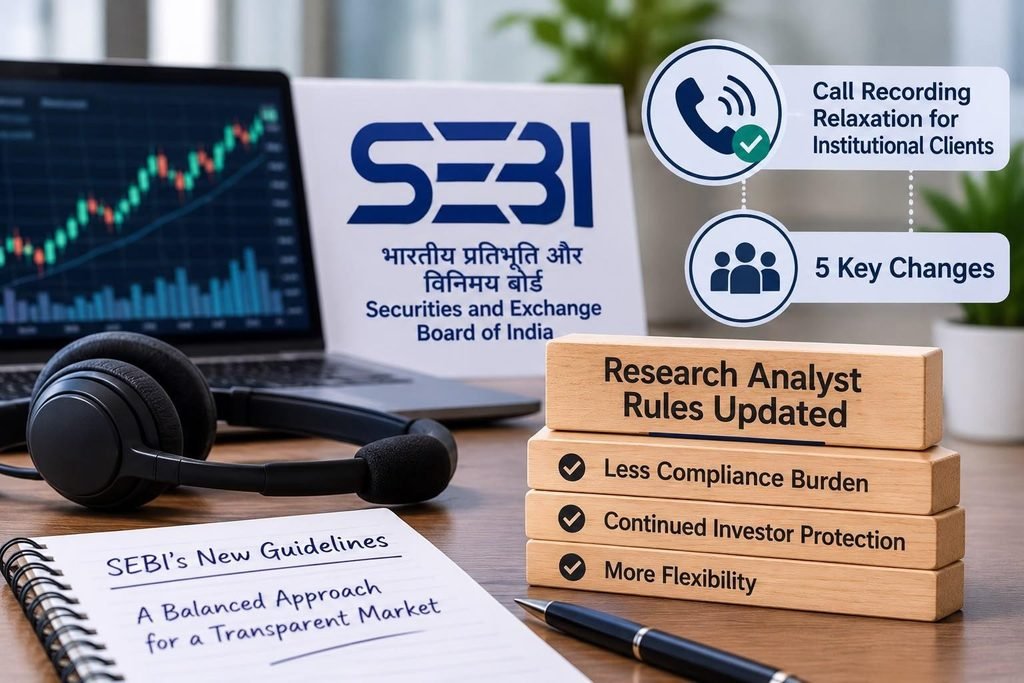
SEBI call recording rules have changed to reduce compliance requirements for research analysts communicating with institutional investors.
Research analysts plays a crucial role in the financial market by providing information related to investment and making it easier for investors to understand the current market trends.
To maintain this relationship, SEBI has introduced some rules for research analysts to follow proper practices while providing their services.
These rules help to maintain transparency in communication between their clients and research analysts, which is an important part of financial regulation.
The most important requirement was to use it to maintain records of communication with clients, including the phone call recordings.
These records help in resolving disputes and ensuring accountability. However, recording every telephone conversation needs additional time, storage, and administrative resources.
To address these concerns, SEBI proposed relaxing the call recording requirements for institutional clients.The revised framework aims to reduce unnecessary compliance work while ensuring that investor protection and transparency remain important priorities.
Read our guide on SEBI research analyst regulations to understand registration, compliance responsibilities and communication requirements for research analysts.
Credits: AI-generated
The Existing Call Recording Rules
SEBI has approved a proposal to relax the requirement for research analysts (RAs) and research entities to maintain call recordings of interactions with institutional investors, easing compliance requirements for the industry.
Under the approved framework, research analysts and research entitles will no longer be mandatorily required to maintain call recordings of their communication with clients.
However, they will continue to maintain other records, which may include telephone recordings, emails, SMS messages, written documents, and other legally verifiable information.
The purpose of maintaining these records is to ensure transparency and to have proper evidence. In case any dispute occurs in the future between client and research analyst.
For example, if a client raises a complaint about the advice received from a research analyst, then the communication records can help to clarify what was discussed. These records also help SEBI monitor compliance with the applicable regulations.
Why Did SEBI Propose Relaxing the Rules?
Relaxing the call recording requirements was proposed by SEBI because it creates the additional workload for research analysts, especially when dealing with institutional clients. It also involves the storing, managing, and maintaining large record files.
Institutional investors, such as banks, insurance companies, and investment firms, may have their own research teams and financial experts. They can independently evaluate the information and study investment opportunities provided by research analysts.
The main purpose of relaxation was to reduce the compliance burden on research analysts and make their daily targets more productive. SEBI also wanted to ensure that the important records are still being maintained and the real investors interests are being protected.
Key Changes in the Revised Framework
Relaxation for Institutional Investors
The most important change is that research analysts no longer need to maintain call recordings of their interactions with institutional investors. This helps in reducing the workload burden on the research analysts and allows them to focus more on their research activities and daily operations more efficiently.
Continued protection for retail Investors
Relaxation has only been given with institutional investors but with retail investors, research analysts must continue to maintain their records of communication, including the call encodings with their clients.
Like institutional investors, individual investors may not have the same knowledge of the finances. Proper documentation helps protect them from misleading information and other possible concerns.
Other Communication records must be maintained
Only the call recording requirements have been relaxed for the institutional investors but research analysts must continue maintaining their other valid communication records, such as SMS, e-mails, etc.
The main purpose is to ensure transparency and that important client interaction can be reviewed when needed or at the time of dispute, if any happens.
Better Compliance Management
The revised framework is expected to make compliance more practical for research analysts. By reducing the need to store certain call recordings, research analysts may be able to manage their resources more efficiently.
At the same time, the continued requirement to maintain other communication records helps preserve transparency and accountability.
5-Year Record Keeping Requirement Continues
The most basic requirement was to keep records for the last five years remains unchanged. If any dispute arises in future there should be the maintained records of the issue and kept until the dispute resolved. This ensures that the relaxation does not remove the responsibility of research analysts to maintain proper documentation.
Impact on Research Analyst and Financial Market
The revised rule were made to benefit research analyst and expected to make their work easy by reducing time, storage, and effort required for maintaining the call recordings. Now, research analyst can be more focused on their activities such as market research, preparing reports and make their daily operations more efficient and productive. This relaxation also helped in reducing cost of managing and storing communication records of their clients.
For institutional investors, the change support smoother communication with analyst without reducing their responsibility to evaluate the investment information carefully.
However, research analyst must continue following the other SEBI regulations and maintaining the required communication records.
Conclusion
SEBI’s decision to relax call recording requirements for institutional investors is a positive step towards making compliance easier for research analysts. It recognises the practical difficulties of maintaining extensive communication records while allowing analysts to focus more on their research and client services.
The revised framework also highlights the importance of balancing regulatory requirements with the needs of the financial industry. By reducing unnecessary compliance work and continuing to protect retail investors, SEBI aims to create a more efficient and transparent market. Going forward, research analysts must adapt to the new rules while maintaining professional standards and investor confidence.
References
[1] Securities and Exchange Board of India, “Review of Regulatory Requirement for Maintenance of Call Records of Institutional Clients by Research Analysts or Research Entities,” Circular, Oct. 23, 2026. [Online]. Available: https://www.sebi.gov.in/web/?file=https%3A%2F%2Fwww.sebi.gov.in%2Fsebi_data%2Fattachdocs%2Foct-2026%2F1792753022042.
[2] Securities and Exchange Board of India, “Consultation Paper on Relaxation in Requirement of Maintenance of Call Records for Institutional Clients,” May 18, 2026. [Online]. Available: https://www.sebi.gov.in/
[3] “Sebi eases call-recording mandate for research analysts dealing with funds,” Business Standard, Oct. 23, 2026. [Online]. Available: https://www.business-standard.com/markets/news/sebi-eases-call-recording-mandate-for-research-analysts-dealing-with-funds-126102301112_1.html
[4] “SEBI Exempts Research Analysts From Mandatory Call Recording Of Institutional Investor Interactions,” LiveLaw, Oct. 23, 2026. [Online]. Available: https://www.livelawbiz.com/securities-law/sebi/sebi-exempts-research-analysts-from-mandatory-call-recording-of-institutional-investor-interactions-555764