
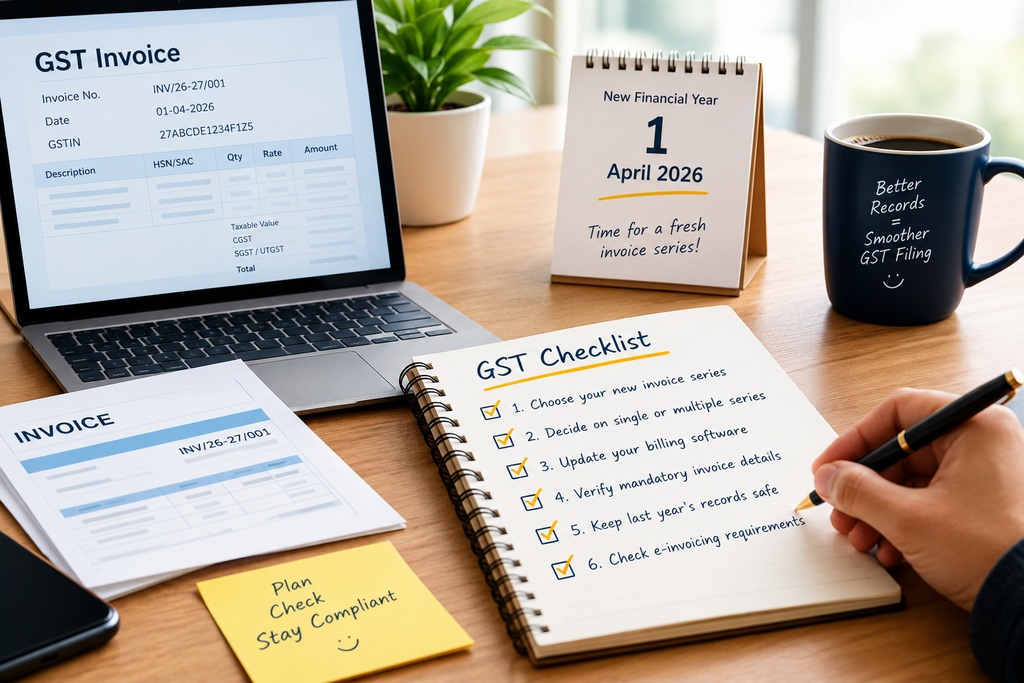
Source: ChatGPT [ Open AI ]
GST invoice numbering is an important part of preparing your business records for the new financial year, helping keep invoices organised and billing processes consistent from 1 April 2026.
The beginning of a new financial year often comes with a long to-do list for business owners. There are payments to check, accounts to settle and plans to make for the months ahead. In the middle of all this, invoice numbering might not seem very important. But a little preparation can save a lot of confusion later.
If your business is getting ready for the financial year 2026–27, 1 April is a good time to review your invoice system. You do not need to make things complicated. Just make sure your invoices are properly numbered, your records are organised and your billing process is ready for the new year.
Here are six simple things to check.
1. GST Invoice Numbering: Six Checks for the New Financial Year
If you have been using the same invoice sequence throughout the year, starting a fresh series can make your records easier to manage.
For example, your first invoice for FY 2026–27 could be numbered INV/26-27/001. This is only an example; you can choose a format that suits your business.
The important part is consistency. GST rules require invoice numbers to be consecutive, unique for the financial year and no longer than 16 characters. Choose a format that is easy to understand and stick to it.
2. Keep Your Numbering System Simple
Not every business needs a complicated invoice system. If you operate from one location and handle a limited range of transactions, one series may be enough.
Businesses with multiple branches or different billing requirements may prefer separate series. GST rules allow this, but it is important to decide how each series will be used.
Think about what works best for your team. A system that everyone understands is much easier to maintain than one that creates confusion every time an invoice is issued.
3. Check Your Billing Software Before 1 April
You probably do not want to discover a billing problem while a customer is waiting for an invoice.
Before the new financial year begins, open your billing or accounting software and check whether the new series has been set up correctly. Make sure the numbering sequence starts where you expect it to and that the invoice date and other details appear properly.
If you prepare invoices manually, review your templates and registers too. Taking a few minutes to check everything beforehand can save you from making corrections later.
4. Do Not Overlook the Other Invoice Details
An invoice is more than just a number. It also records what was sold, to whom it was sold and how much tax applies.
Before issuing your first invoice, check that your template includes the details required under GST rules. Depending on the transaction, these may include GSTINs, the description of goods or services, HSN or SAC codes, taxable value and the applicable tax amounts.
You may not need to change your entire format. Sometimes, a quick review is enough to spot missing or outdated information.
5. Do Not Throw Away Last Year’s Records
Starting a fresh series does not mean starting your records from scratch. Your old invoices may still be needed to confirm payments, answer customer questions or support tax-related work.
Keep previous invoices safely stored and separate from the new series. If you discover an error in an earlier invoice, follow the applicable GST procedure to correct it rather than changing or reusing invoice numbers casually.
Keeping old and new records organised makes it much easier to find information when you need it.
6. Check Whether E-Invoicing Applies to You
Some businesses also need to follow GST e-invoicing requirements. Whether your business falls under these rules depends on the applicable conditions.
If e-invoicing applies to you, make sure your billing process is ready and that you understand the steps involved. If you are unsure, check the official GST portal or speak to your accountant before issuing invoices under the new series.
It is better to clear up these questions beforehand than to deal with avoidable problems after transactions have already taken place.
Following a GST compliance checklist can help businesses review their invoicing process, maintain accurate records, and prepare for tax-related responsibilities.
A Fresh Start for Your Business Records
Invoice numbering may seem like a small administrative task, but it is part of keeping a business organised. When records are clear, checking transactions and preparing GST returns becomes less stressful.
Before 1 April 2026, take a little time to review your invoice series, check your billing system and organise your records. You do not need a complicated process. You just need one that works consistently and helps you keep your business paperwork in order throughout the year.
References:-
[1] New GST Rules from April 2026: Complete Guide to e-Invoicing, LUT, IMS & Invoice Numbering, April 2026, ND Savla & Associates Chartered Accountants [ Online ]
Available:
Reports:-
AI Report
Plagiarism Report
Grammar Report