Input Tax Credit in GST: How Input Tax Credit Can Affect Business Cost Under GST
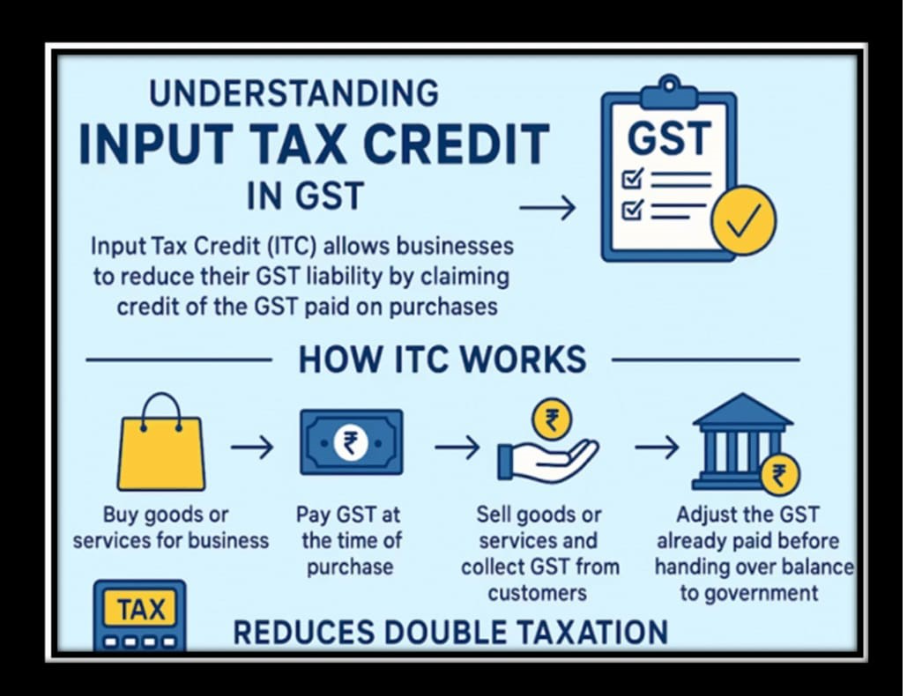
The Goods and Services Tax (GST) has revolutionized the tax and cost management approach of businesses in India. Input Tax Credit (ITC) is one of the most crucial aspects of GST. ITC provides an opportunity for eligible business entities to avail credit facility to reduce the rate of payment on sales, wherein they have to pay GST on purchases. Therefore, input tax credit is now playing a significant role in the cost planning of businesses under the GST regime. Input Tax Credit in GST
Input Tax Credit in GST: What is Input Tax Credit?
Input Tax Credit is the credit that will be allowed to a registered business to the extent of any taxes paid on the input, services, and purchases that have been used for the business. For instance, a business that purchases goods for ₹18,000 but collects ₹30,000 from customers for these purchases may be able to avail the ₹18,000 input tax credit (ITC) against the output tax liability (GST). The use of ITC is governed by the provisions of the GST Act and eligibility conditions as specified. So, the net GST to be paid would be ₹12,000. Input Tax Credit in GST
Input Tax Credit in GST: How ITC will impact on GST Cost
ITC can decrease the tax burden which is ultimately a cost to the business. Effective cost of inputs may rise due to absence of ITC.In absence of ITC, the cost of inputs will be affected. The tax on inputs can, in general, be adjusted against the tax liability on output using eligible ITC. Input Tax Credit in GST
For example:
Particulars| Amount
GST paid on purchases| ₹18000
Total revenue received from sale of goods| ₹30,000
Less: Eligible ITC| ₹18,000
Net GST payable| ₹12,000
This can prevent the chain reaction of taxes and can increase the efficiency of business operations.
ITC is defined within the framework of GST Planning.ITC is part of GST Planning.
As a significant part of GST planning for businesses, companies need to ensure that they have the proper/informed invoices, records and adherence to the rules and regulations so that they can avail eligible credits. In addition, companies must also make sure that any purchases are made for a business purpose that is allowed, and other conditions are met.
Good management of ITC can assist businesses in making planning decisions for cash flows, managing their GST cost, and making informed purchasing decisions. Loss of time or mistake in claiming the eligible ITC can impact working capital and may also result in higher requirements for working cash.
Conclusion
Input Tax Credit is a significant factor in the effective cost of a business with regard to the GST. ITC can minimize cascading effect of taxes and help in better cash flow management as it allows eligible input taxes to be adjusted against output tax liability. Thus, it’s crucial to ensure that good Governance of Input Tax Credit (ITC) is a critical component of the business’s GST planning and compliance approach.
REFERENCES-
[1] Source: Taxmann https://share.google/pUQKAugyeHRsmzIfD
[2] Source: GST Council https://share.google/O3v6WesZSma44qN2m
[3] GST Input Credit: Meaning, Definition, Benefits & FAQs https://share.google/pk9whAD0eDTN62OkI
[4] Benefits of Input Tax Credit (ITC)- Insights from Udaipur CA https://share.google/NrsyIyLEDHdZ79YqK
[5] Internal link: Add Post ‹ Eve Consultancy — WordPress
Screenshot
[1] Proofreading[Grammarly/Quillbot]

[2] Pligiarism report [Duplichecker]

[3] AI DETECTION (zerogpt )