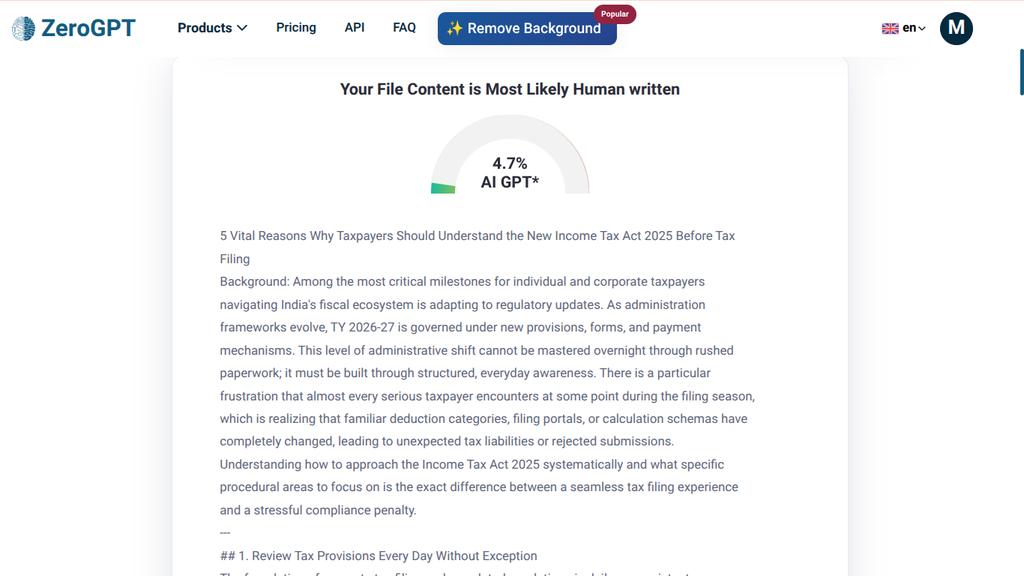
New Income Tax Act 2025 Among the most critical milestones for individual and corporate taxpayers navigating India’s fiscal ecosystem is adapting to regulatory updates. As administration frameworks evolve, TY 2026-27 is governed under new provisions, forms, and payment mechanisms. This level of administrative shift cannot be mastered overnight through rushed paperwork; it must be built through structured, everyday awareness. There is a particular frustration that almost every serious taxpayer encounters at some point during the filing season, which is realizing that familiar deduction categories, filing portals, or calculation schemas have completely changed, leading to unexpected tax liabilities or rejected submissions. Understanding how to approach the Income Tax Act 2025 systematically and what specific procedural areas to focus on is the exact difference between a seamless tax filing experience and a stressful compliance penalty.
1. New Income Tax Act 2025: Review Tax Provisions Every Day Without Exception
The foundation of accurate tax filing under updated regulations is daily or consistent engagement—not occasional reviews, not weekend panic, or looking at rules right when the due date arrives. Taxpayers build regulatory fluency through repeated exposure to official circulars and portal notifications, gradually raising the baseline of what feels normal and manageable. New Income Tax Act 2025
For modern taxpayers, the daily or weekly routine should involve a structured window of focused learning—not scrolling through social media speculation, but deliberate engagement with official guidelines concerning the Income Tax Act 2025. Reviewing evolving tax provisions well ahead of time helps establish clarity and prevents last-minute filing bottlenecks.
New Income Tax Act 2025 is an important topic for taxpayers who want to understand India’s updated income tax framework before filing their returns. Learning about the new provisions can help individuals understand tax rules, identify applicable deductions and exemptions, maintain accurate financial records, and meet filing requirements. Being aware of the changes can also help taxpayers avoid common filing mistakes and make informed financial decisions. Reviewing official Income Tax Department guidance before submitting a tax return helps ensure that taxpayers follow the applicable rules and deadlines.
New Income Tax Act 2025 is important for taxpayers who want to stay informed about changes in India’s tax system and understand their responsibilities before filing returns. Knowing the key provisions can help individuals understand applicable tax rates, deductions, exemptions, and documentation requirements. It also helps taxpayers organize their financial information, reduce filing errors, and plan their finances more effectively. By reviewing official tax guidelines and keeping track of important deadlines, individuals can prepare their income tax returns with greater confidence and comply with the rules applicable to the relevant financial year.
2.New Income Tax Act 2025: Focus on Legal Architecture, Not Just Form Filling
One of the most important shifts a taxpayer must make is moving from simple information extraction—what numbers go into this specific box?—to structural analysis—how do these new legislative provisions alter my overall tax liability? Filing questions under the Income Tax Act 2025 are designed to test whether a filer understands the logical architecture of the law rather than just copying figures from old formats.
Practising this analytical review during preparation—identifying core statutory shifts in the first instance, tracking how subsequent schedules relate to those changes, and summarizing structural adjustments—builds the exact comprehension orientation that modern tax portals require. Individuals who develop this habit find that it prevents calculation errors and secures accurate tax filing outcomes. New Income Tax Act 2025
New Income Tax Act 2025 is important for taxpayers who want to stay informed about changes in India’s tax system and understand their responsibilities before filing returns. Knowing the key provisions can help individuals understand applicable tax rates, deductions, exemptions, and documentation requirements. It also helps taxpayers organize their financial information, reduce filing errors, and plan their finances more effectively. By reviewing official tax guidelines and keeping track of important deadlines, individuals can prepare their income tax returns with greater confidence and comply with the rules applicable to the relevant financial year.
3. New Income Tax Act 2025: Time Your Preparation and Track Your Progress
Tax filing efficiency requires measurement. Without tracking how much documentation has been reviewed and at what accuracy level, a filer has no reliable way to know whether their preparation is producing improvement or maintaining a dangerous plateau. Timed review sessions—working through specific tax schedules against a structured timeline—provide the data that makes preparation genuinely developmental rather than reactive. New Income Tax Act 2025
Tracking progress toward completion targets and adjusting preparation intensity accordingly converts tax season from a vague source of anxiety into a measurable skill development process with specific, achievable milestones.
4.New Income Tax Act 2025: Build Financial Vocabulary Through Context, Not Memorisation
Tax terminology is both a compliance enabler and a direct requirement for accurate filing. Taxpayers frequently respond to unfamiliar terminology by attempting to memorise disconnected word lists or sections—a strategy that produces short-term recall but limited long-term retention and minimal practical understanding.
The more effective strategy is contextual learning—encountering unfamiliar tax terms within real financial documentation, inferring their operational meaning before verifying through official guides, and noting them in a personal reference journal. Terms learned this way—embedded in meaningful context—are retained and applied to tax filing far more reliably.
5. New Income Tax Act 2025: Practice Specific Formats and Document Types
While general financial awareness builds the baseline, targeted practice on the specific forms and payment mechanisms introduced for TY 2026-27 is essential for successful execution. Different income streams require different reporting schedules, and new digital portals demand familiarity with updated layouts.
Taxpayers should ensure their preparation includes material representative of all applicable filing profiles rather than relying only on what feels familiar from previous years. Working through an unfamiliar return format during practice is significantly preferable to encountering it for the first time on the final submission portal. New Income Tax Act 2025
Conclusion
Tax filing proficiency under the Income Tax Act 2025 is not a talent that some individuals have and others do not. It is a skill built through systematic practice, measured through regular assessment, and deepened through analytical engagement with new legislative frameworks. The taxpayer who commits to focused preparation, who studies structural provisions rather than just surface rules, who tracks filing progress honestly, and who builds technical vocabulary through context is building the single most reliable compliance skill available.
References
[1] Ministry of Finance, “The Income Tax Act 2025: Key Legislative Updates and Implementation Guidelines,” Government of India, New Delhi, 2025. [Online]. Available: [https://www.finmin.nic.in/](https://www.google.com/search?q=https://www.finmin.nic.in/&utm_
[2] Central Board of Direct Taxes, “Guidelines for Tax Filing and New Payment Mechanisms for TY 2026-27,” CBDT, New Delhi, 2026. [Online]. Available: Notification-3-of-2026.pdf
[3] Institute of Chartered Accountants of India, “Comprehensive Guide to the New Income Tax Framework,” ICAI, New Delhi, 2025. [Online]. Available:ICAI Publication Portal — Home
[4] S. L. Pressley and P. Afflerbach, “Verbal Protocols of Reading: The Nature of Constructively Responsive Reading,” Lawrence Erlbaum Associates, New Jersey, 1995. [Online]. Available: APA PsycNet
[5] National Institute of Public Finance and Policy, “Compliance Trends and Taxpayer Preparedness under New Fiscal Laws,” NIPFP, New Delhi, 2026. [Online]. Available: [https://www.nipfp.org.in/](https://www.nipfp.org.in/?utm_
[6] Internal Link: Add Post ‹ Eve Consultancy — WordPress