Ⅰ. Introduction
GST 2.0 Compliance E-commerce businesses handle many transactions every day. Because of this, even a small mistake in GST records can create problems in filing and reporting the important transaction. The recent GST reform phase, often called the GST 2.0 Trend, has increased the need for businesses to keep their tax systems updated and give the required information that they need to know before any transaction made.
E-commerce operators also have a specific GST responsibilities. For example, operators covered under Section 52 have to collect Tax Collected at Source (TCS) on eligible taxable supplies and report the required details.
GST 2.0 Compliance is becoming increasingly important for e-commerce businesses as digital transactions and online sales continue to grow. The changing GST framework requires businesses to pay closer attention to tax collection, invoicing, reporting, and transaction records. E-commerce platforms and online sellers need to understand the latest compliance requirements to avoid unnecessary penalties, delays, and financial risks. Maintaining accurate records and submitting GST returns on time can help businesses operate smoothly and build trust with customers. By adopting effective GST management practices and regularly monitoring tax updates, e-commerce businesses can stay compliant while focusing on growth and long-term success.
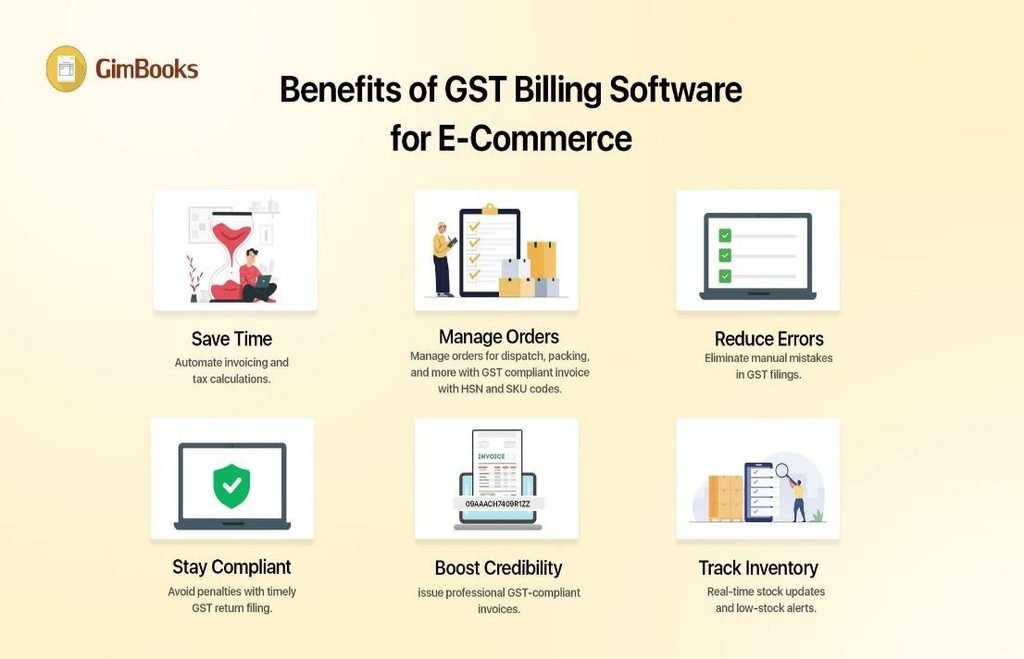
E-Commerce Software Benefits
Ⅱ. Compliance Needs More Attention: GST 2.0 Compliance: Key Changes for E-Commerce Businesses
Online businesses deal with orders, cancellations, returns, discounts, different sellers and customers from different states. These transactions need to be recorded correctly for avoid unnecessary mistake and frauds. GST 2.0 Compliance
GST systems also require businesses to report supplies who are outside the country through returns such as GSTR-1. The GST portal provides specific reporting fields for supplies made through e-commerce operators that they know about all the information regarding their transaction.
Therefore, businesses should regularly check their invoices, GST rates, returns and transaction data to make the best result of their transaction.
Businesses should also use reliable digital tools to track GST-related transactions and maintain accurate financial records. Staying updated with GST changes can help e-commerce companies reduce compliance risks and manage their operations more efficiently.
Ⅲ. Effect On Pricing: GST 2.0 Compliance: Key Changes for E-Commerce Businesses
GST changes can also affect the final price of products. When the tax rate or treatment of a product changes, businesses may need to update their pricing and billing systems to match their product price with change of GST. GST 2.0 Compliance
For online marketplaces, it will become more important because thousands of products may be listed at the same time and customer knowing the correct product price before purchased. A delay in updating tax information can able to create incorrect invoices or pricing differences.
Regular GST reviews can help businesses identify compliance gaps before they become serious problems. This proactive approach also makes it easier to adapt to future GST changes and maintain smooth online operations.
Ⅳ. What E-Commerce Businesses Should Do: GST 2.0 Compliance: Key Changes for E-Commerce Businesses
Businesses can improve their e-commerce compliance by some relevant points:
- Checking GST rates regularly to know how the product price will be manages.
- Keeping invoices and transaction records accurate to avoid future confusion and mismatch.
- Matching sales data with GST returns to know the accurate profit earn by the company.
- Checking returns and cancelled orders properly to manage all the transaction.
- Monitoring TCS requirements where applicable to knowing the product transaction.
- Updating accounting and billing software after GST changes.
The GST system also provides auto-drafted information such as GSTR-2B to help registered taxpayers check available input tax credit. GST 2.0 Compliance
Ⅴ. Conclusion
E-commerce businesses cannot be treated GST compliance as only a filing activity. It is connected with pricing, billing, records and daily business operations that any company will be manage. The GST 2.0 Trend makes it important for online businesses to review their systems regularly and up to date with current trends and transactions. Simple and timely compliance can help businesses reduce errors and manage their online operations more smoothly to perform the company activity properly.
References
- Policy Circle: https://www.policycircle.org
- Fintrac Advisors: https://fintracadvisors.com
- Economic Sciences: https://economic-sciences.com
- Internal Link: Add Post ‹ Eve Consultancy — WordPress
Proofreading