
10x Performance: The Power of Load Balancing in IT Infrastructure
Published: Aug 10, 2026
Key Highlights
- Load balancing involves the distribution of traffic among several servers.
- It is essential for the provision of an effective and robust IT infrastructure setup.
- There exist various methods applicable to different frameworks.
- The cloud computing environment has boosted the capacity of load balancing.
- It ensures minimal downtimes.
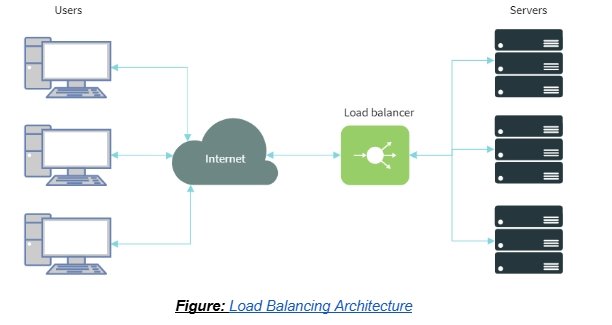
This is our current generation, where everything happens in an instant. It therefore becomes critical to take into account speed, efficiency, and availability. Consider how many individuals might be accessing the same program at the same instant. Without adequate distribution of such requests, the system will definitely collapse, leading to delays and potential service outages for users trying to access the program simultaneously. Load balancing forms the foundation of any effective IT infrastructure management in such cases.What is Load Balancing?In general, load balancing is the process of distributing network traffic to multiple servers. It does not depend solely on one computer for handling traffic. The use of load balancing facilitates equal sharing of the workload among all computers.
It would be imperative to point out that load balancing allows for the following:
- Effective resource management
- Minimize response time
- Avoid server overload.
Why Load Balancing Matters in IT Infrastructure Management
Today’s IT systems are complicated and constantly changing. From cloud computing to microservice architecture, IT infrastructure management requires scalability and reliability. Load balancing plays a critical role in this by:
The absence of load balancing makes even the most modern IT infrastructure ineffective.Types of Load Balancing TechniquesRound Robin Method: Requests are distributed sequentially across servers. Simple but effective for equal-capacity systems.
- Least Connections Method: Load balancing distributes traffic evenly by directing it towards the least loaded serve
- IP Hashing: A user’s IP address determines which server handles their request, maintaining session consistency.
- Dynamic Load Balancing: Uses real-time data like CPU usage and memory to route traffic intelligently.
Load Balancing in Cloud and Modern Systems
The advent of cloud-based computing platforms has led to major developments in the area of load balancing. Load balancing via cloud platforms comes with advantages such as scalability, global traffic distribution, and synchronization with artificial intelligence monitoring tools.
Load balancing is essential for facilitating smooth communication among multiple microservices.
Challenges in Load Balancing
While powerful, load balancing is not without challenges:
With proper planning and current technologies, though, these difficulties can be overcome.
Conclusion
There is no other choice but to practice load balancing. Load balancing is an indispensable component for ensuring that efficient and scalable operations take place with the increase of complexities and demands within the system. The issue of load balancing takes center stage in light of the entire process of managing the IT infrastructure framework.
Frequently Asked Questions
What is load balancing?
Load balancing is the process of distributing incoming network traffic across multiple servers to ensure optimal performance, availability, and resource utilization.
Why is load balancing important in IT infrastructure?
It prevents server overload, reduces response time, improves system reliability, and ensures uninterrupted service during traffic spikes.
How does load balancing improve system performance?
It intelligently distributes requests among servers, reducing bottlenecks and enabling faster processing.
What are the main benefits of load balancing?
The key benefits include improved availability, scalability, high performance, fault tolerance, and efficient resource utilization.
. What is IP Hashing in load balancing?
IP Hashing assigns requests to servers based on the client’s IP address, ensuring users consistently connect to the same server.
How does load balancing support cloud computing?
It enables automatic traffic distribution, scalability, high availability, and seamless integration with cloud-based applications.
What are the common challenges of load balancing?
Common challenges include complex configuration, implementation costs, monitoring requirements, and latency in dynamic decision-making.
How does load balancing improve scalability?
It allows new servers to be added or removed based on traffic demand without affecting application performance.
What factors should organizations consider when selecting a load-balancing technique?
Organizations should consider traffic volume, server capacity, application requirements, scalability needs, cost, and real-time performance requirements when choosing a load-balancing strategy.
What role does load balancing play in high availability?
It automatically redirects traffic to healthy servers if one fails, ensuring continuous service availability.
Statutory Citations & References
NGINX, “Load Balancing,” NGINX Documentation.
Available: https://docs.nginx.com/nginx/admin-guide/load-balancer/http-load-balancer/.
Amazon Web Services, “Elastic Load Balancing,” AWS Documentation.
Available: https://docs.aws.amazon.com/elasticloadbalancing/.
Microsoft, “Azure Load Balancer Documentation,” Microsoft Azure.
Available: https://learn.microsoft.com/en-us/azure/load-balancer/.
Google Cloud, “Cloud Load Balancing Overview,” Google Cloud Documentation. Available: https://cloud.google.com/load-balancing/docs/load-balancing-overview.
Maximize Your Business Potential
Looking for a partner to advise on GST, ITR, Business Registration, or Financial Strategy? Our experts ensure your compliance is seamless and your solutions are optimized.
Book a Strategy ConsultationEve Finance: Your Daily Financial Eve-olution!
Finance made simple, fast, and fun! 🏦💡 Sign up for your daily dose of financial insights delivered in plain English. In just 5 minutes, you’ll be smarter and better!