
India vs China: The Battle to Shape Global Trade Rules in a Multipolar World
Published: Jun 18, 2026
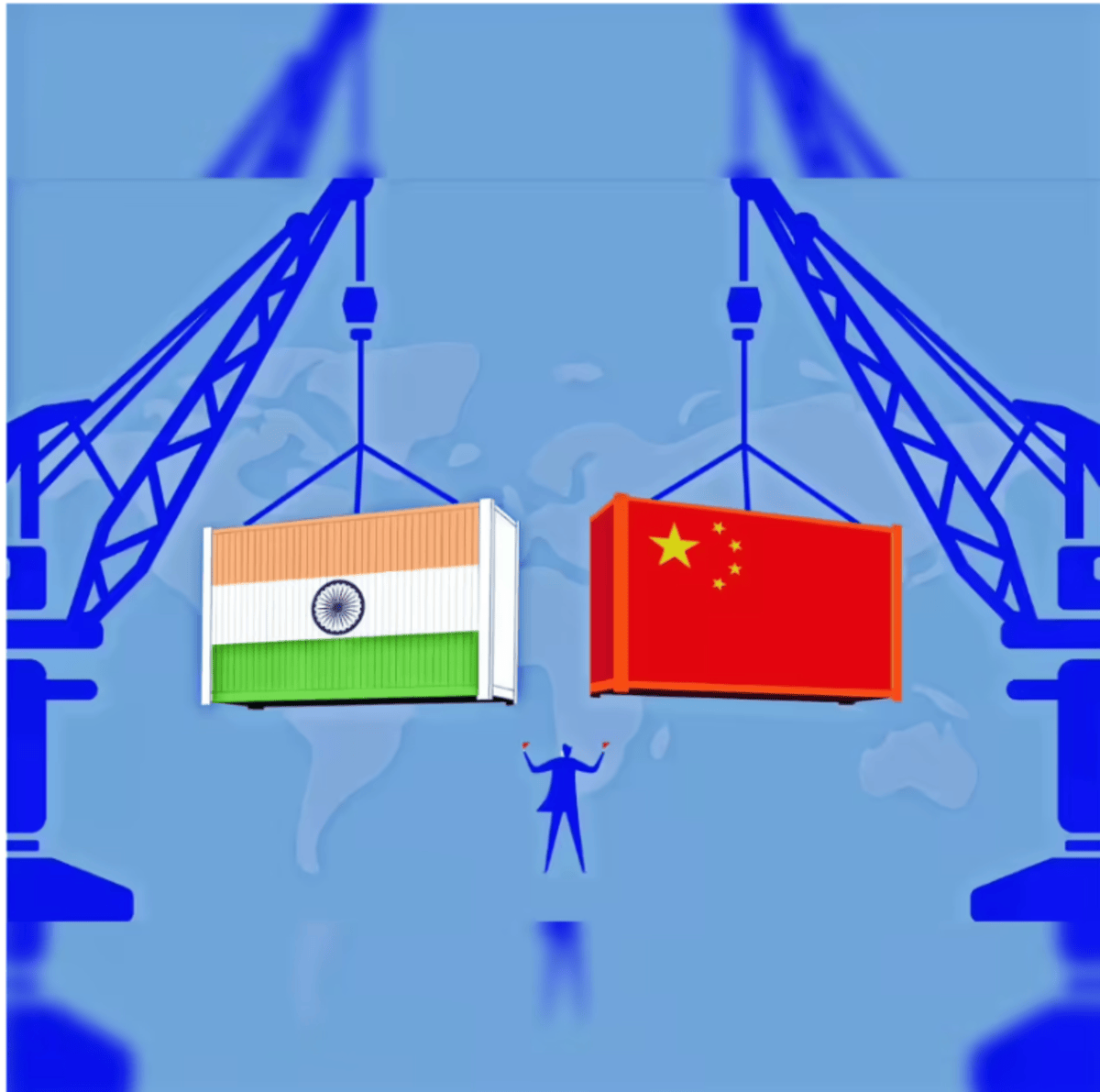
The multipolar international system that has come into existence from the post-Cold War unipolar era has dramatically reconfigured international economic governance. The heart of this systemic change is two emerging Asian powers, Bharat and Cathay. The world’s economic structure remains dominated by the great powers like the United States, China, and the European Union, and the growing Sino-American bipolarity is forcing the other world to make a composite balancing act.
In this disjointed architectural landscape, India and China are waging a strategic game to shape, influence, and dominate the overall framework of global commerce. Of course, both countries have been grouped under the Global Dixie label, but they have very different diplomatic agendas, institutional footprints, and motivations. Most significantly, the rivalry between these two regional powers plays out on both traditional, multilateral platforms and through regional frameworks, directly affecting planetary resources, identity, and geopolitical influence.
Many-sided craft governance mainly takes place in the many-sided rubbing at the World Trade Organization (WTO). What happens in this forum is a reflection of the institutional philosophies of the two parties: Cathay and India. China has been able to be integrated into the global value chain, thanks to its accession to the WTO, and to have done so in such a way that it has applied existing multilateral guidelines to help drive its economic growth. Indeed, its scheme is frequently a defensive institutional balance, in which it works within the rules to reinforce the manufacturing dominance, while seeking incremental adaptations that will boost the advantages of its state capitalism.
In contrast, India has historically taken a more market-cautious approach towards multilateral trade consolidation. Indian statecraft often takes the single, rule challenging approach, due to its internal political realities and unique negotiation culture. In the negotiations, issues related to developmental equity, food protection, and policy space for developing economies are regularly raised by Indian representatives at the negotiating table. Moreover, the cautious scheme has now been reframed by the Western critics as trade skepticism or obstructionism, and in the global context of the recent shift to “ weaponized interdependence ”, it has been reimagined as India ‘s pussyfooting around the politics of craft.
Yes, as the advanced economies make a shift toward protectionism and state intervention, India’s historical lackluster intent to fully open up its economy to unregulated global value chains is increasingly being considered a strategic resiliency.
Needless to say, the competition between India and China to define global rules of trade is a key element of today’s complex multipolarity.
The two regional powers are not one and the same but embody quite different conceptions of economic diplomacy. China aspires to build a Sino-centric order through leveraging its size of manufacturing production and isobilateral investment networks, while India implements an adaptive, defensive attitude of autonomy, resilience, and equitable rules.
The winner will decide not only the fate of Asian integration, essentially, but also on the normative principles of the global trade of the future decades.
The reality is: regional Contestation and the Belt and Road Initiative.
The trade conflict isn’t limited to multilateral forums; it is spreading to regional infrastructure and connectivity frameworks. Indeed, the most prominent structural manifestation of this enlargement is China ‘s Belt and route enterprise (BRI). The BRI aims at establishing a new institutional framework, one focused on China, and at bypassing the old corridors and financial circuits. The program is based on huge state-funded investments to bind Asia, Africa, and Europe into economic chains, with China having asymmetric leverage, creating a trade regime significantly based on bilateral deals.
India is one of the most strident and vocal critics of BRI, which it sees as more of an invasionary tool than a trade connectivity initiative, and which has the potential to change the geopolitical dynamic in the region. Notably, New Delhi’s opposition is particularly directed at violations of territorial integrity like the China-Pakistan monetary Corridor (CPEC) traversing disputed areas.
In fact, Bharat has adopted a powershift model, rather than joining Beijing’s framework, by promoting its own norms of regional craft. This method is based on the principles of transparency, local ownership, financial sustainability, and respect for international law. Bharat strives to provide a free and equitable alternative trade infrastructure model to other states and to challenge Chinese dominance in the region through championing alternative corridors and relying on multi-alignment tendencies.
Strategic Outlook – Order of Magnitude 2. Strategic Outlook: Complex order of Magnitude 2.
The difference in the trade strategies of Beijing and New Delhi is a manifestation of a greater clash over international authority and the individuality of each system. In other words, with craft and national security intertwined, both are redefining what a legitimate global economic order is. Cathay has a massive capital resource; they have a huge supply chain ascendancy, and they use it to create a world scheme operating with economic rules that suit their long-term geopolitical goals.
As an important balancing pole, India plays a key role in advocating a development-friendly and open architecture defined by rules, within the Global South. The truth is: this isobilateral friction makes it more difficult to provide global public goods, as well as erodes the traditional many-sided consensus.
In this highly competitive environment, Western powers are increasingly looking to cooperate with India to diversify critical supply chains away from China, further elevating New Delhi ‘s systemic importance.
Frequently Asked Questions
How is the India China rivalry influencing global trade rules?
The India China rivalry is shaping global trade rules through competing approaches to trade governance, economic diplomacy, and international institutions such as the WTO.
Why are India China trade rules important for the future global economy?
India China trade rules matter because both countries are major economic powers whose policies influence global supply chains, regional trade agreements, and international commerce.
How do India China trade rules differ in global economic governance?
India China trade rules differ in their priorities, with India emphasizing developmental equity and policy flexibility, while China focuses on expanding trade networks and strengthening its global economic influence.
Statutory Citations & References
[1] A. Narlikar, “Regional powers’ rise and impact on international conflict and negotiation: China and India as global and regional players,” Global Policy, vol. 10, no. 1, pp. 22–28, 2019.
[2] Z. D. Singh, Powershift: India-China Relations in a Multipolar World. London, U.K.: Pan Macmillan, 2020.
[3] J. P. Panda, India-China relations: Politics of resources, identity and authority in a multipolar world order. London, U.K.: Routledge, 2016.
[4] M. A. Peters, “The emerging multipolar world order: A preliminary analysis,” Educational Philosophy and Theory, vol. 55, no. 14, pp. 1653–1663, 2023.
Simplify your Business
Eve Consultancy is your trusted partner for end-to-end compliance services, including Company Incorporation, GST Registration, Income Tax Filing, MSME Registration, and more. With a quick and hassle-free process, expert guidance, and affordable pricing, we help businesses stay compliant while they focus on growth. Backed by experienced professionals, we ensure smooth handling of all your legal and financial requirements. WhatsApp us today at +91 9711469884 to get started.
Maximize Your Business Potential
Looking for a partner to advise on GST, ITR, Business Registration, or Financial Strategy? Our experts ensure your compliance is seamless and your solutions are optimized.
Book a Strategy ConsultationEve Finance: Your Daily Financial Eve-olution!
Finance made simple, fast, and fun! 🏦💡 Sign up for your daily dose of financial insights delivered in plain English. In just 5 minutes, you’ll be smarter and better!