
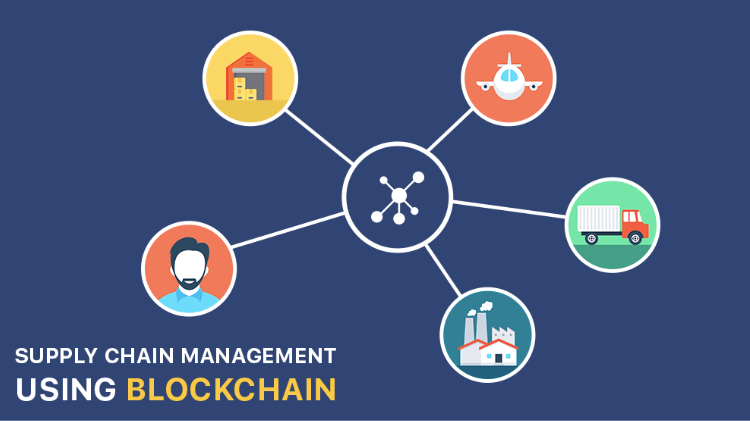
Supply chains are basically long stories about how things move—from a farm or factory all the way to someone’s home. The problem is that the story is usually split across emails, spreadsheets, portals, and phone calls, and no one ever sees the full picture. When a shipment goes missing, a product turns out to be faulty, or a fake item slips in, everyone scrambles just to answer: “Where did this go wrong?” Blockchain tries to fix exactly that by giving all players one shared, trustworthy version of the story.
What Blockchain Really Feels Like in Practice
Imagine a communal ledger where every key participant in the supply chain can add their notes, but no one gets to erase or overwrite without transparency. Thus, every time an event takes place—packing of goods, loading on a truck, customs clearance, or delivery to a warehouse—it is recorded as a time-stamped entry in that log. Entries are so well protected from manipulation that people end up trusting this shared record more than going into disputes about whose spreadsheet is “right.”
This is particularly useful when partners in a supply chain are not entirely familiar or even somewhat distrustful of each other, as is often the case with global supply chains. Whether they are running completely different internal IT systems, they can still work on a common blockchain network and synchronize on the core facts like quantities, dates, and locations. It removes a lot of back‑and‑forth chasing of information and lets people spend more time solving problems than hunting for data.
Making Products Easier to Trust
From a human point of view, one of the biggest wins is peace of mind. With blockchain, a product’s journey can be traced from origin to shelf in a matter of minutes. If there is a safety issue—say a contaminated food batch or a defective pharma lot—teams can quickly identify which units are affected and where they went, rather than guessing and overreacting.
It also tackles the very real worry of counterfeits. Counterfeit products in such areas as drugs, luxury goods, and electronics can be harmful to both consumers and brands. Attaching an authentic digital record to each real product through a blockchain, thus, makes it very difficult for counterfeit products to go unrecognized. By means of very elementary devices such as QR codes or tags, even consumers are enabled to verify the authenticity of a product by consulting its history, which helps to establish trust in a very concrete manner.
Cutting Down on Waiting, Chasing, and Paperwork
Anyone who has worked in operations, logistics, or finance knows how much time goes into waiting for approvals, checking documents, and asking for “the latest version.” Blockchain can ease a lot of this burden, especially when combined with smart contracts—self‑executing rules built into the system. For example, once a delivery is confirmed and the required data is on the ledger, a payment can trigger automatically. That means fewer disputes, fewer manual checks, and faster money flow for suppliers who often operate on tight margins.
Because everyone sees nearly real‑time information about shipments and inventory, decisions become less guess‑based. Planners can better avoid stock‑outs, unnecessary safety stock, and sudden surprises in the network. For the people behind the screens and on the warehouse floor, that translates into fewer fire drills and more predictable days.
The Very Human Challenges
Of course, blockchain does not magically fix everything. If people enter wrong or incomplete data, the system simply locks in those errors more securely—“garbage in, garbage forever” still applies. There are also sensitive questions: Who controls the network? What is visible to whom? How do you protect confidential pricing while still sharing enough data to make the system useful?
Changing is itself a significant obstacle. When it comes to bringing in Blockchain, it changes workflows, integrations, and methods of sharing information, and not all partners are equally prepared or enthusiastic. That is the reason why a lot of the successful initiatives go step by step, starting with a narrowly targeted use case and a small number of partners who are committed and convinced that it helps, and then gradually extending the scope.
Conclusion
Basically, blockchain in supply chains is not so much a high-tech thing but rather a way of making people use the same, truthful data. It enables all members of the chain—planners, warehouse teams, managers, and even customers—to have a transparent and accurate account of product origin and handling. If implemented wisely, it is capable of minimizing fraud and the presence of counterfeit products, accelerating payment processes, and lessening the frantic work of gathering information on a daily basis. The real value shows up not in buzzwords, but in quieter days, fewer surprises, and greater confidence that the data on the screen actually reflects what is happening in the real world.
References
[1] Oracle, “Blockchain for Supply Chain: Uses and Benefits,” Oracle, Aug. 7, 2024. [Online]. Available: https://www.oracle.com/in/blockchain/what-is-blockchain/blockchain-for-supply-chain/
[2] Turing, “Blockchain in Supply Chain: Benefits, Use Cases & …,” Turing, Apr. 22, 2025. [Online]. Available: https://www.turing.com/resources/blockchain-for-supply-chains
[3] Deloitte, “Using Blockchain to Drive Supply Chain Transparency,” Deloitte, Nov. 27, 2022. [Online]. Available: https://www.deloitte.com/us/en/services/consulting/articles/blockchain-supply-chain-innovation.html
[4] Carmatec, “Blockchain in Supply Chain: Use Cases and Benefits,” Carmatec, Feb. 12, 2025. [Online]. Available: https://www.carmatec.com/blog/blockchain-in-supply-chain-use-cases-and-benefits/
[5] IBM, “What Are the Benefits of Blockchain?,” IBM, Jul. 26, 2021. [Online]. Available: https://www.ibm.com/think/topics/benefits-of-blockchain
[6] IBM, “What Is Blockchain?,” IBM, Jul. 7, 2021. [Online]. Available: https://www.ibm.com/think/topics/blockchain
[7] Poddar Institute, “Blockchain for Supply Chain Uses and Benefits,” Poddar Institute, Dec. 31, 2024. [Online]. Available: https://www.poddarinstitute.org/articles/blockchain-for-supply-chain-uses-and-benefits
[8] Paltron, “The Role of Blockchain in Supply Chain Management (SCM),” Paltron, Mar. 15, 2023. [Online]. Available: https://www.paltron.com/insights-en/the-role-of-blockchain-in-supply-chain-management-scm
Amazon Web Services, “Supply Chain Tracking and Traceability with IoT-Enabled Blockchain on AWS,” AWS Partner Network Blog, Sep. 15, 2020. [Online]. Available: https://aws.amazon.com/blogs/apn/supply-chain-tracking-and-traceability-with-iot-enabled-blockchain-on-aws/
Blockchain Magazine, “Exploring IBM’s Blockchain: Revolutionizing Industries With Innovative Solutions,” Blockchain Magazine, Jan. 2, 2025. [Online]. Available: https://blockchainmagazine.com/exploring-ibms-blockchain-revolutionizing-industries-with-innovative-solutions/
Penned by Uday
Edited by Anuj Kumar, Research Analyst
For any feedback mail us at info@eveconsultancy.in
Finance made simple, fast, and fun! 🏦💡 Sign up for your daily dose of financial insights delivered in plain English. In just 5 minutes, you’ll be smarter already!
Simplify Your Business Compliance with Eve Consultancy
Eve Consultancy is your trusted partner for end-to-end compliance services, including Company Incorporation, GST Registration, Income Tax Filing, MSME Registration, and more. With a quick and hassle-free process, expert guidance, and affordable pricing, we help businesses stay compliant while they focus on growth. Backed by experienced professionals, we ensure smooth handling of all your legal and financial requirements. WhatsApp us today at +91 9711469884 to get started.