
5 Transformative Benefits of Virtual Job Coach AI for Interview Readiness Technology
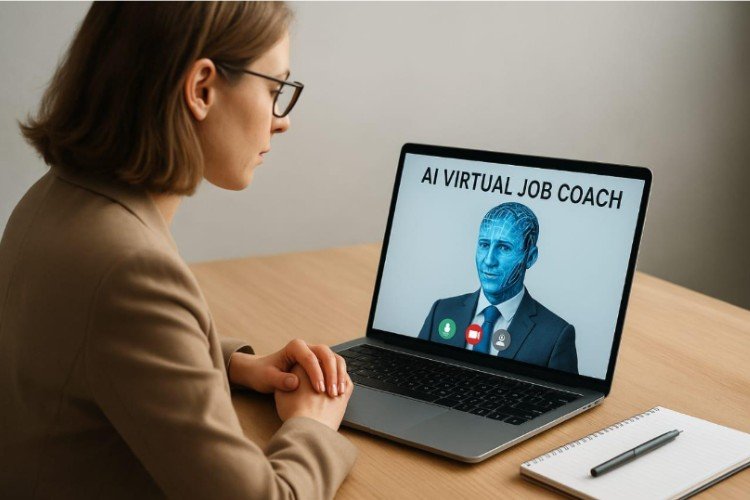
Introduction
Moving technology in the workplace is changing how professionals prepare for success with virtual job coach AI and interview readiness technology. Career prep is no longer confined to irrelevant training. It is now highly interactive and personalized.
AI is being adopted much faster than before. Gallup’s 2025 data reveal a steep acceleration in the use of AI for work, with U.S. employees leveraging AI rising from 21% to 40% and weekly users from 11% to 19%. This isn’t just a spike in usage; there is a much deeper and foundational change in the way learning and work are being done.
For those looking for a job, the transition brings both an opportunity and a challenge. Enhanced Horizons enables personalized assistance, more effective interview simulations, and extensive skill tracking. On the other hand, it also demands a more conscious effort of the workforce to be usable and mindful of the regulations that surround them.
With the ongoing transition, being adaptively proficient at the blend of human skill and computational intelligence is no longer a choice, but a necessity. This article investigates the five primary factors of how AI is redesigning careers for 2025 and what practitioners need to do to succeed in this constantly evolving environment.
The Unrelenting Growth of AI Usage
AI is now a standard across all industries. Instep’s 2025 survey reveals 72% of workers in accounting, consulting, finance, and law use AI, a significant leap from 48% in 2024. Of interest, approximately 50% confessed to having used software that is not officially sanctioned by their companies, an indication of both strong desire and organizational policy voids.
This illustrates a larger trend known as the “shadow AI” phenomenon. In a global study conducted by KPMG and the University of Melbourne in 2025, it was found that 57% of users concealed their AI usage from employers and 66% failed to check AI results for correctness. Although this emphasizes the danger posed, it equally shows the level at which AI is embedded in daily tasks.
For workers, it is very clear: AI is not optional; it is the basic expertise. It is AI that aids in the preparation of client summaries, the polishing of job presentation tools, and even the practice of job interviews. But using it responsibly, responsibly, and communicating with it raises the line between the rest and the future-thinking professionals.
Regulations Are Shaping the Future of AI Coaching
Scrutiny is rising alongside the advancement of AI. The EU AI Act is one of the milestone shifts, the phasing-in of which begins in 2025. Perhaps its most consequential provision is the ban on AI systems that attempt to infer emotions in workplace or classroom settings. Companies will face fines of up to 7% of global turnover by August 2025 if they attempt to breach this provision.
This is particularly concerning for coaching done by AI. Many virtual coaching tools rely on emotion-recognition functions by analysing tone, face, or body language during mock interviews. Developers aiming for the EU market will now have to refocus on transparent, safe, and skill-based feedback, which is far more difficult to implement.
This indicates that while AI can assist in career advancement, ethical considerations and regulation will curb the functionality on offer. A virtual coach can help structure interviews or assess skills and guide through critical response frameworks, but the assistive AI must do so without venturing into sensitive, restricted, and legally bound elements.
Employees View AI as Both Important and Intimidating
AI has simultaneously empowered and exhausted today’s workforce. As mentioned in a LinkedIn Work Trend Index Report published in July 2025, more than a third of U.S. executives expect employees to have skills in comprehending AI during assessment and review processes. On the other hand, a significant number of workers described learning AI as akin to “having an additional job”. This duality elucidates the importance of guided, supportive tools in learning and adopting AI technologies.
While employees are required to assimilate AI into their workflows, the resources available to aid learning often feel insufficient. Virtual coaching tools can simplify the complex process of AI adoption through micro-steps like advanced interview preparation and automated simulation of tasks, and real-time assessment of verbal skills.
Artificial Intelligence can act like a career partner and not simply a technical upgrade if it can assist employees in managing the delicate balance of their work. The balance of work is delicate, and assisting will act like a career partner for these employees, rather than just a technical upgrade. The main aim must be to use such tools to complement the skills of employees, rather than supplant them. This enhances the confidence of employees over the long term and reduces the sense of being overwhelmed.
Looking Ahead with Intelligent Coaching
Looking ahead, career development will increasingly rely on AI tools. As adaptive feedback and personalized learning are becoming more common, picture yourself gearing up for an important interview: Rather than reading through generic advice, AI can evaluate your speech, enhance it with industry-standard modifications, and practice challenging and relevant interview questions with you.
The study conducted by KPMG brings to light the issues of trust and precision. Without a second look, far too many people trust AI results. This is the value that virtual job coaches, which are organized and clear platforms, bring to the table. They use a mix of human checking and data-based insights to provide career-crisping prep that is safer and effective.
Ongoing AI-based training will also become a staple of company workforce planning. The convergence of employee training and AI support will become increasingly seamless, leaving professionals in a more precarious situation regarding their need to adopt, and not simply use, these solutions.
Conclusion: Steering Through the AI-Enhanced Career Path
Fragmentations in the workplace are quite real. To illustrate this point, we can look at two pieces of data: Gallup shows that usage of AI has doubled, and In-app found that 72% of professionals readily accept its use, albeit informally. AI usage in the workplace certainly has seen its fair share of growth. Regulations, such as the EU AI Act, are shifting the boundaries of Virtual Job Coach AI, while the LinkedIn Work Trend Index highlights the need and strain of upskilling.
Overall, there is a twofold message to be taken away from the research findings. First of all, AI has to be integrated into day-to-day activities. Additionally, AI job coaching platforms offer great coaching at all levels. The platforms do more than just refine interview skills; the mock interviews conducted in accordance with the relevant regulations truly help build confidence for real interviews through Interview Readiness Tech.
AI will go on to play a big role in work until 2025. The attitude with which one faces this dynamic phenomenon is what decides the outcome. Responsibility, readiness, and the right attitude will help one take initiative and drive change rather than just adapting. One’s career will be made by those who are ready to take risks.
References
[1] Gallup, Artificial Intelligence in the Workplace: Adoption and Usage Trends 2025. Gallup, 2025. [Online]. Available: https://www.gallup.com
[2] Instep, AI in Professional Services: Global Workforce Survey 2025. Instep, 2025. [Online]. Available: https://www.instep.com
[3] KPMG and University of Melbourne, Global AI at Work Study 2025. KPMG International, 2025. [Online]. Available: https://home.kpmg
[4] European Union, EU Artificial Intelligence Act. Official Journal of the European Union, 2025. [Online]. Available: https://artificial-intelligence-act.eu
[5] LinkedIn, Work Trend Index: AI and the Future of Work, Jul. 2025. LinkedIn Corporation, 2025. [Online]. Available: https://www.linkedin.com
[6] In-app Research, The State of Informal AI Adoption in the Workplace 2025. In-app, 2025. [Online]. Available: https://www.inapp.com
[7] Z. Liu, “Interview AI-assistant: Designing for Real-Time Human-AI Collaboration in Interview Preparation and Execution,” arXiv preprint, Mar. 3, 2025. [Online]. Available: https://arxiv.org/abs/2504.13847
FAQs on Virtual Job Coach AI and Interview Readiness Technology
- What is virtual job coach AI and how does it work?
Virtual job coach AI uses interview readiness technology to simulate interviews and deliver personalized feedback.
2. How does interview readiness technology improve job preparation?
Interview readiness technology enhances performance by offering structured mock interviews and real-time coaching.
3. Can virtual job coach AI help with behavioral interview questions?
Yes, virtual job coach AI platforms use interview readiness technology to guide users through behavioral formats.
4. Is interview readiness technology suitable for remote interviews?
Absolutely. It’s designed to support virtual formats and remote job seekers with adaptive coaching.
5. What kind of feedback does virtual job coach AI provide?
It analyzes tone, timing, and clarity using interview readiness technology to improve response quality.
6. Can interview readiness technology track progress over time?
Yes, it logs performance metrics and highlights growth areas across multiple sessions.
7. Is virtual job coach AI useful for fresh graduates?
Definitely. It helps build confidence and communication skills using interview readiness technology.
8. Do virtual job coach AI platforms support multilingual practice?
Many platforms offer multilingual support to help users prepare in their preferred language.
9. How secure is personal data on interview readiness platforms?
Trusted platforms use encryption and follow strict privacy protocols to protect user data.
10. Can virtual job coach AI replace human coaching?
It complements human coaching by automating repetitive tasks and scaling interview readiness technology.
11. What industries benefit most from interview readiness technology?
Tech, consulting, and finance sectors see strong results from virtual job coach AI integration.
12. Is interview readiness technology suitable for executive-level interviews?
Yes, advanced modules are available for high-level roles through virtual job coach AI platforms.
13. Does virtual job coach AI offer resume analysis?
Some platforms include resume review features as part of their interview readiness technology suite.
14. Is virtual job coach AI helpful during career transitions?
Absolutely. It helps users reframe experience and practice for new roles using interview readiness technology.
15. What’s the future of interview readiness technology?
Virtual job coach AI will evolve with smarter algorithms, making interview readiness technology more intuitive and effective.
Penned by Himanshi Saraswat
Edited by Hamid Ali, Research Analyst
For any feedback mail us at info@eveconsultancy.in
Finance made simple, fast, and fun! 🏦💡 Sign up for your daily dose of financial insights delivered in plain English. In just 5 minutes, you’ll be smarter already!
Simplify Your Business Compliance with Eve Consultancy
Eve Consultancy is your trusted partner for end-to-end compliance services, including Company Incorporation, GST Registration, Income Tax Filing, MSME Registration, and more. With a quick and hassle-free process, expert guidance, and affordable pricing, we help businesses stay compliant while they focus on growth. Backed by experienced professionals, we ensure smooth handling of all your legal and financial requirements. WhatsApp us today at +91 9711469884 to get started.